

For the last two weeks we have been volunteering on a winery in Valle de la Concepción just outside of Tarija in exchange for free accommodation and lunch. We were expected to work six hours a day, six days a week with Sundays off. March is harvest season, so our timing was perfect and we got to see most of the wine making process. The winery is an artisanal operation where virtually everything is done manually. It’s hard to convey how manual the whole process is.
Our very first task was to transfer wine from a 50-gallon container into a 5-gallon bucket with a siphon, carry the bucket into another building, climb up on a piece of furniture, and pour the wine into two 15-gallon containers at the top of a rickety structure using a funnel. We had no idea why we were doing this until later on the tour when we discovered the two 60-liter containers fed the surtidor pump where wine comes out of a garden hose (see more about the garden hose and the tour here). Suddenly we understood why the containers had to be so high up.
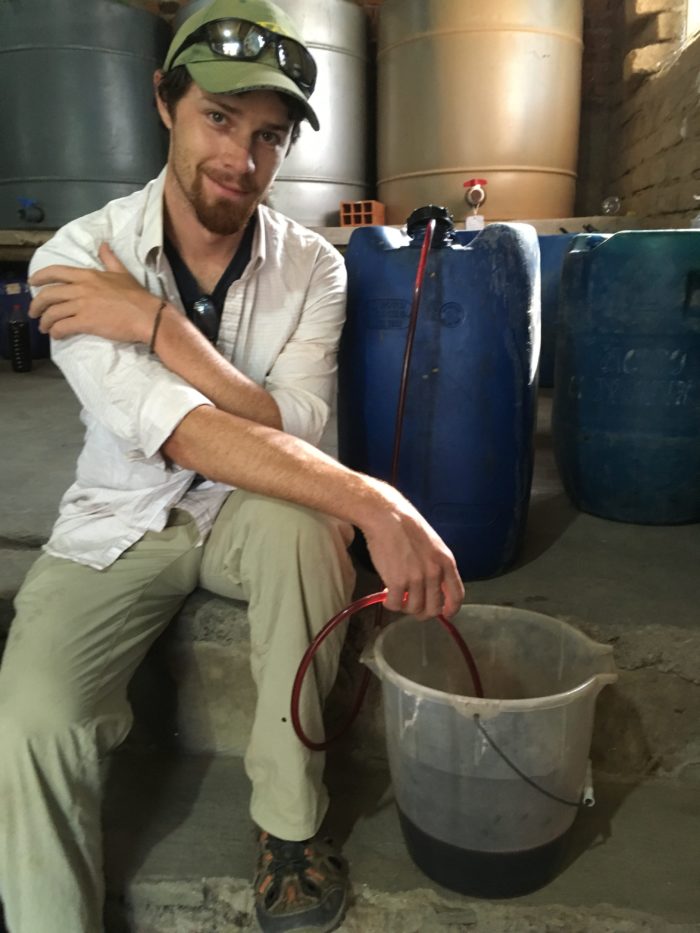
Siphoning wine into a bucket 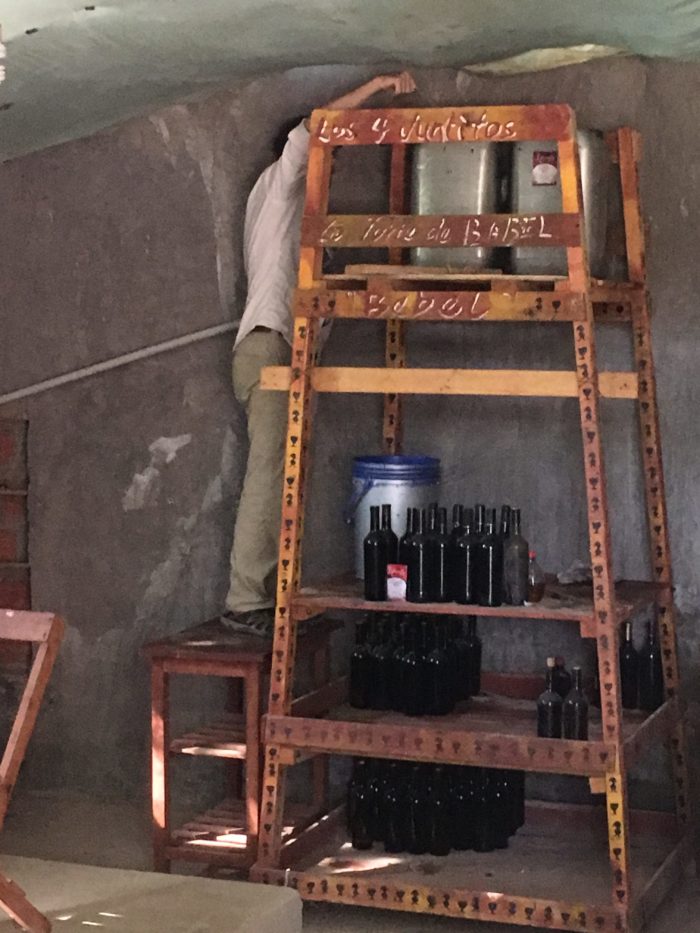
Filling the surtidor tanks with wine one pitcher at a time
The second task we were assigned was carrying tables and chairs from the outdoor eating area to the storage room at the top of the winery. We had been shown where to put the chairs but understood the tables lived somewhere else. Eager to continue working, Eric went to ask Lucy (the woman we did most of our work with) where we should put them with a string of Spanish words that conveyed the question. She responded in Spanish, which, of course, Eric didn’t understand, and exasperated, she turned to her colleague and said, “he doesn’t understand anything!” We got the impression she thought this would be a long two weeks.
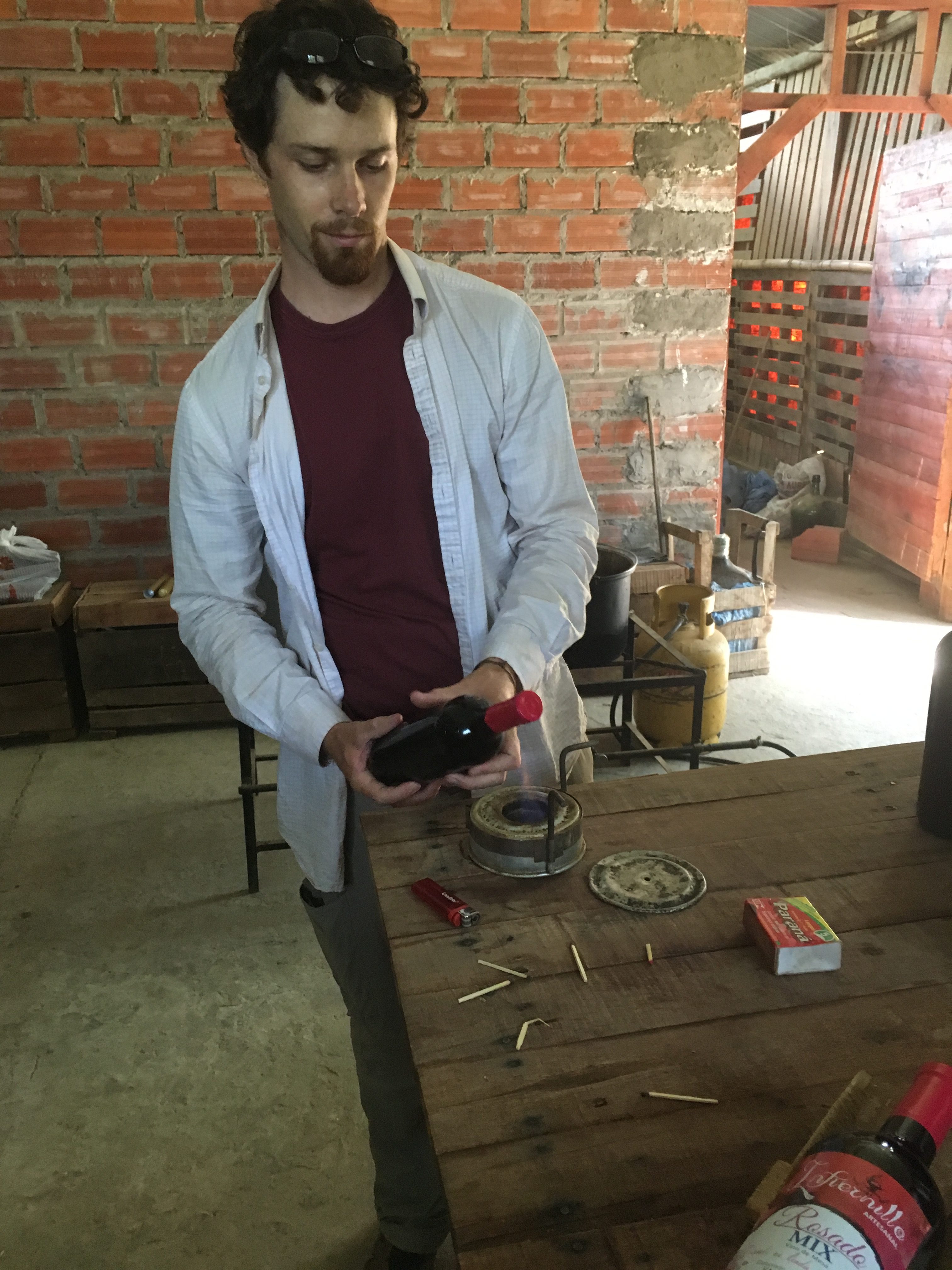
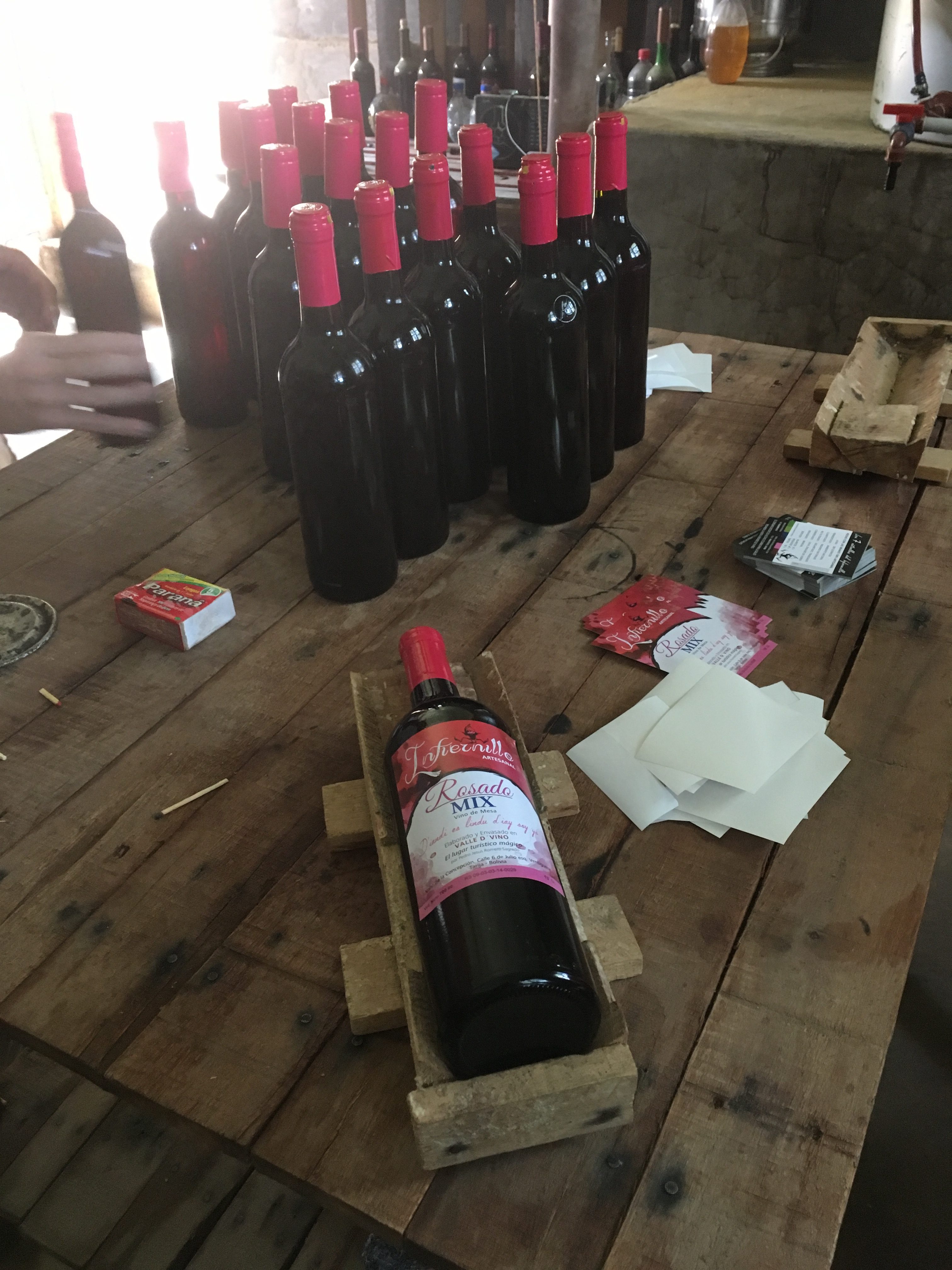
We spent the first few days labeling bottles of wine from prior seasons. The labeling process requires a few steps:
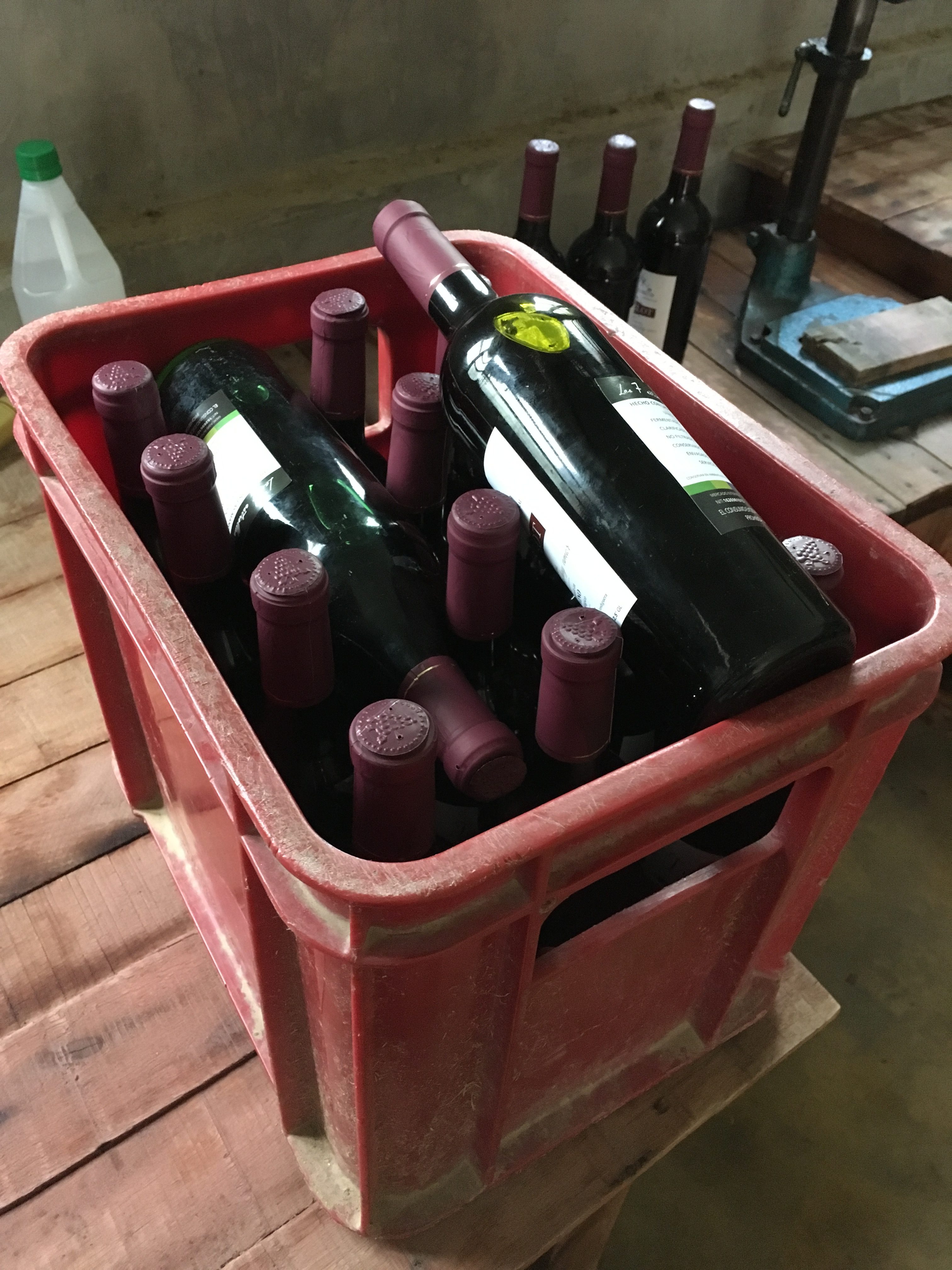
- Carrying the bottles from the storage shelf to the table – we usually did this with crates, 14 bottles at a time
- Wiping the bottles off since they are usually covered in dust
- Putting a foil cap on each bottle, the color corresponding to the type of wine
- Lighting the small alcohol stove to shrink the foil onto the bottle.
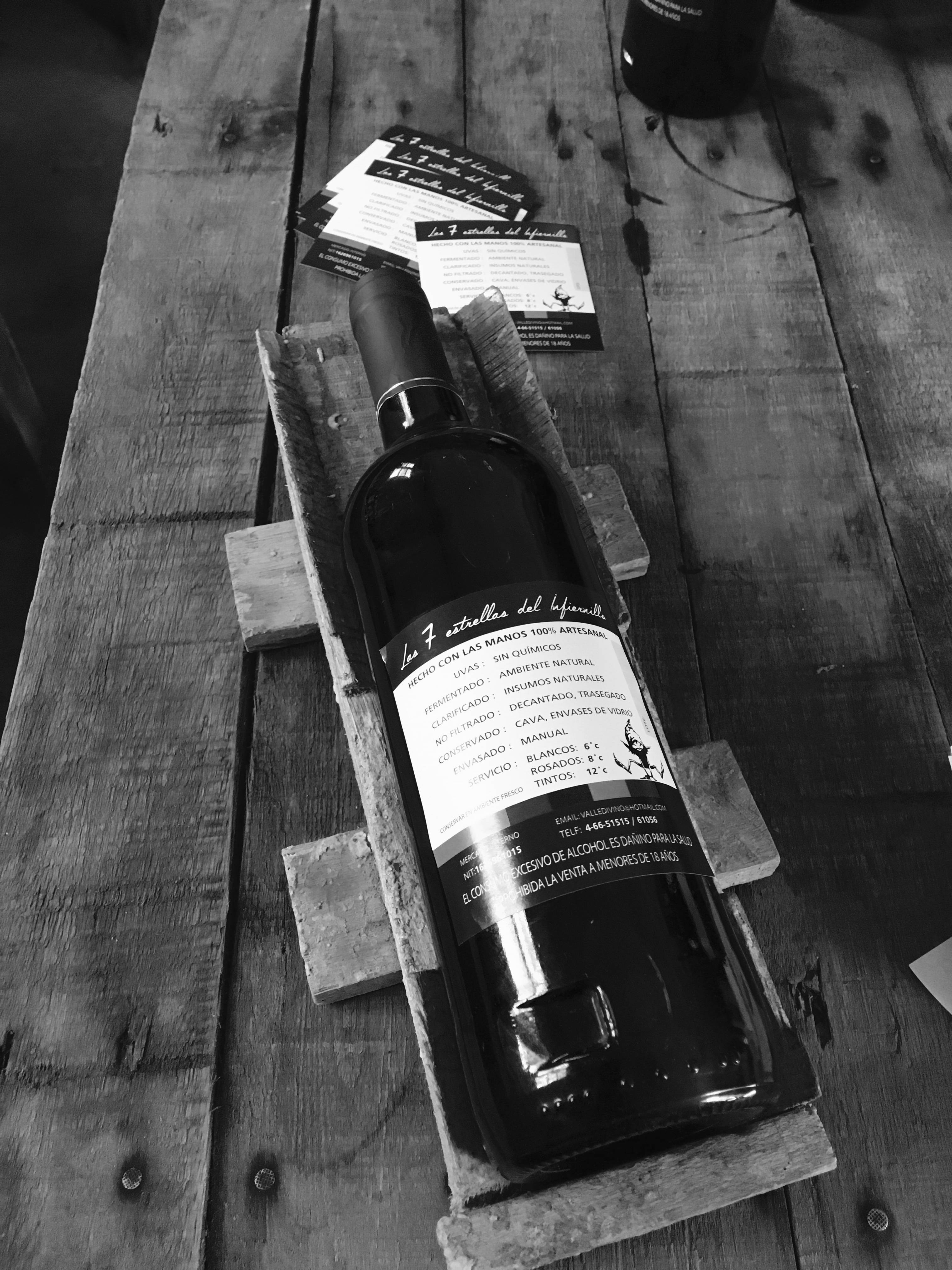
- Putting the bottle on a wood frame that helps indicate where the label should be placed
- Labeling the front and back of the bottle and putting it in the crate
- Carrying the crate of bottles to another shelf and stacking them up again
In total, we labeled 900 bottles of wine over the two weeks.
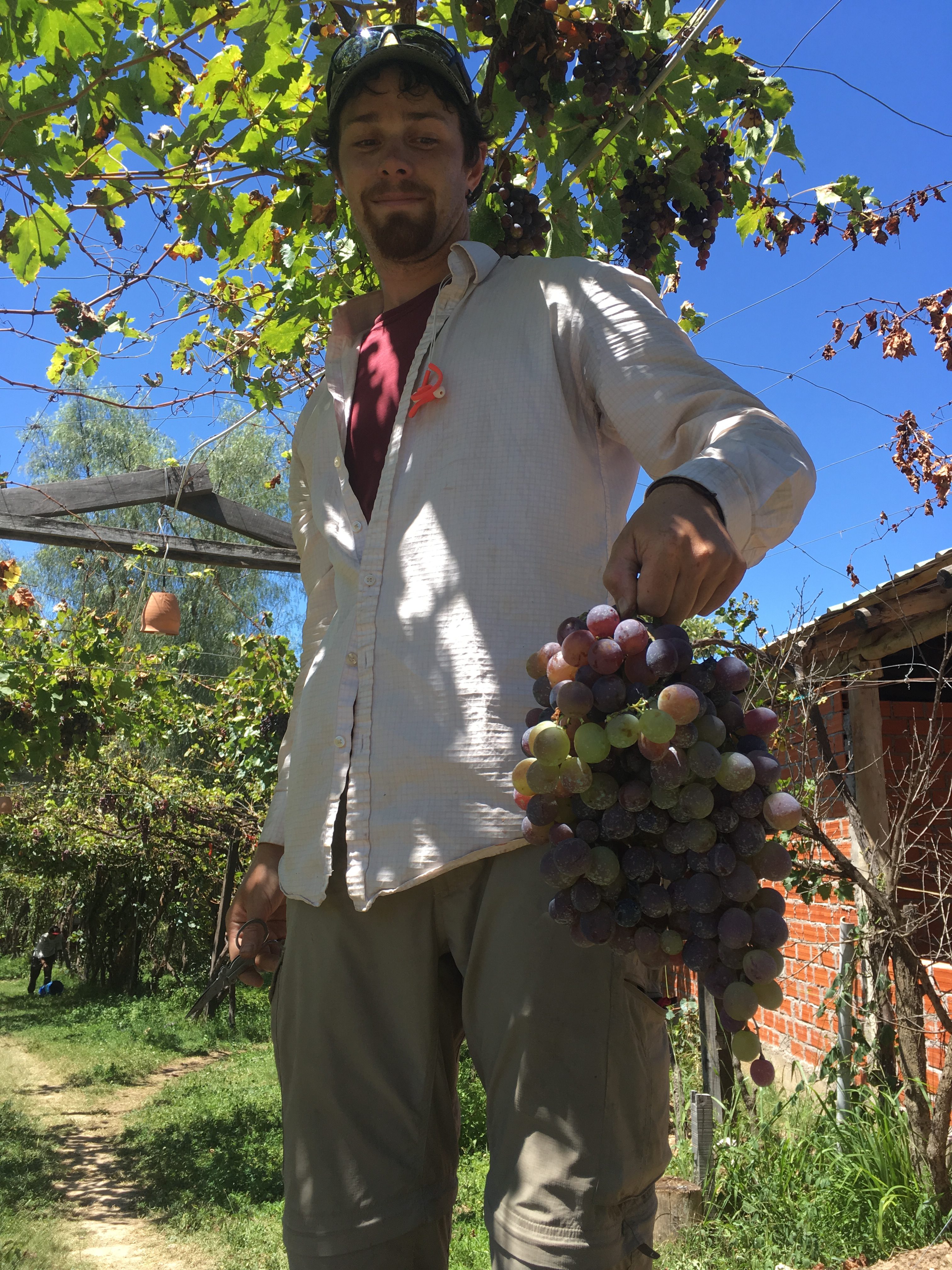
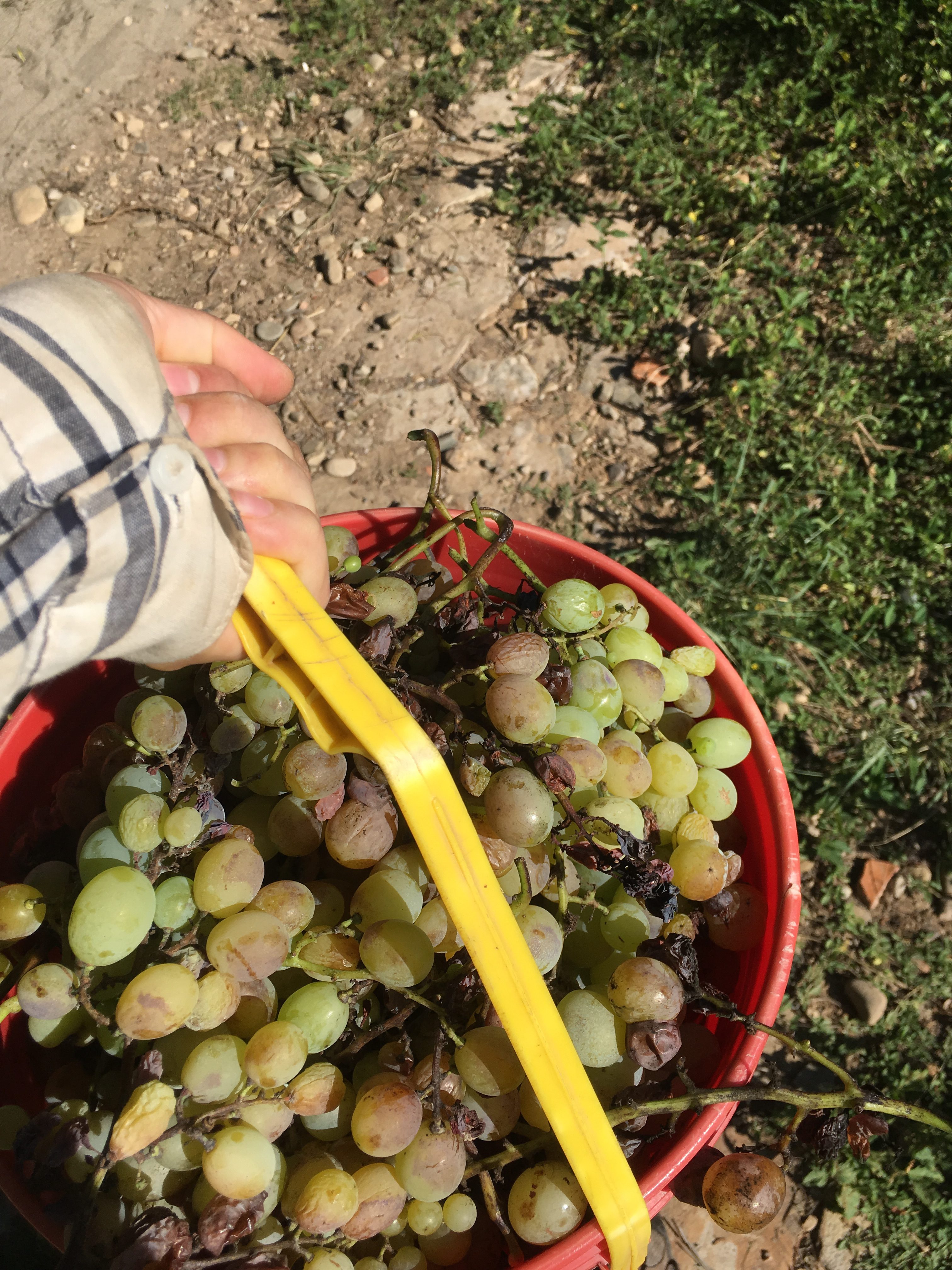
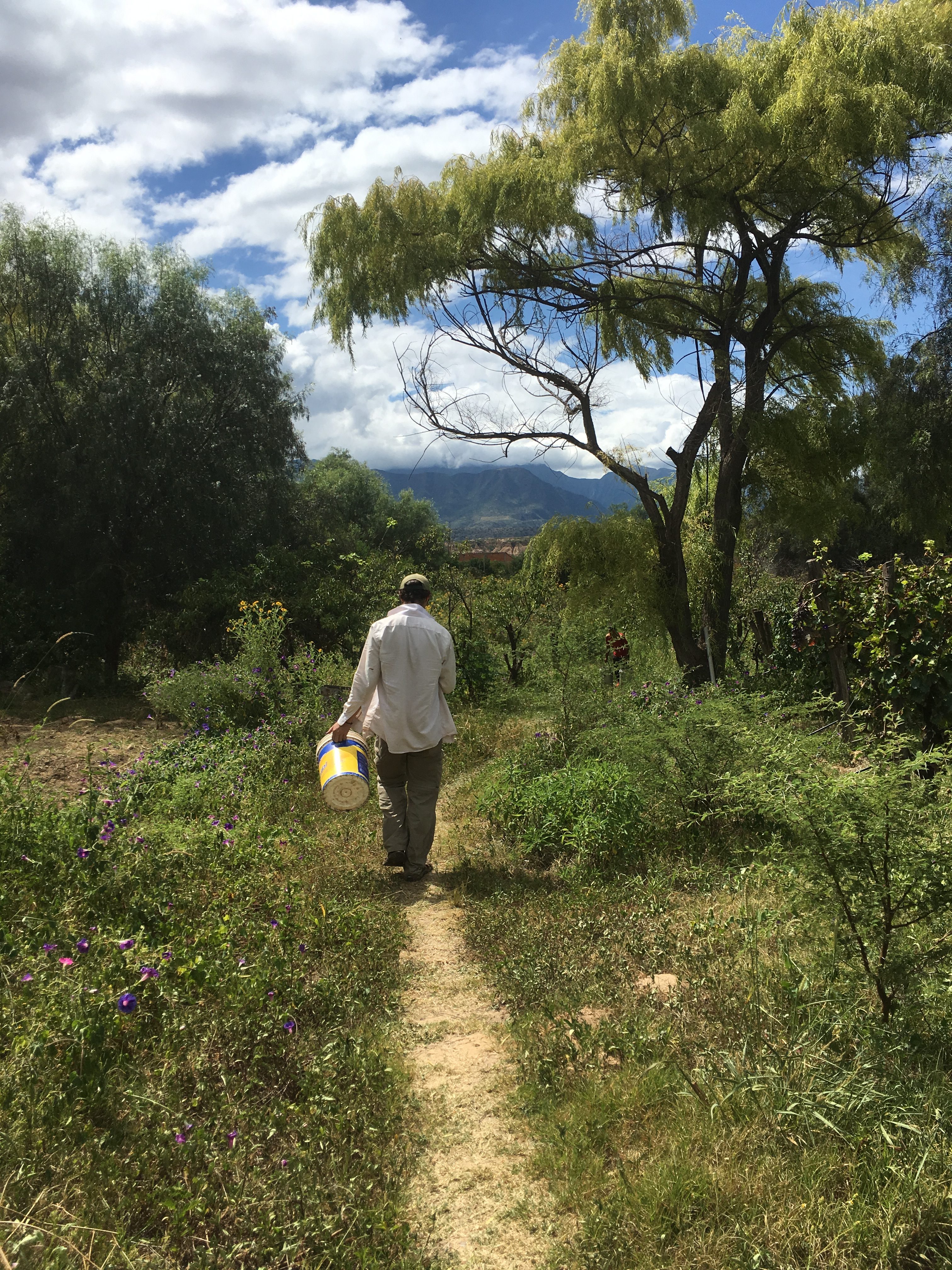
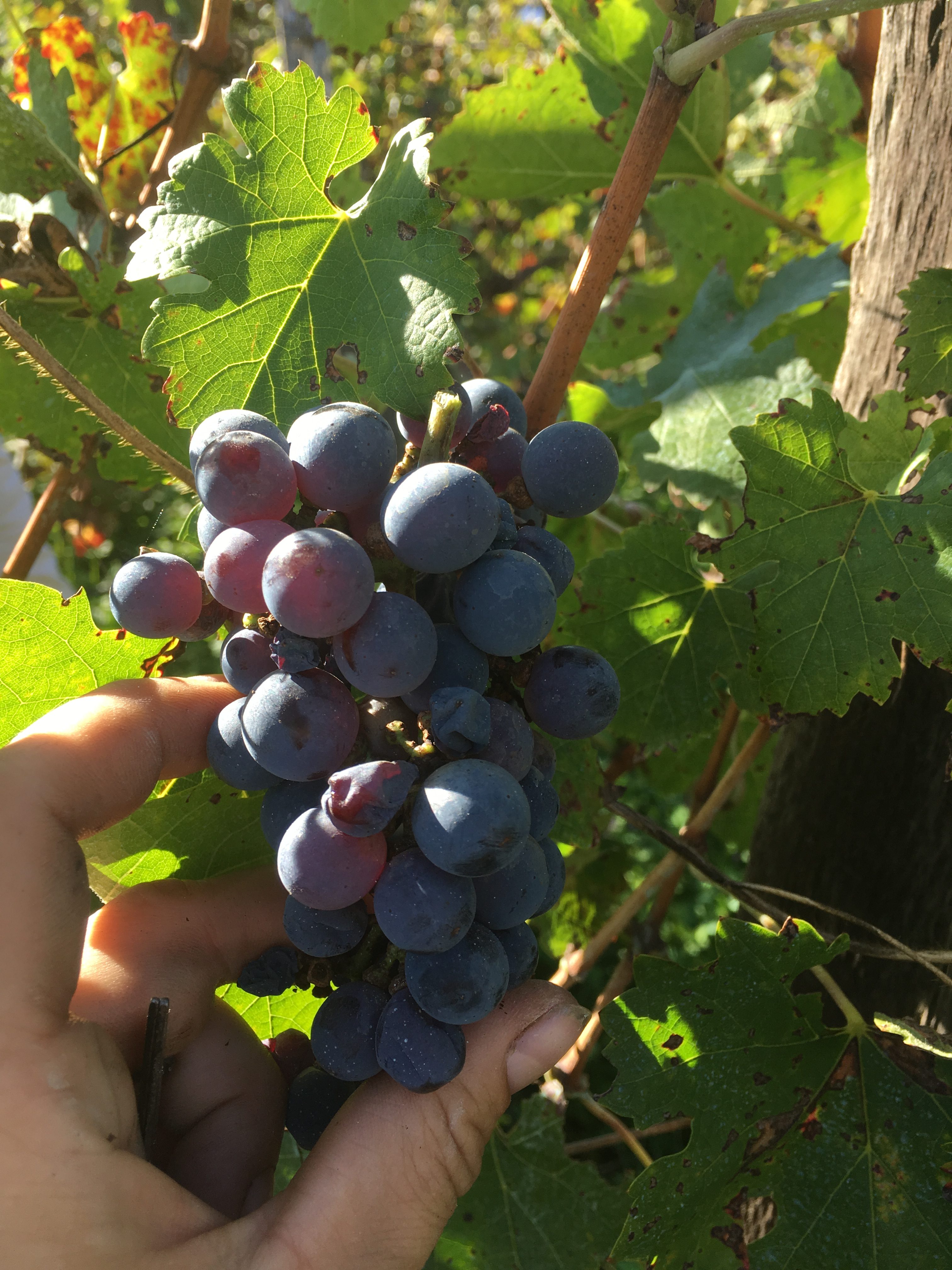
On Thursday and Friday, it was harvest season. We were sent out into the grape fields with a small pair of scissors and a 5-gallon bucket each. We were told to fill up the buckets with Moscatel grapes and carry them back up to the wine production building where we could empty the buckets onto a tarp and repeat. When all the grapes in the field were picked, we had to pick the grapes from the arbor. This required standing on chairs, tables, and sometimes chairs on tables to get them all and was way slower than harvesting from the field. The first day we harvested 105 gallons of grapes, which we thought was pretty good until we learned one of the usual workers had harvested 250 gallons! The second day we were supposed to pick Cabernet grapes. They were much smaller, so it took more bunches to fill the bucket and they were also much harder to distinguish from other red varieties, so we were much slower. In total across the two days, we harvested 150 gallons of grapes.
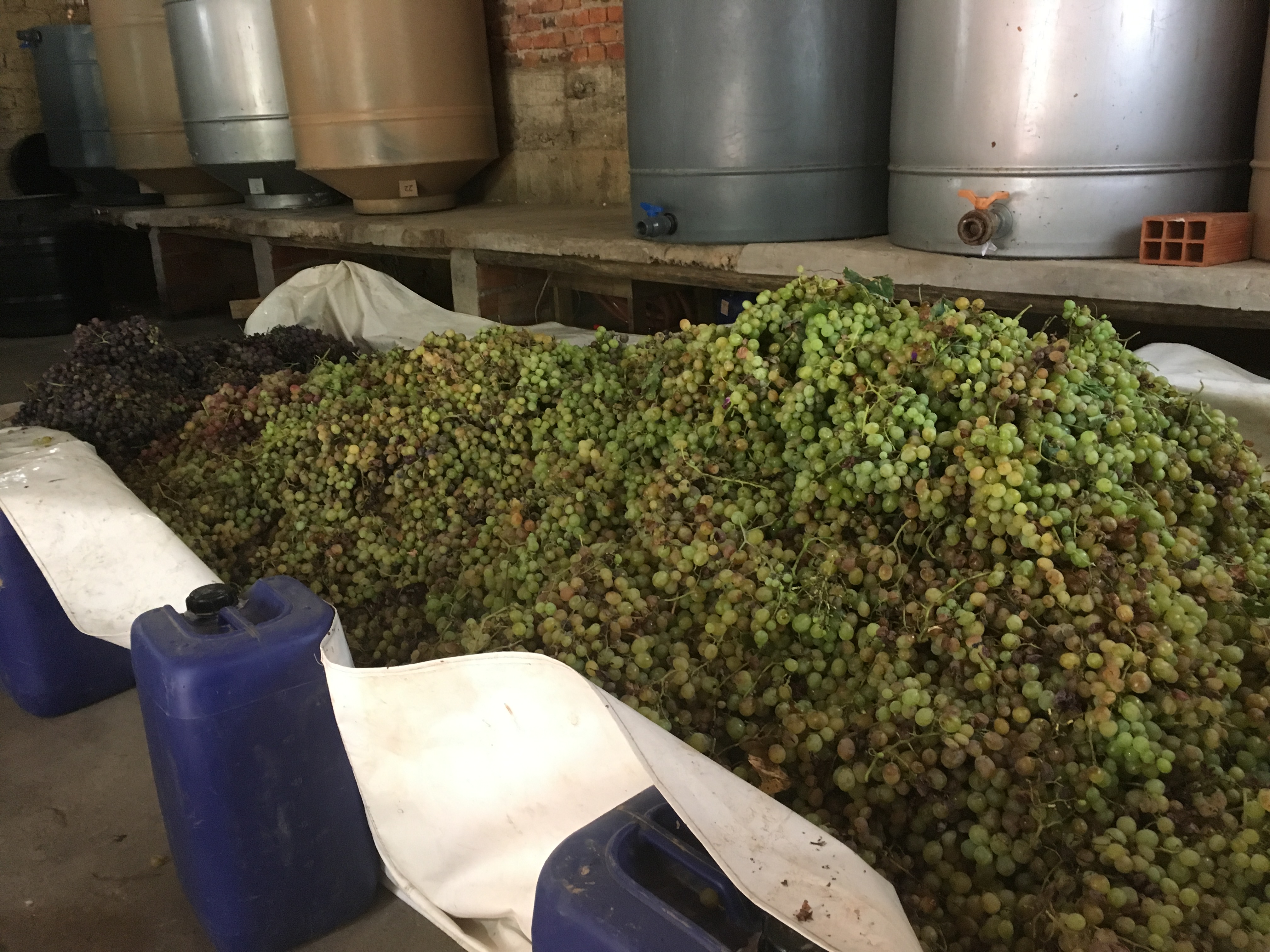
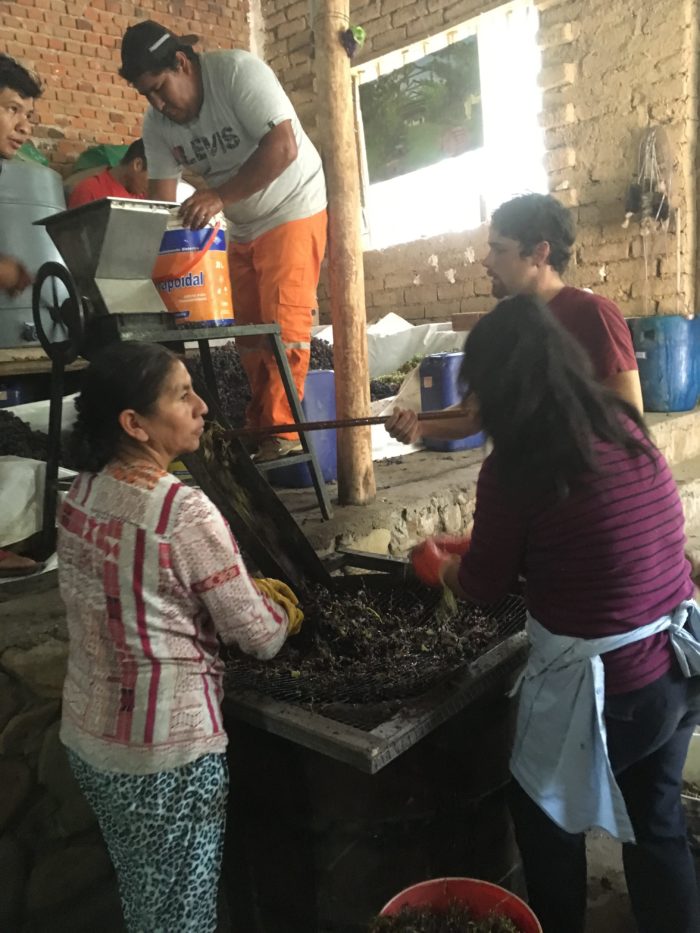
After each day of harvest, we had to crush the grapes. The winery uses an old hand crank mill for the crushing process and it is a six-person operation. One person gathers grapes from the tarp into a five-gallon bucket and hands it to the next person who feeds the grapes into the mill. The third person turns the hand crank. The crushed grapes and juice slide down the ramp and the fourth person uses a wooden rod to pull the grapes down the ramp faster. The grapes fall onto a wide mesh over a 100-gallon wooden barrel. The fifth and sixth persons rub their hands over the mesh pushing the grape skins through and removing the stems. When a 100-gallon container is filled with grape juice and skins, we then transfer it out five gallons at a time into a fermentation vat using a bucket brigade system. Then we start the grape crushing process again. In total, we created 788 gallons of grape juice and skins which we transferred to fermentation vats. The two harvesting and crushing days were by far the hardest. We worked close to 10 hours each day, and the work required a lot of carrying and lifting of heavy buckets, not to mention turning the mill itself which Eric was heavily involved in.
Once the fermentation vats are full of their respective grapes and skins, the fermentation process begins. In the beginning, the fermentation reaction is very strong so the grape mixture gets quite hot and you can hear it bubbling. The bubbles push the skins to the surface, so twice a day we had to stir the vats to put the grape skins back in contact with the liquid. The first step was to take the temperature of each vat which we did by sticking the thermometer into the thick layer of skins at the top for five minutes. Once we had recorded the temperature, it was time to bazuquear (stir). Bazuqueando (stirring) involved using a wooden paddle at the end of a long handle to push the grape skins into the liquid until they were all covered again. When the temperature was high (75-82 degrees Fahrenheit), the grape skins at the surface were thick and hard to bazuquear. As time went on, the temperature dropped and the bazuqueando became easier. Towards the end of the week, we were recording temperatures between 57 and 64 degrees Fahrenheit, and the grape mixture was becoming soupier and required a lot less bazuqueando.
It also held the thermometer less well which meant on the second to last day of our stay on the winery, we lost the thermometer in a 200-gallon vat of grape must! Neither of us could reach it, and trying to grab it almost certainly pushed it lower in the vat. Eric tried to fish for it with a strainer and somehow lost the strainer in the vat too. He was able to retrieve the strainer with a wooden rod, but we decided the only way to get the thermometer which was now surely lying on the bottom of the 200-gallon vat was to remove some of the wine from the vat. Eric filled a 5-gallon bucket with grape must and passed it to Jess who poured it into an empty vat, and we continued this way until we had removed roughly a quarter of the grape must. 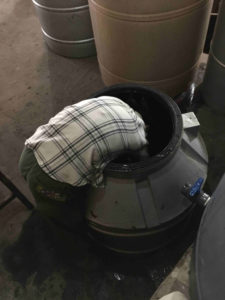 Eric climbed on top of the 200-gallon vat and put his body inside it so he could reach the bottom and found the thermometer! The wine fumes were so strong, Jess was sure he’d be drunk when he came back out. We then had to bucket brigade in reverse to get the wine back into the 200-gallon vat, so Jess was now upside down in a vat of wine filling buckets and handing them up to Eric. At the end, Lucy only said “from now on, we measure temperature in a pitcher”.
Despite not speaking Spanish, Eric had a chance to redeem himself with Lucy during the bazuqueando. The 22-year old bazooka had finally broken last week and someone made a new one with a new handle and smaller paddle, but it wasn’t very well attached and fell apart by the end of our first bazuqueando session. 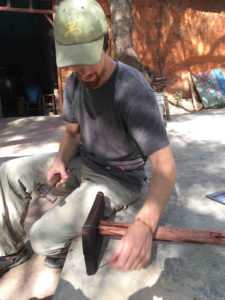 One of the other workers attached the old paddle to the new handle with a single screw which lasted through another session of bazuqueando, but then the paddle started to spin around on the handle. Eric sat down to repair it with Lucy looking on. He added some large staples to the handle and strung wire around the paddle on each end and attached it to the staple. Afterwards, the bazooka was strong and solid, and Lucy was raving about how good it was.
Each session of bazuqueando took 30 minutes, which left plenty of time for labeling and bottling. Bottling is a four-person operation. One person sanitizes the bottles by pouring a small amount of wine in each bottle, swishing it around and dumping it into the next bottle. The second person fills the bottles with wine from the tank. The third person tops off the level of wine in each bottle with a small squeeze bottle, and the fourth person corks the bottle with the corking machine (manually). The corker filled a crate with the finished bottles and then lined them up on the floor in a big square that was easy to count. The first day we bottled 310 bottles of a red wine blend which was in tank 9 (the tank in the bottling room). The second and third days of bottling, we had to manually blend the Cabernet and Sangiovese wines in a 2:1 ratio which meant filling up two 5-gallon buckets of Cabernet for every one 5-gallon bucket of Sangiovese from the fermentation room and carrying them bucket by bucket to tank 9 in the bottling room. There were 95 gallons of Cabernet and 55 gallons of Sangiovese, but tank 9 only held 55 gallons, so the 2:1 ratio got a little messy in this process. In total, we bottled 1,076 bottles of wine.
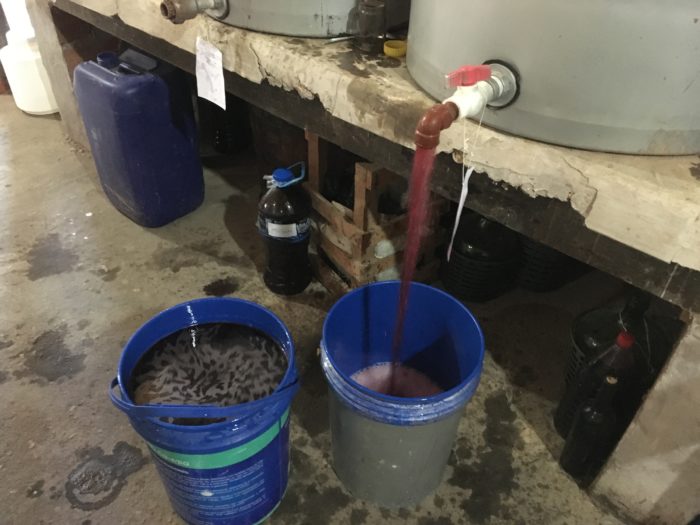
Two buckets of Cabernet 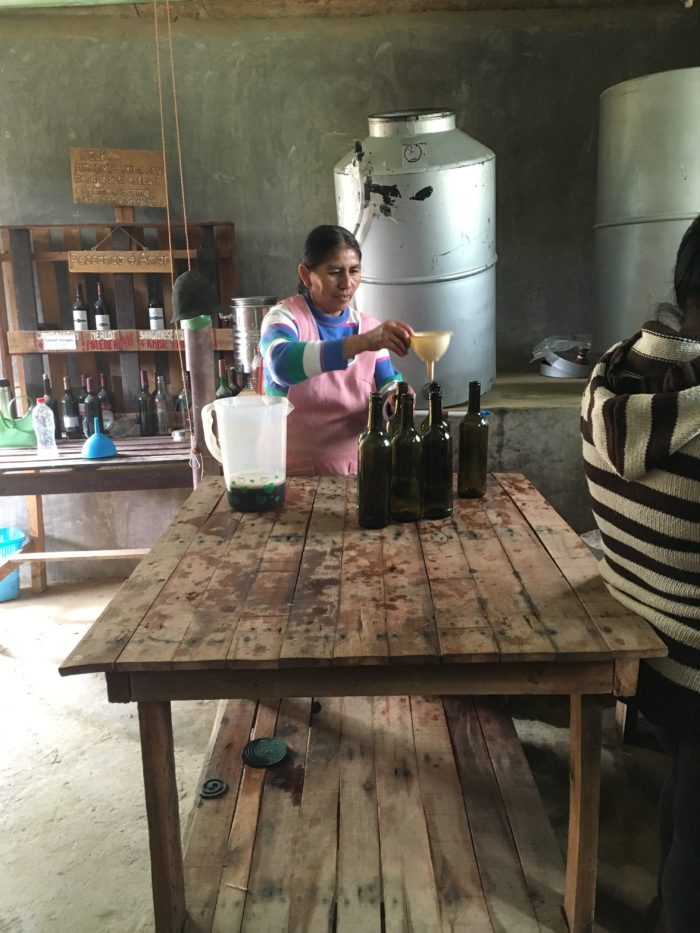
Filling the wine bottles 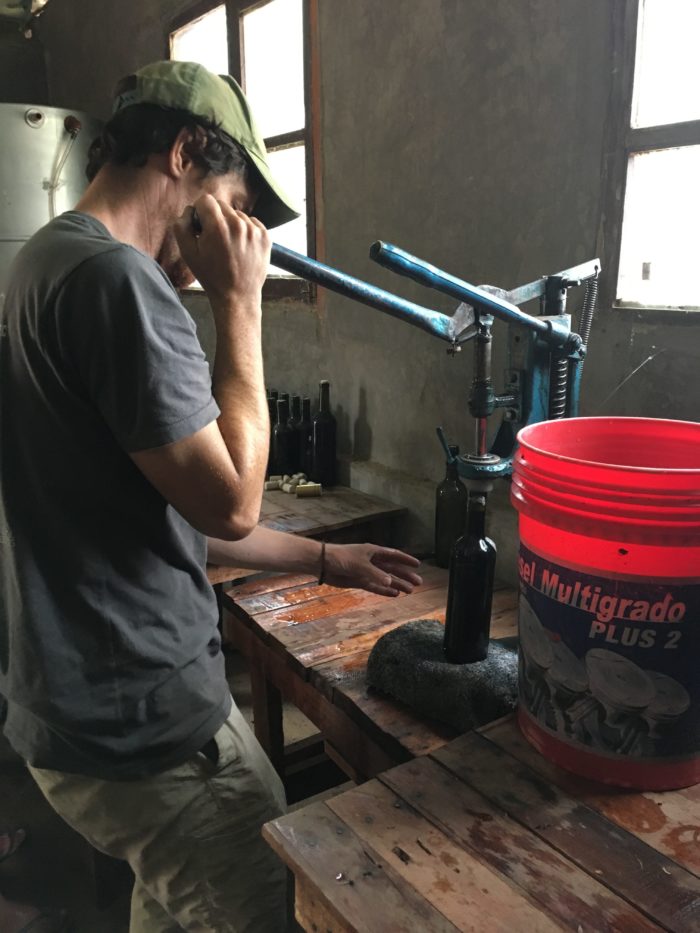
Corking 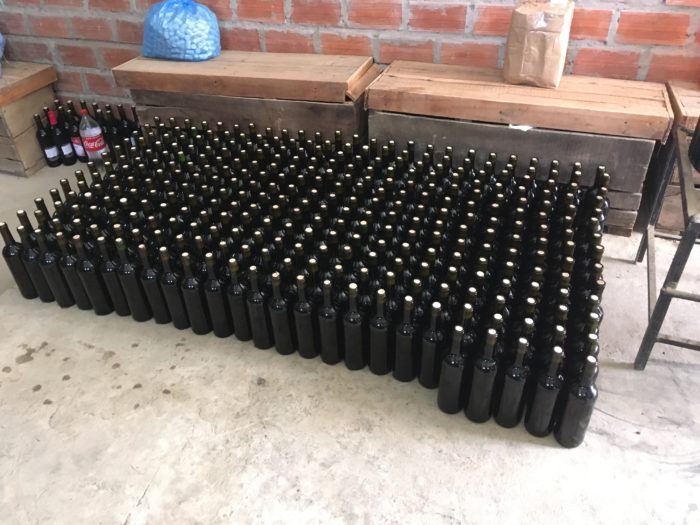
330 bottles of wine
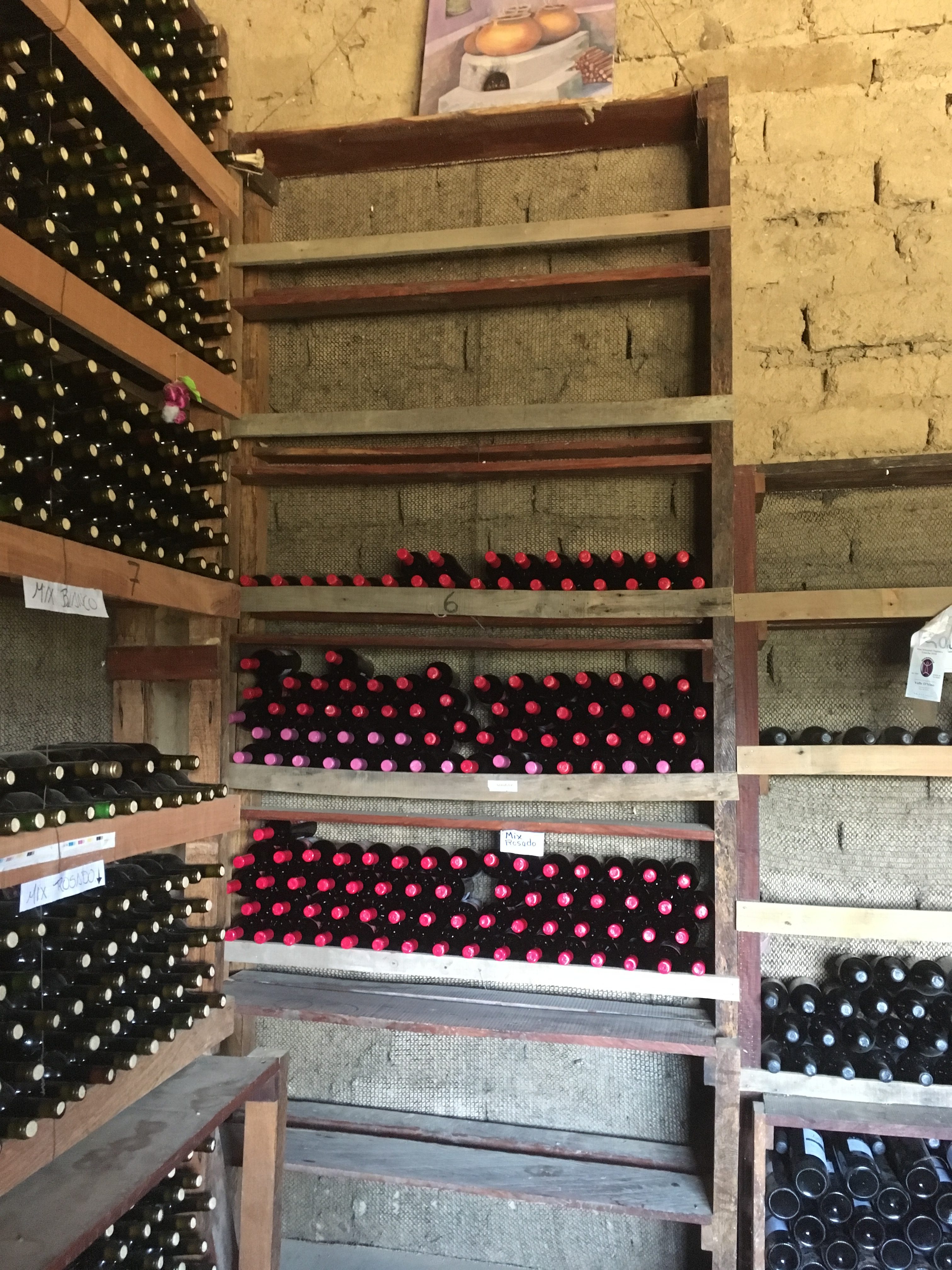
After bottling 1,076 bottles of wine, we needed to put them somewhere. The storage room of the bodega is lined with these amazing, but sort of terrifying, bamboo shelves. We were already quite familiar with these shelves having labeled many of the bottles from here and moved them into the finished wine storage area; however, racking the bottles on the shelves is a different art than taking them down. The shelves have chicken wire in the back but nothing on the sides to frame the shelves. 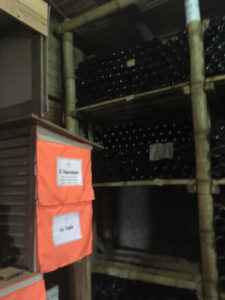 You can’t quite fit 14 bottles across the bottom and 13 don’t fit snugly which means as you build the rows the bottles on the edges threaten to slide out or tilt downwards causing the whole pyramid to be rather precarious. The solution is to shove small and medium size planks of wood in the rows of bottles at various points to level them out and keep the whole pile from crashing down. We ran out of space on these shelves, so the next day we had to carry 430 bottles outside, around the corner, and down to the cave 12-14 bottles at a time in a crate. We handed the crate up to Eric who was perched in one of the cave shelves racking the bottles. The cave shelves are sturdier, but carrying the bottles all the way there was hard work.
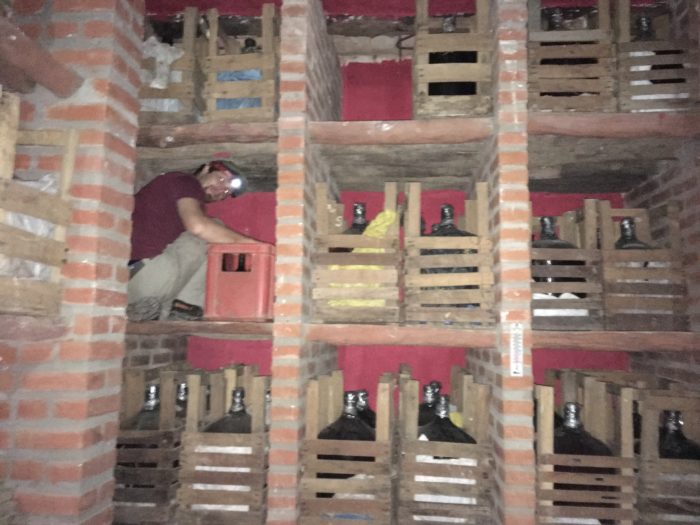
Eric racking wine bottles 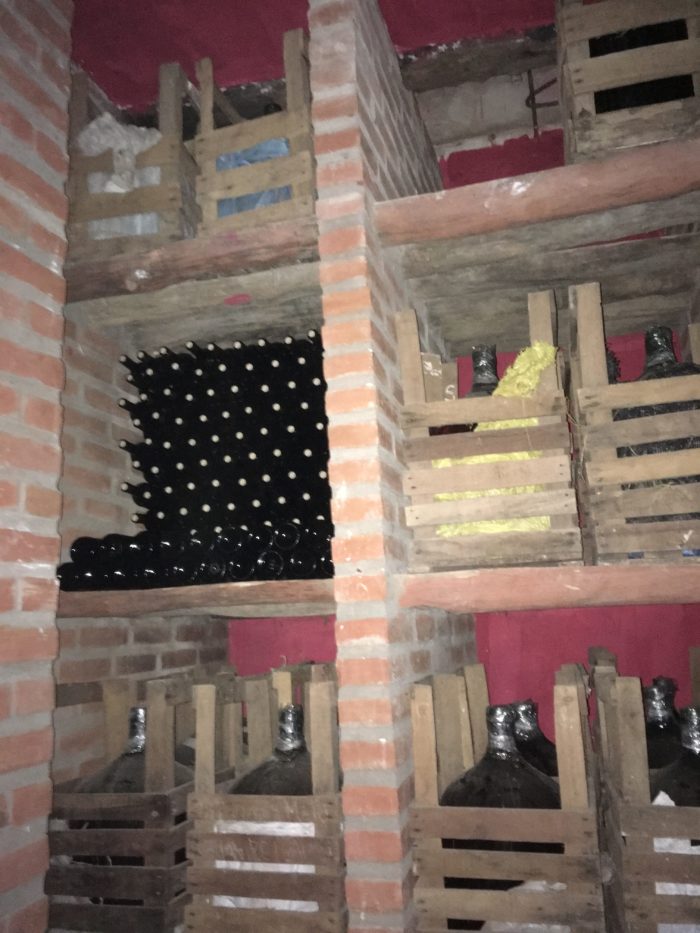
Finally done
WWOOFing was a lot of work, but we really enjoyed learning about the process of making wine and the more authentic Bolivian experience we got. WWOOFing is also great for the budget. Over the 14 days we worked at the winery, our average daily spend was $6.92 not including the $18.97 we automatically incur every day for our Bolivian and Paraguayan visas and our travel insurance. Our daily average to date when we arrived at the farm was $105.42. By the time we left, our daily average was down to $88.54, so we can confidently say: WWOOFing is working!
Loved reading this!
I enjoyed reading this as well. Jess we need to see some pictures of you, otherwise it looks like Eric is doing all the work, which I know is not true!
Haha! I’ve expressed the same concern! My co-photographer is on notice.