

We caught the bus to Abancay for another WWOOFing opportunity without really knowing what we would be arriving to. We’d had a miscommunication with our original intended host, Karol, who now had some French WWOOFers arriving and didn’t have room for us in his house. He felt bad reneging on his “agreement” with us even though it was our fault for not being more responsive, so he offered we could stay in a “tree house” with his friend who also does WWOOFing.
We thought by this point we’d had every bus experience imaginable, but this one was surprising. The scheduled departure from Cusco was 9:15am. At 9:09, people on the bus started stomping their feet, banging on the windows and yelling “hora! vamos!” It was clear they thought the bus was late, but we were confused because our tickets definitely said 9:15. It’s hard to imagine so many people can be wrong about the departure time of the bus, but when the bus pulled away at 9:15 on the dot, we were pretty sure that’s what happened. We saw a few other instances of the advertised time of the bus not matching the ticketed time, and we started to wonder if the bus companies were trying to adjust for Latin American time.
We arrived in Abancay with instructions to go to the “tree house” and Karol would meet us later. We found the tree house, which from the outside looked rather haphazard and precarious with planks of wood balanced across the river, broken car windshields scattered around, and sheets hanging down, but there was no one there. A neighbor who was borrowing a hose suggested we sit down and wait, so we carefully took a seat on some wicker furniture balanced on planks of wood spanning the river. We were there for 90 minutes but Octavio, the owner of the tree house didn’t appear. Two small children arrived and insisted he was sleeping because the door was open, but we weren’t about to go exploring in this crazy-looking house.
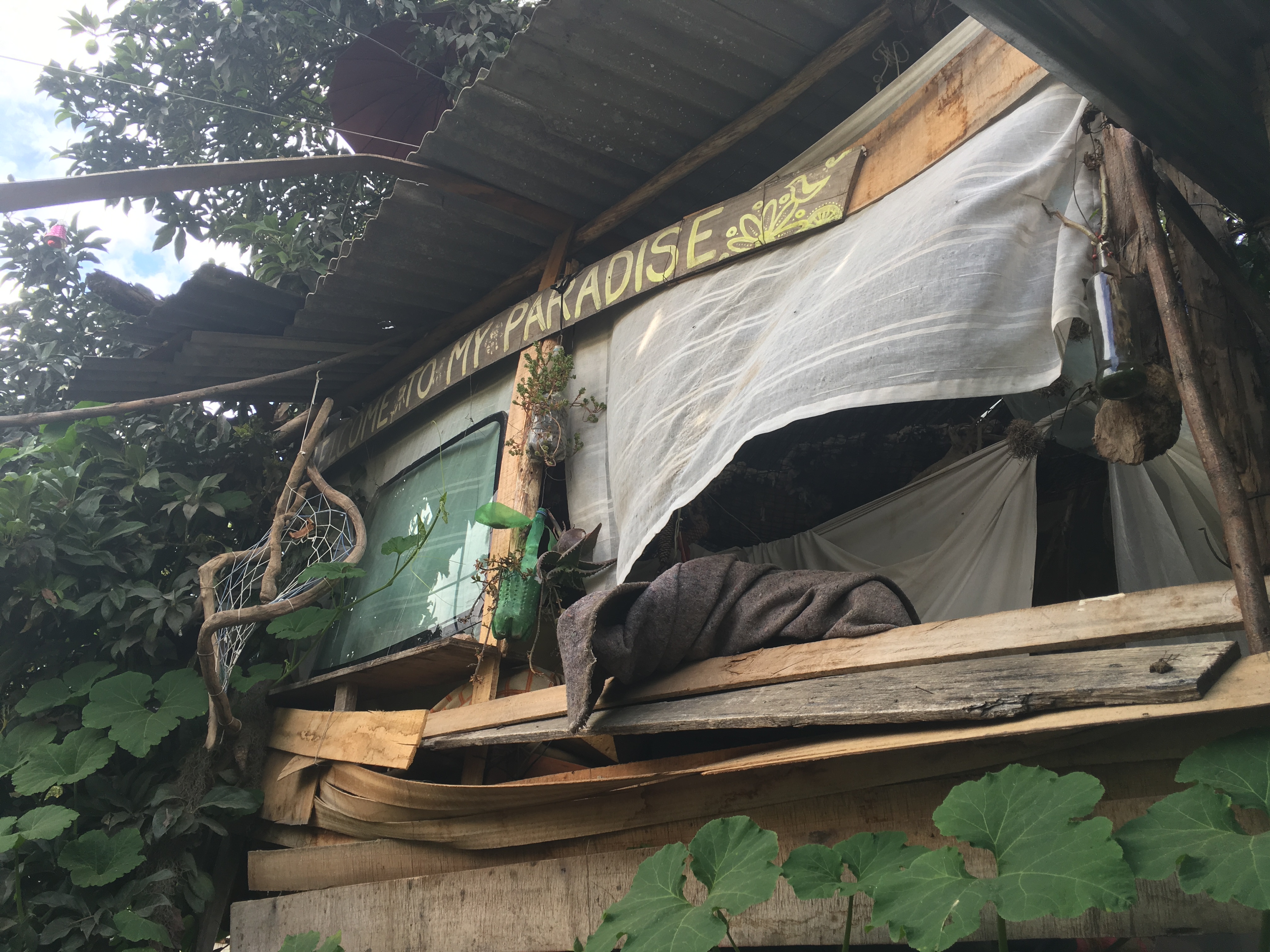
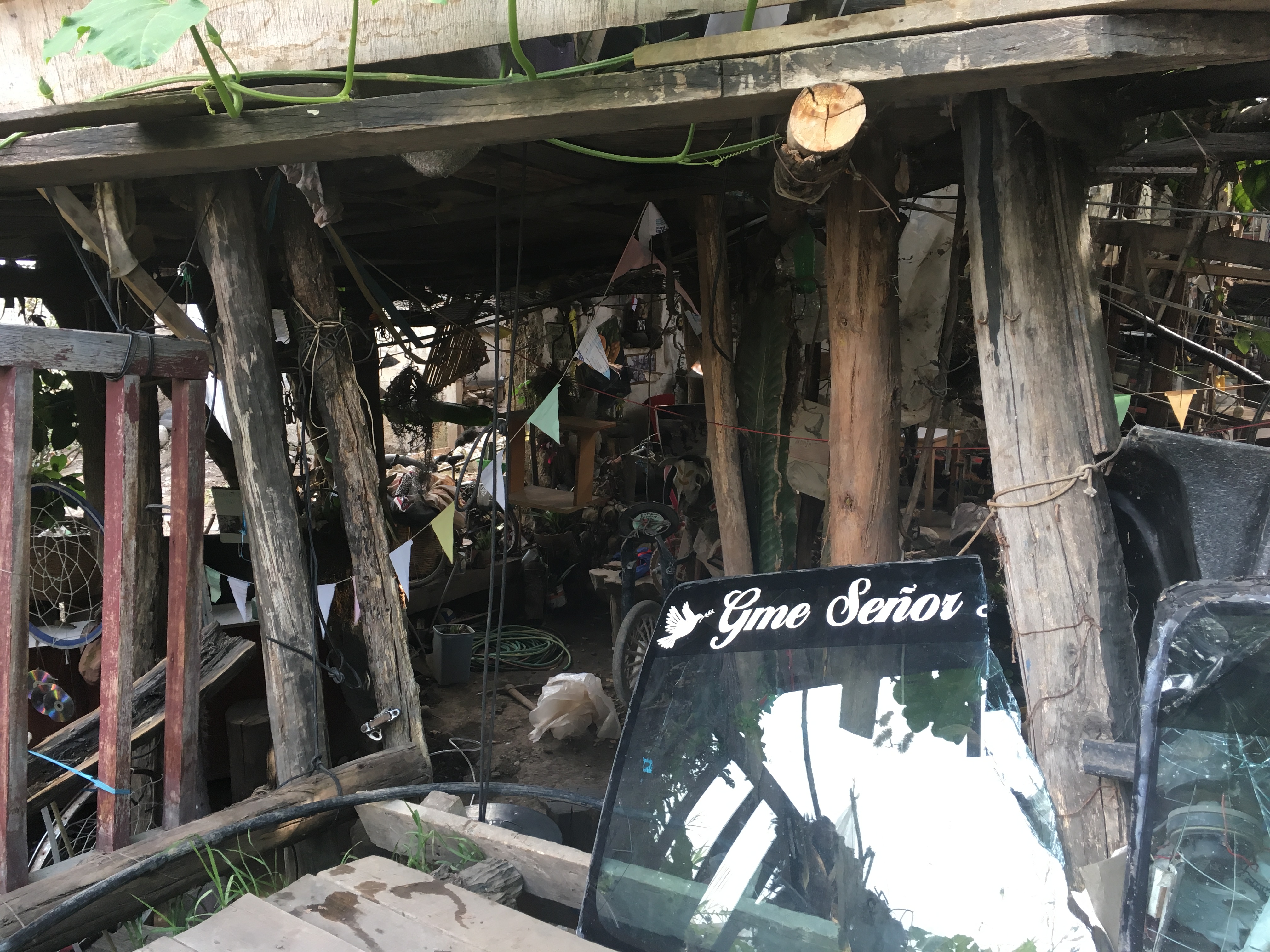
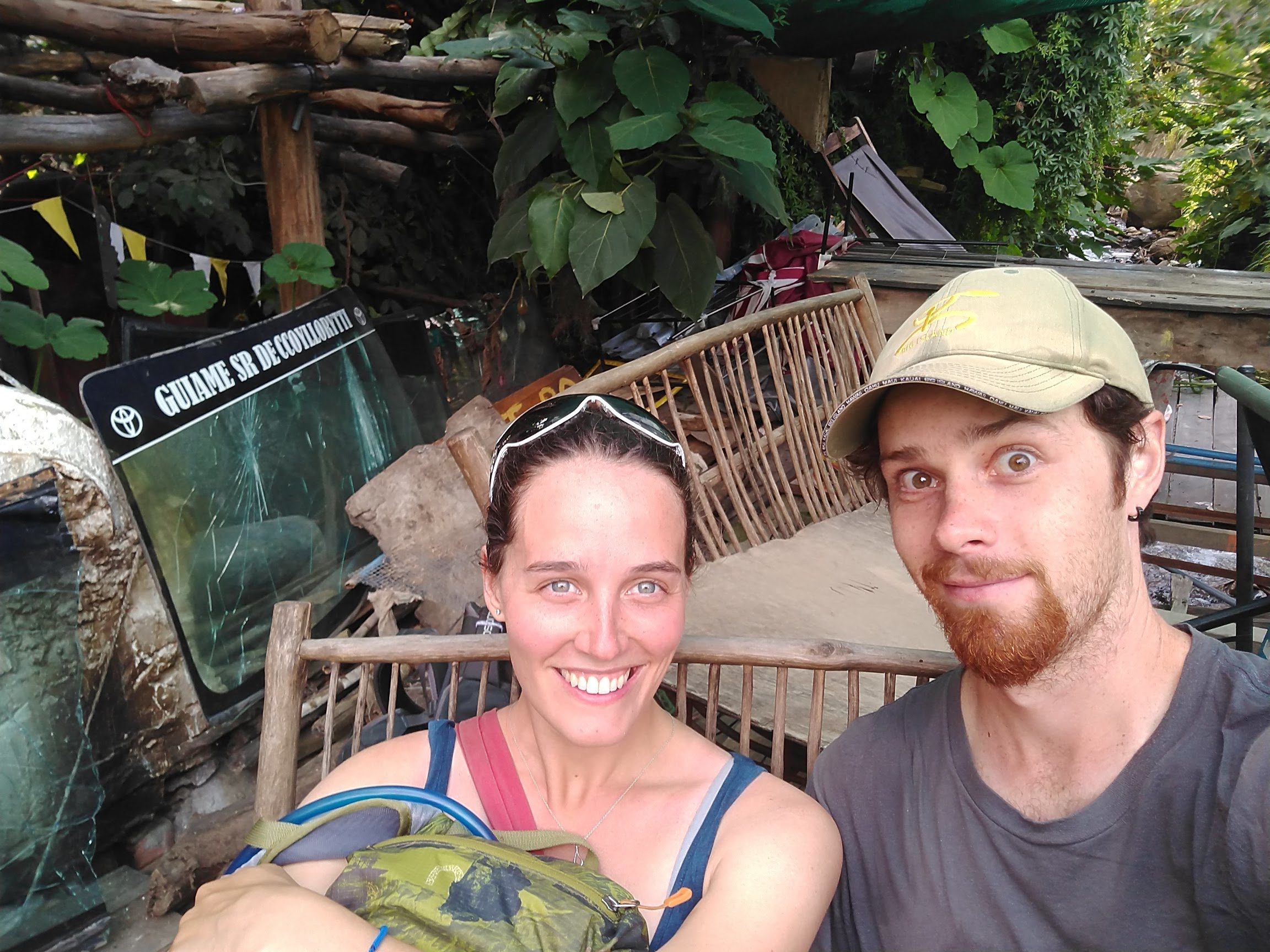
After 90 minutes of waiting we went in search of food, ate a big meal, and returned to the tree house to find Karol and two other people inside. The tree house has a bunch of nets strung across it for beds so we climbed up and lay in one for a while. Pretty soon the tree house had turned into a party. There were three Italians, two Venezuelans, us and a bunch of Peruvians. The Italians had brought eggplant parmigiana and the Venezuelans were preparing various mushroom sauces from local mushrooms they had harvested. It turns out the tree house is a really cool place where people are always showing up to hang out. While we imagine it would have been an awesome place to spend a week, we decided we would be more comfortable in a room with walls and a bed. And Karol’s French WWOOFers weren’t coming anymore, so his extra room was free. We got a ride to Karol’s place at 12:45am after eating dinner with the crew at the tree house and were told to get up at 7am the next day for work.
Over the course of the next six days, we helped Karol with his projects in the countryside. He owns a small plot of land roughly a 40-minute walk from the city and has also taken over his grandfather’s ranch property higher up in the mountains.
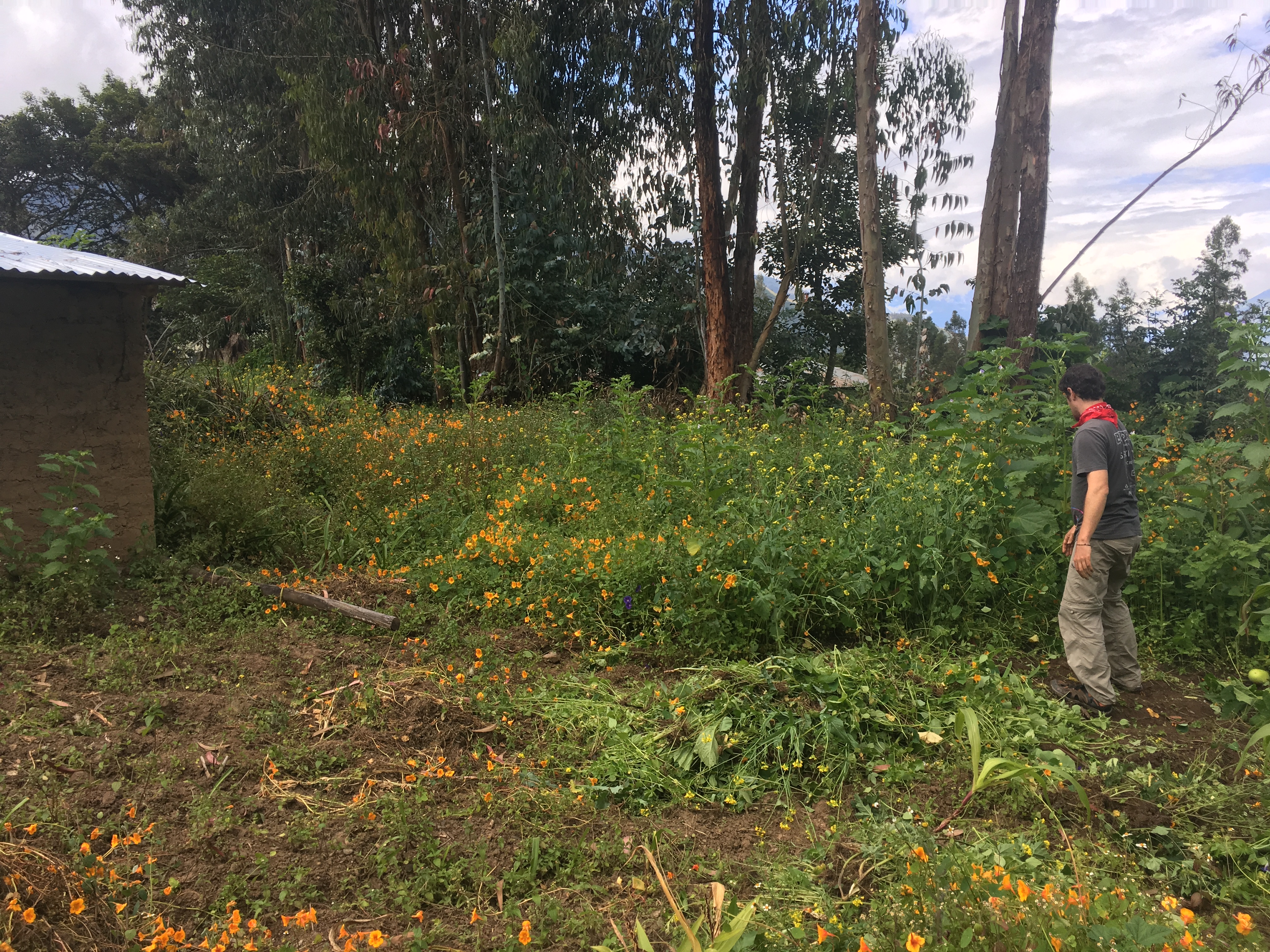
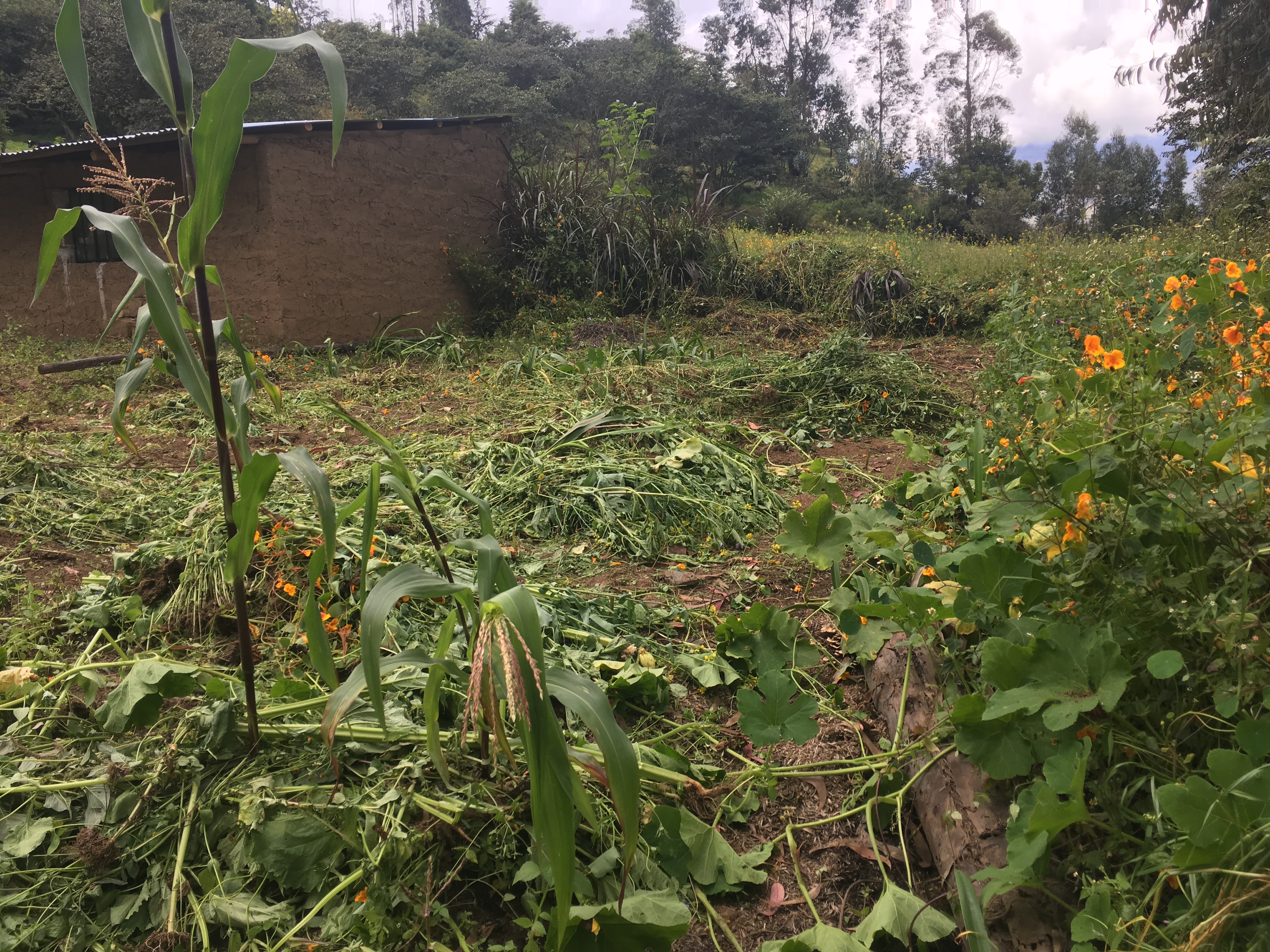
On Monday, after setting our alarms for 7am and then laying in bed until we heard Karol get up at 7:30am (he’s pretty flexible about timing), we ate a big bowl of oatmeal (Karol eats oatmeal at least two meals a day), and walked up to the smaller property. There we spent a few hours weeding a small plot of land where Karol intends to plant avocado trees. When we had cleared all the weeds, we gathered some radishes and beans and headed back down to the city for lunch.
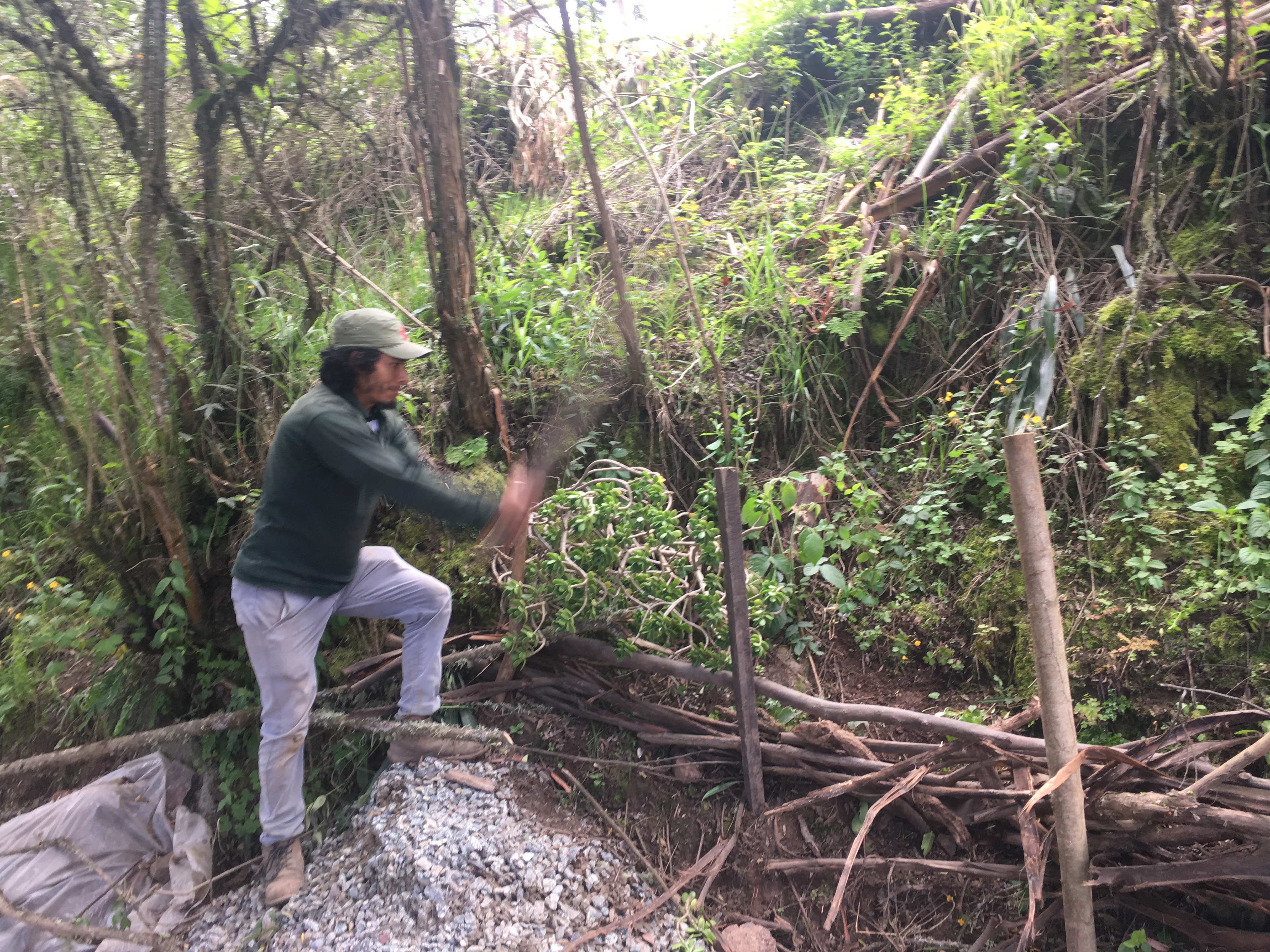
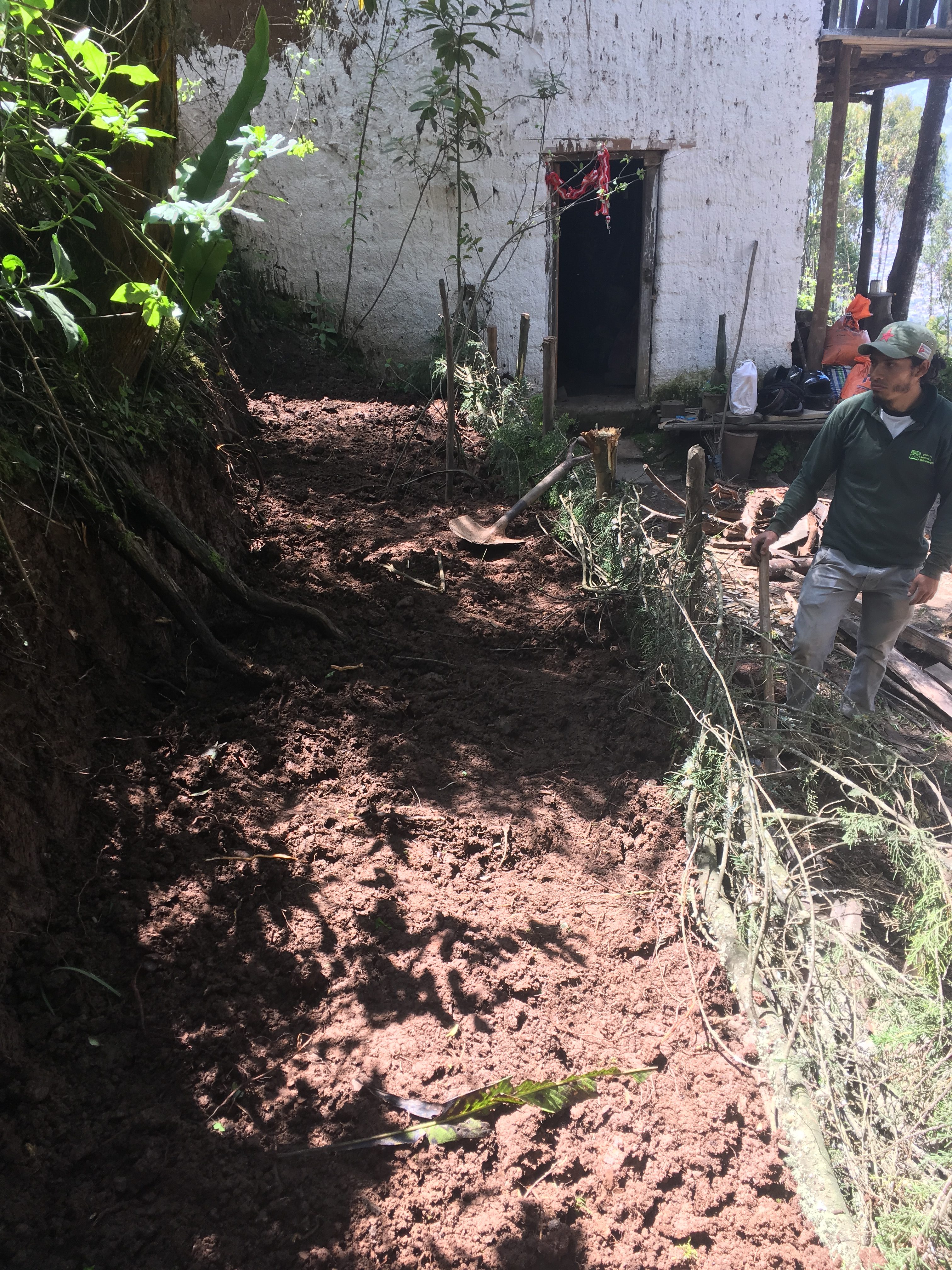
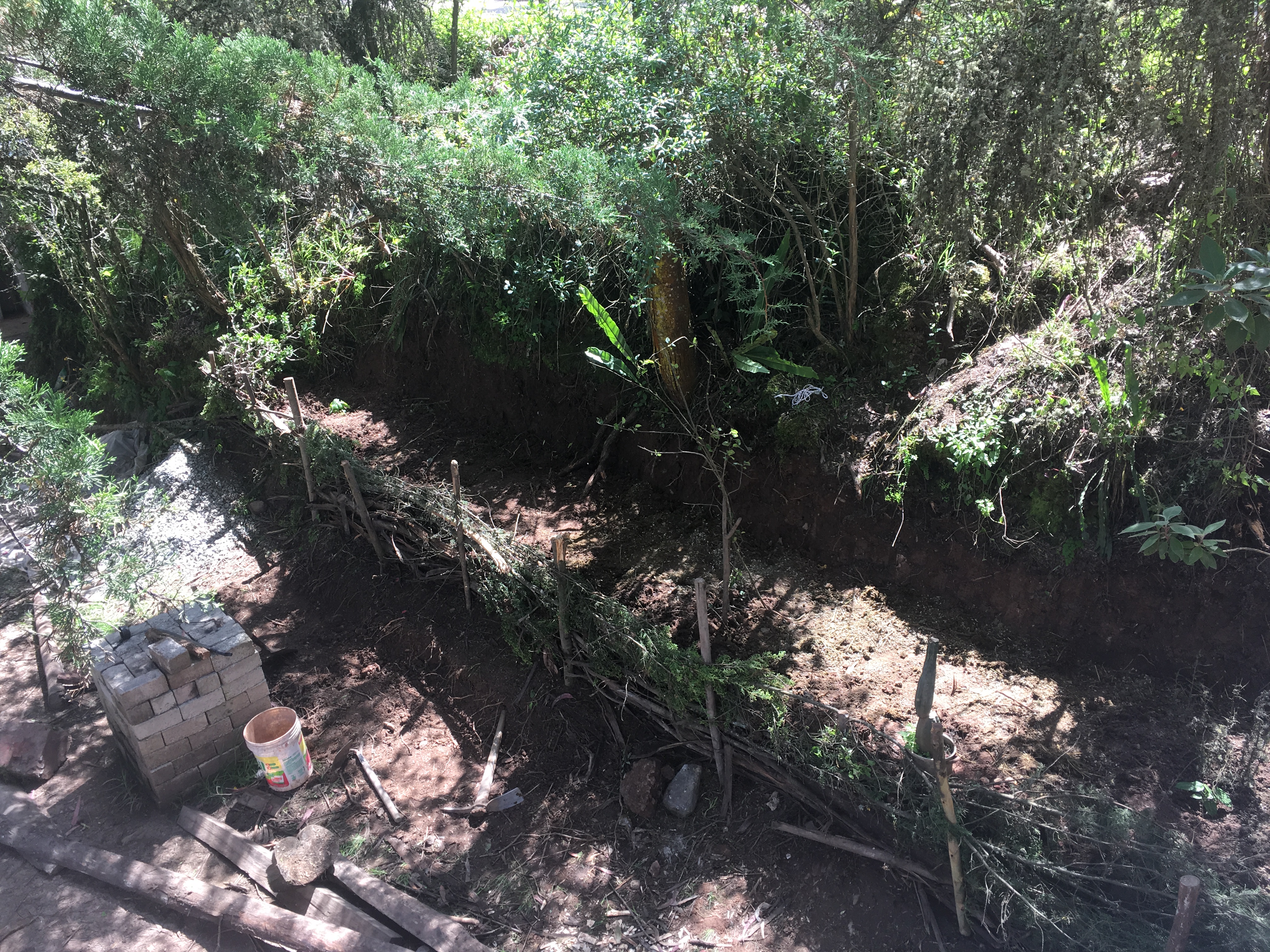
On Tuesday, we woke up at 6am so we could go to the market to get ingredients to make stuffed peppers to bring with us to work. After preparing lunch the three of us got on Karol’s motorcycle to ride up to the ranch for a day of work. The ranch is 6km away in the mountains, and it would take close to two hours to walk there. The project for the day was to create a small garden where Karol could plant herbs and aromatics near the house. Karol went to cut some trees that we could turn into stakes and Eric used the machete to give them sharp points. We then pounded the stakes into the ground approximately three feet apart using a large piece of wood. Afterwards, we put long pieces of bark and branches inside the staked area to hold the dirt in. Then we climbed inside the fence and pulled soil off the hill to create a flat bed for plants. Once the bed was done, we planted two grenadine plants and an apple tree. Then we went up to the balcony of the house to eat our lunch. After lunch we took five trees (two apples, one plum and two grenadines) down to the field below the house, dug big holes, and planted them taking care not to disturb the potato plants nearby.
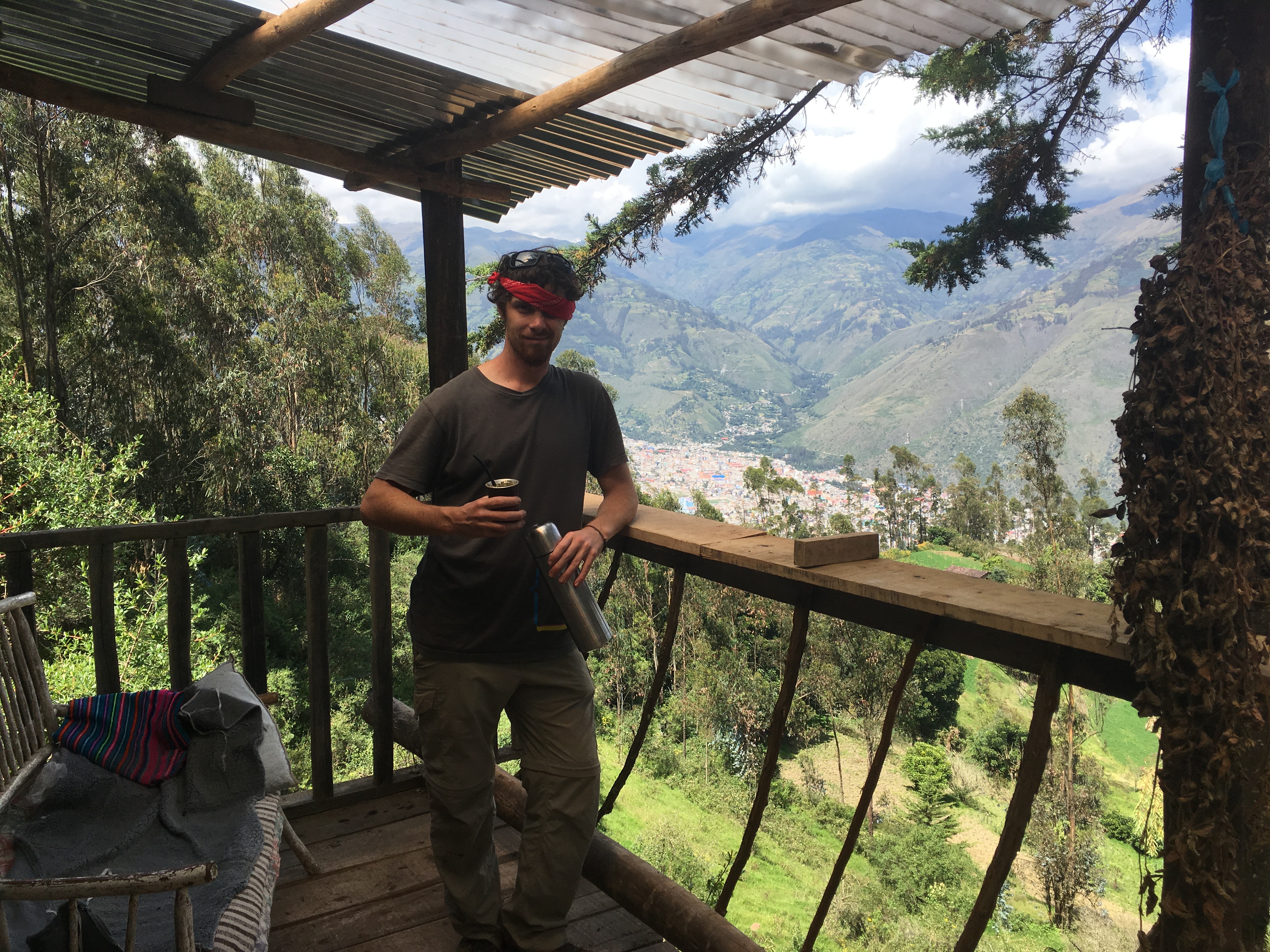
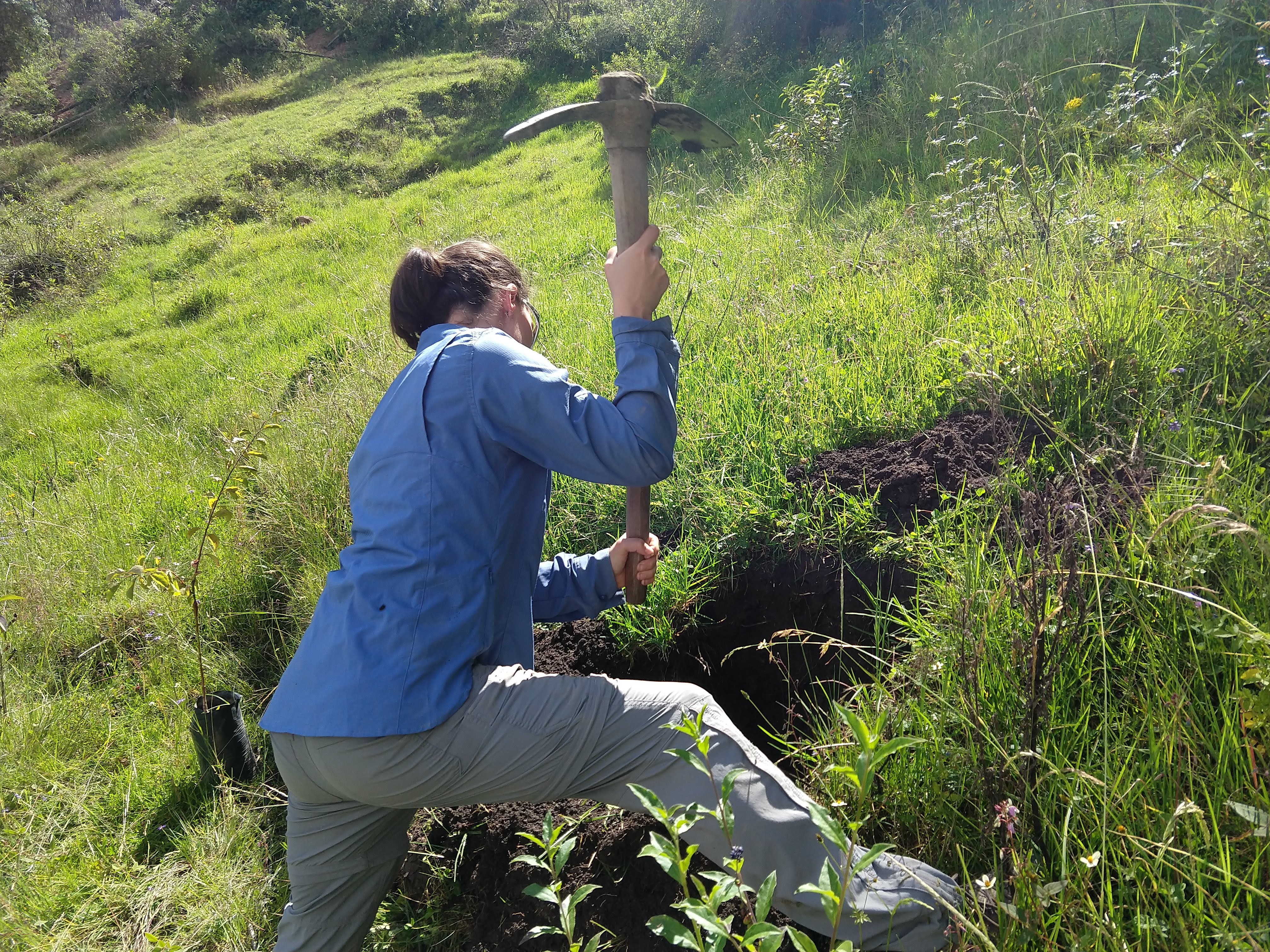
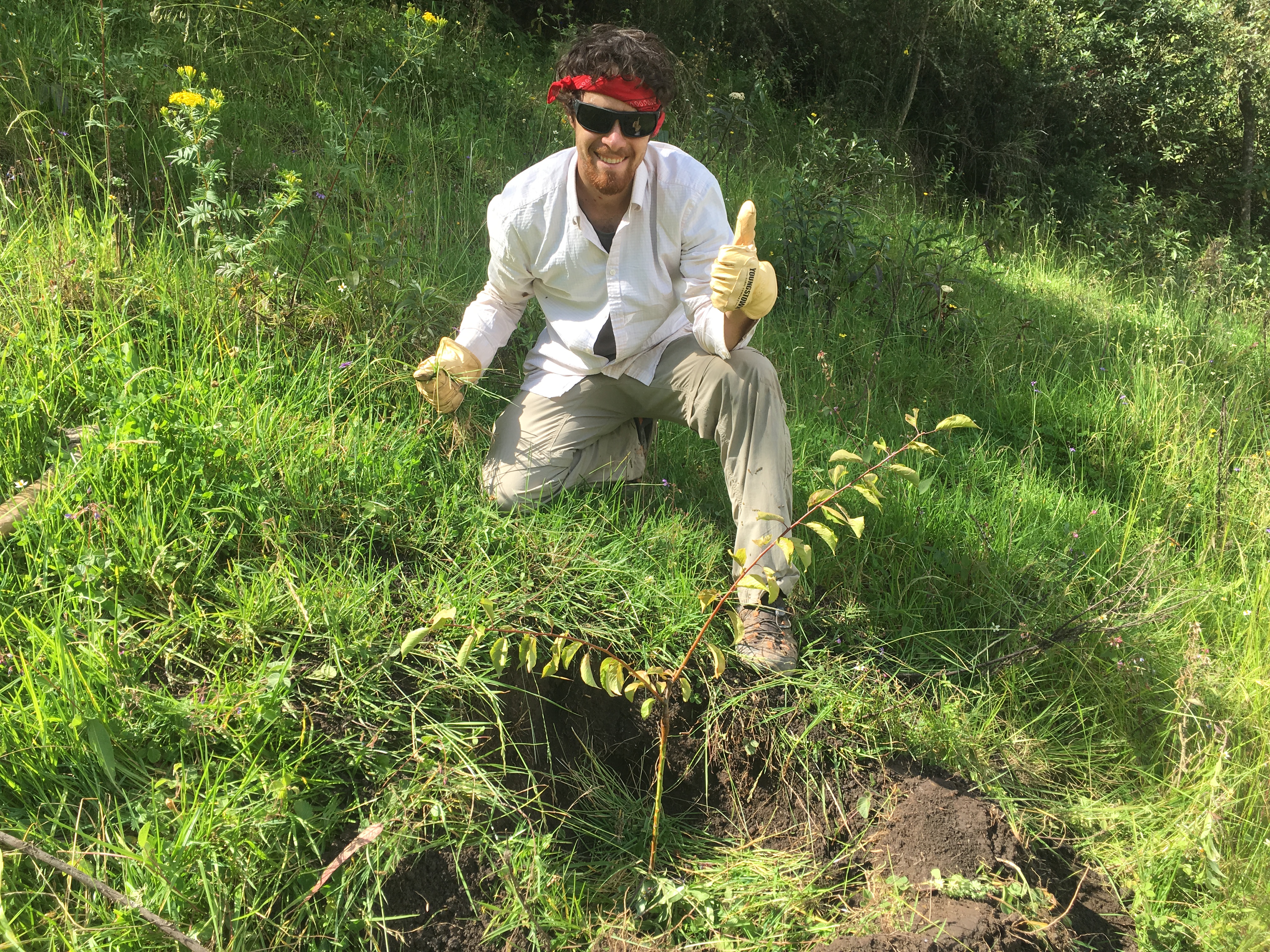
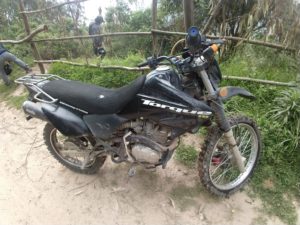 When the work was done we climbed back on the motorcycle for the slightly terrifying ride down. The roads were narrow and windy and there was a cliff edge on one side. Despite being in “bicycle mode” (i.e. coasting), it was still a bit too much adventure, and we decided to walk down in the future.
On Wednesday we had a day off because Karol had to go to a meeting for some community work he is doing. Jess took the opportunity to go to the bank to deposit money for our rainforest excursion next week and was rewarded with an interesting local experience. To make the deposit she had to go to a specific bank, Banco de la Nación, where Carolina, the owner of our rainforest tour company, has an account. The bank branch nearest Karol’s house had a long line outside, so Jess tried to find an ATM that might allow an electronic deposit (we had done this in Buenos Aires for our Bolivian visas, so it was a reasonable possibility). Unfortunately the ATM marked on Google Maps didn’t exist, so Jess walked to a different branch of Banco de la Nación where she found yet another very long line. There didn’t seem to be anything to do but wait now that we had diligently amassed the 1726 soles ($520) we needed in a series of 400 soles withdrawals executed over multiple days. So Jess stood in line for an hour before finally reaching the counter, requesting the deposit, providing the account number, handing over the money, and receiving a receipt confirming the payment. It seems crazy that anyone could conduct business if they have to wait in a bank line for an hour to make a deposit, especially when the bank is only open from 8am to 5pm, and yet, we saw lines like this outside Banco de la Nación branches every day we were in Abancay. Karol said this is not normal, that there are usually only lines like that at the end of the month when people get paid, but it was the second week of April, so we’re not sure what was going on.
On Thursday, Karol told us we could have another day off because his community meeting was actually a two-day affair. We had come to help him with his projects and were grateful for his hospitality, which included a comfortable bed and all the oatmeal we could want (with fixings: bananas, apples, honey, pure chocolate, almonds, strawberry jam, etc.), so we didn’t really want another day off. We offered to help him by cleaning the house and spent the morning sweeping the stairs and the upstairs deck, and taking everything out of the kitchen so we could sweep and scrub the floors.
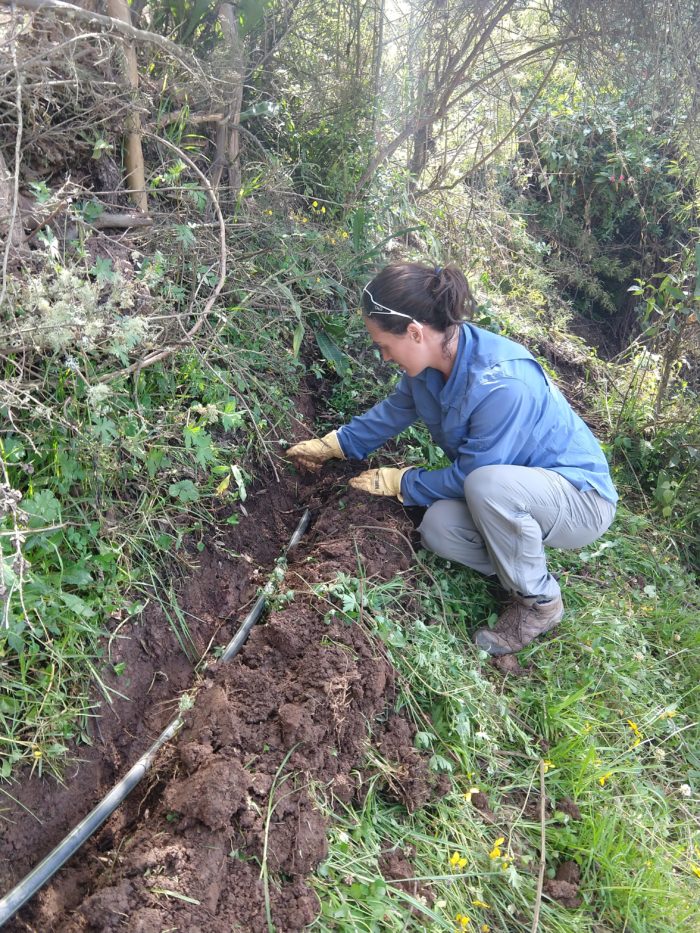
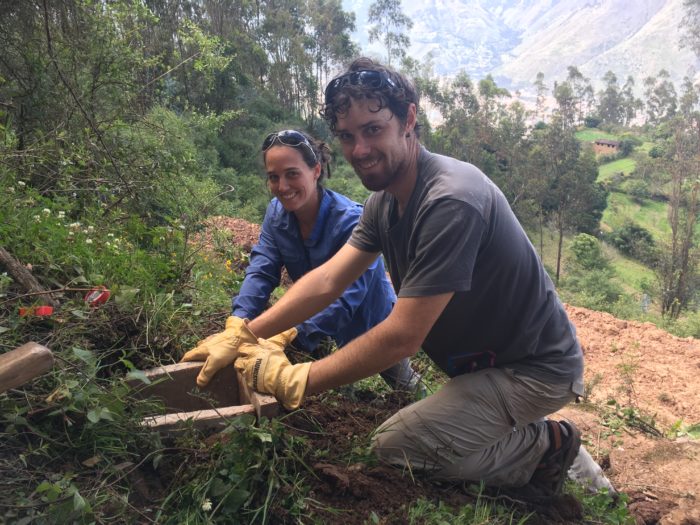
After two days of being in meetings, Karol was ready to get back to the ranch on Friday. We packed up our lunch, climbed on the motorcycle, and began the windy ride up. Our project on Friday was to run water to the bathroom on the property. Karol had a few hoses he wanted to connect to each other and lay under ground. Eric set to work with a pick digging in the hard-packed dirt near the house, while Jess’s first task was to carefully dig up a hose that had previously been buried in softer earth without damaging it. Once that hose had been retrieved, Jess started digging the trench near the source of the water to join up with the trench Eric was digging. Pretty soon we had dug a whole channel from the source to the bathroom and could lay the hose in it and cover it up again with dirt. Where the first two hoses connected, Karol installed a valve so he could easily turn the water on and off at that point. We built a small box around the valve to protect it.
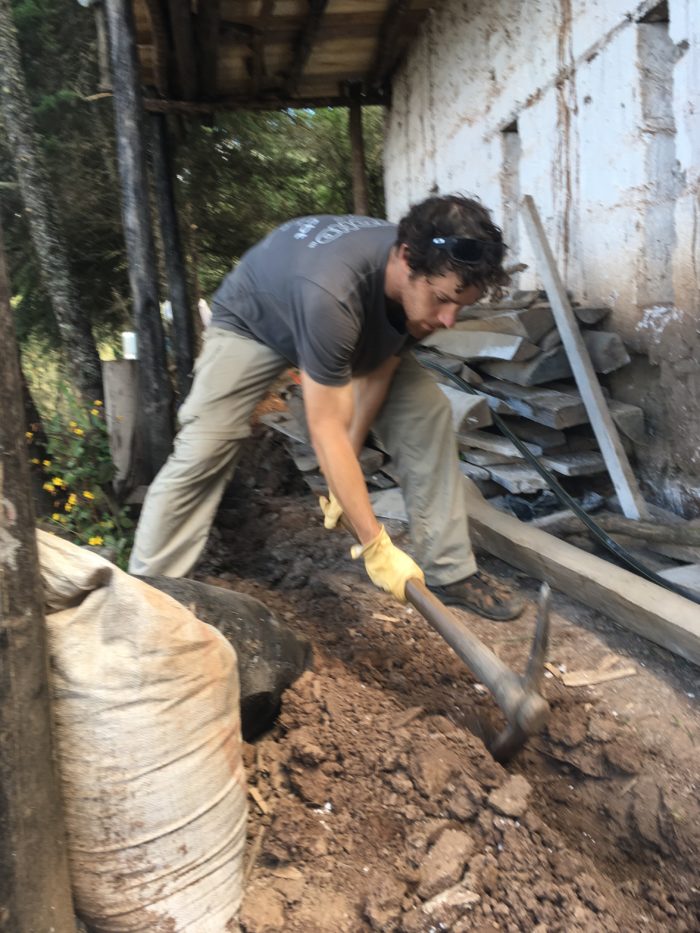
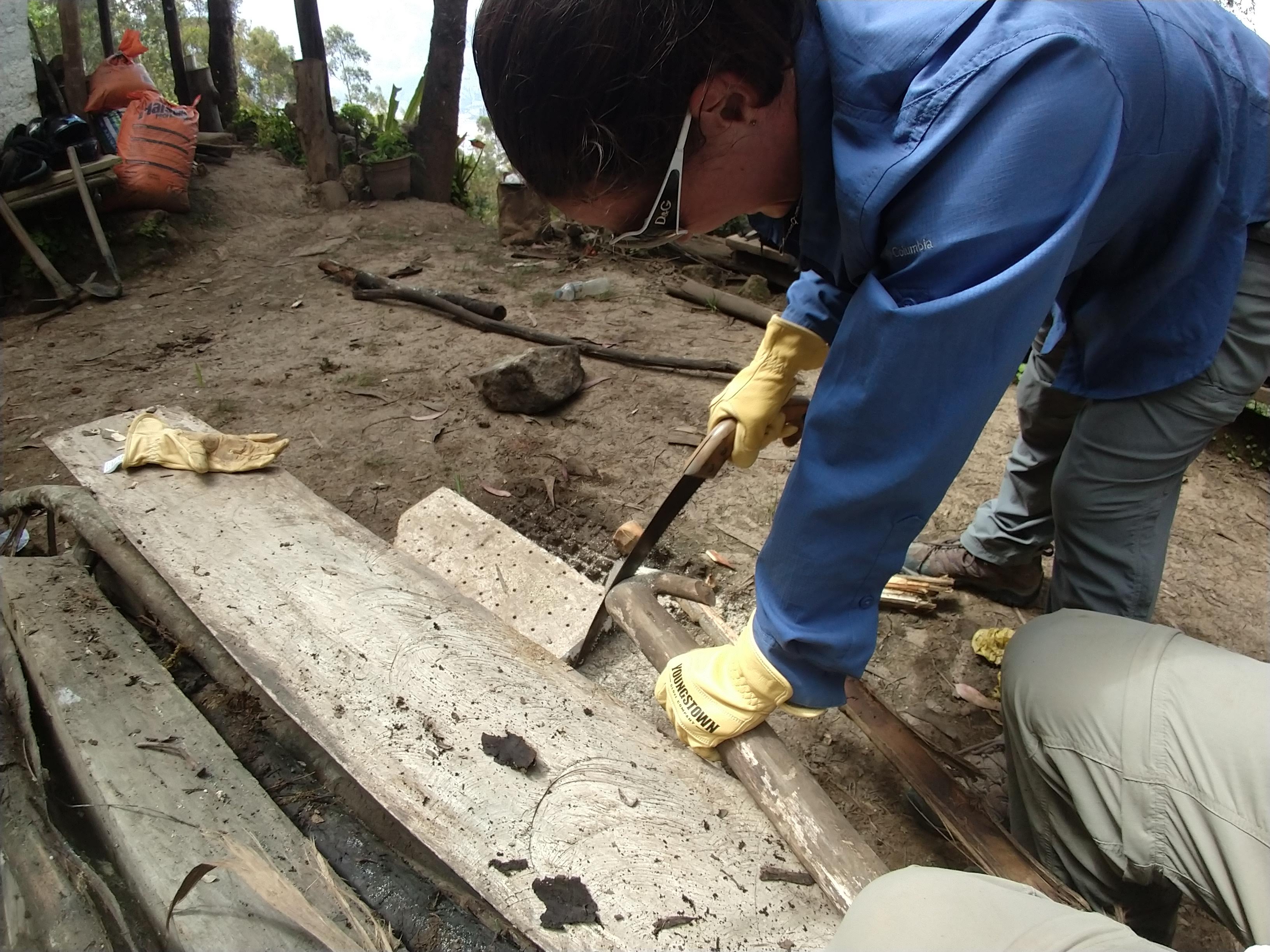
We needed to connect a third hose to the second one, but Karol didn’t have any more connectors, so we had to get a bit creative. Karol’s cousin Wilson had arrived and he suggested trying to widen the mouth of one of the hoses so the other hose would fit inside. They made a small fire in the trench to soften the hose, widened it with a rod, scored the inside of the bigger hose and the inside of the smaller hose and used a PVC joint compound to glue the two hoses together. There was some concern the PVC compound would be corrosive to a non-PVC material, but it seemed to work. Eric thought there might be too much pressure for the hoses to stay together, so we did a little test by blocking the open end of the hose with a rod while the water was on. Some water still got through, so we’re not sure it was a representative test, but the hoses stayed together, and we declared it good enough.
Afterwards we went to Wilson’s country house, which is just down the street from Karol’s ranch, and saw his guinea pigs which he raises for his family’s food. Then we went onto Wilson’s land and picked tunas (the fruit from a particular cactus), and jungle tomatoes before gathering as many bean pods and bean pod plants as we could. Karol says these bean pod trees are really good for the soil and the land on the ranch needs some rejuvenation, so he intends to plant these bean pod trees all over. When we had as many plants as we could carry, we went back to the ranch to gather our things and head back down to the city. Planting would be for another day. Since we did not want to ride down on the motorcycle again, we told Karol we would walk down and started the 90-minute trek down.
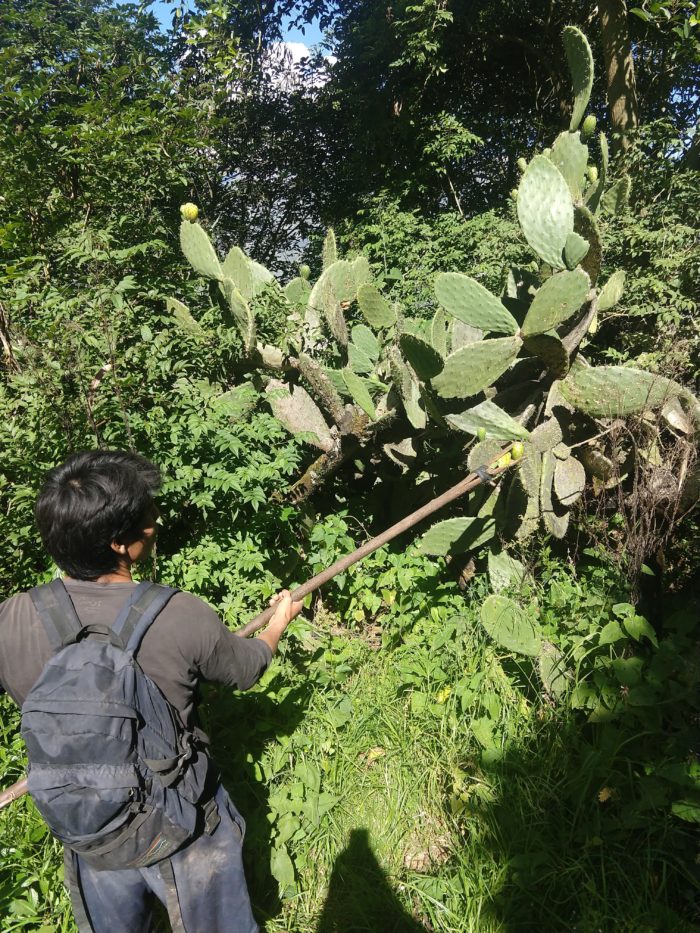
Picking tunas with an awesome picking stick 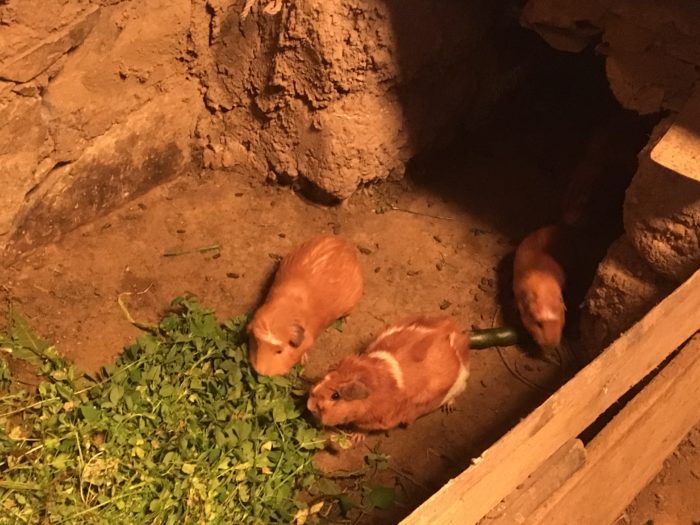
Guinea pigs having lunch! 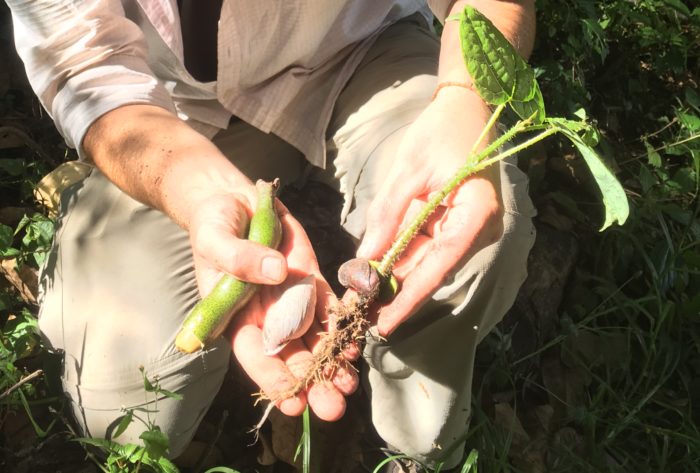
One of the many plants we gathered to improve the soil
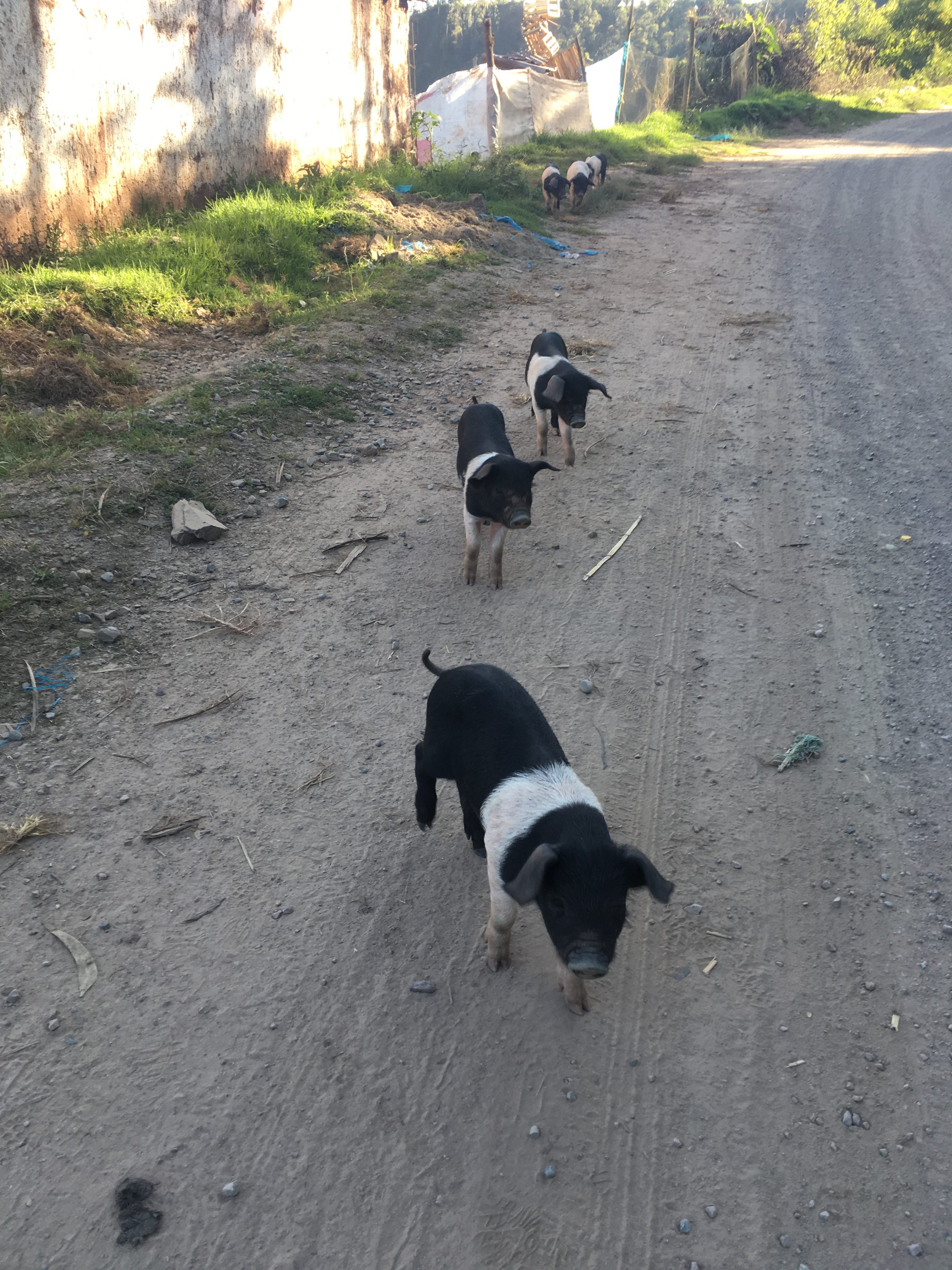
It was a beautiful walk with pretty views of Abancay. We saw lots of animals along the way including some pigs that escaped their home and followed us for a while. Part way down we saw Wilson also walking down. He walks up and down the hill each day in his flip flops!
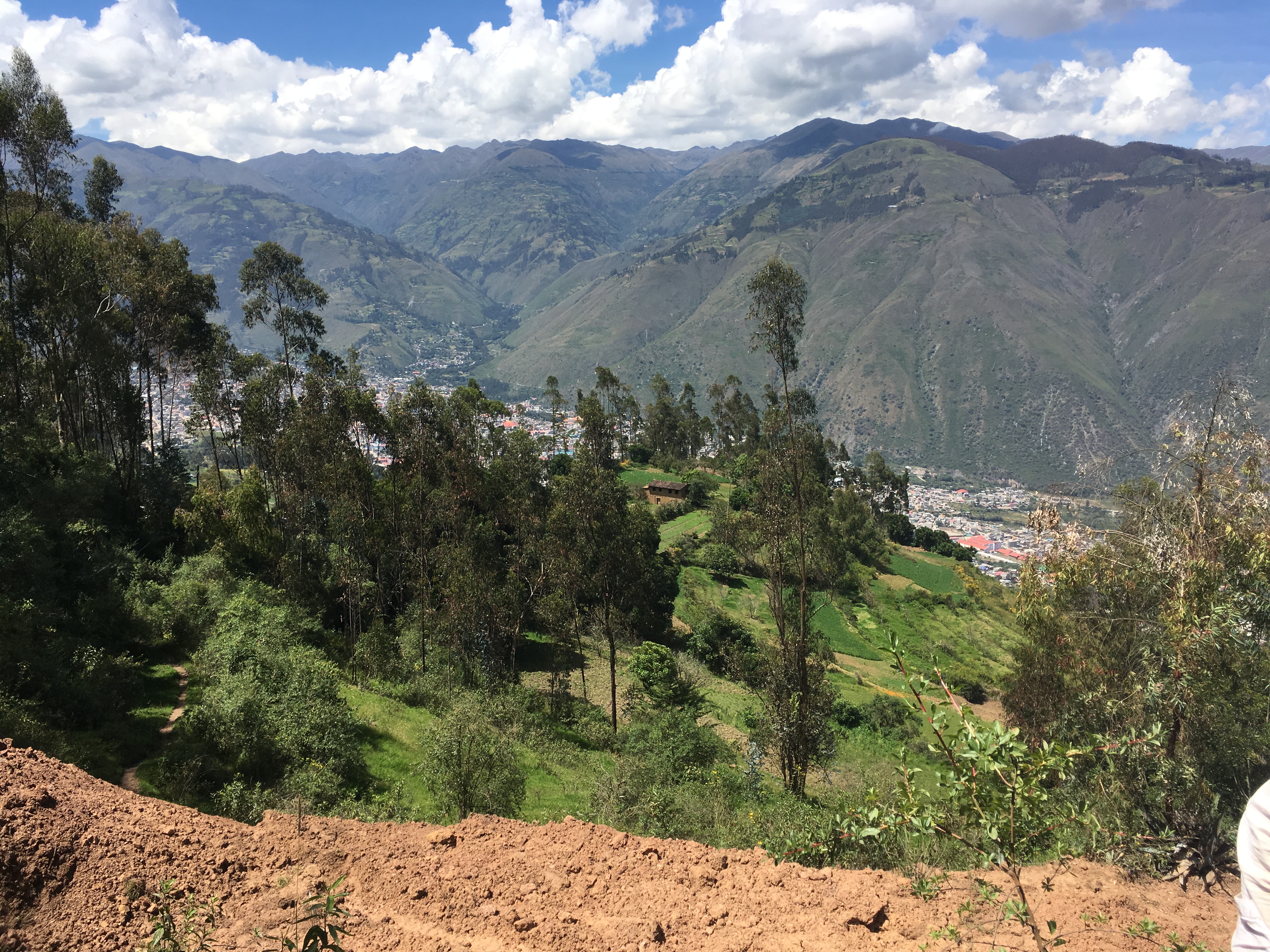
On Saturday, Karol had to take care of his three-year-old son, so Saturday ended up being another rest day for us. We played cribbage, tossed a ball around with the three-year-old, and enjoyed a nice, tranquil last day in Abancay. In six days of WWOOFing, we did four days of work, but we really enjoyed our time with Karol. For him the cultural exchange is more important than the work exchange, so he was happy. And we got to spend a pretty relaxing week in a beautiful city in Peru that most tourists never bother to go to, and we spent virtually no money. Our average spend over the six days was $3.93.
Today we caught a bus back to Cusco for a night before we depart to the rainforest tomorrow.