

Our taxi arrived at the appointed time and whisked us away to the Cusco airport for our flight to Trujillo. This was our first flight since arriving in South America and it was confusing to be in an airport again. We boarded our uneventful flight to Lima and then went in search of the VIP lounge at the Lima airport for our three-hour layover. Eric couldn’t quite believe his eyes when he saw delicious food, beautiful cocktails, and showers, all for free! (Thanks Chase Sapphire Reserve!) It was only 9:30am, but it seemed like a good opportunity to take advantage of a free pisco sour. By 1pm, we had arrived in Trujillo and were taking a taxi to the small nearby beach town of Huanchaco.
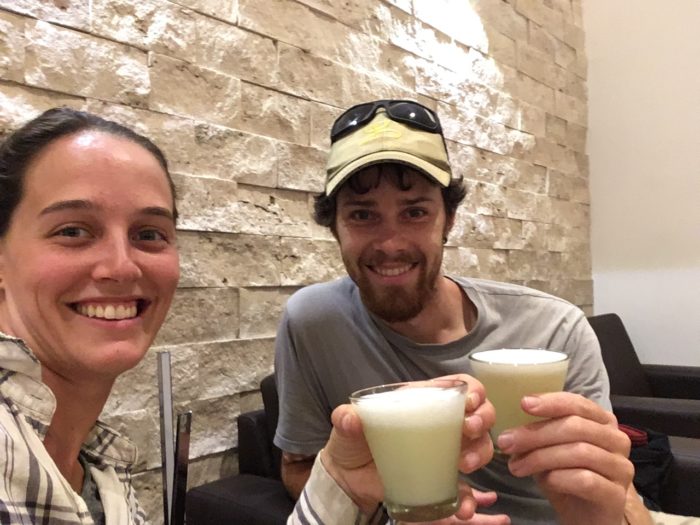
We had read in another blog that Huanchaco was a great place to stay because it’s nicer and calmer than Trujillo, and it’s right on the water. After a lot of big cities, we were ready for something a bit more manageable. Huanchaco was a great place to recharge after our rainforest adventure. We kicked off a weekend of relaxation with a yoga class at ATMA Hostel. Yoga classes are offered at 6:30pm most evenings for 7 soles ($2) for people staying at the hostel (slightly more if you’re not) and the yoga is popular. Afterwards we went out for our first ceviche of South America.
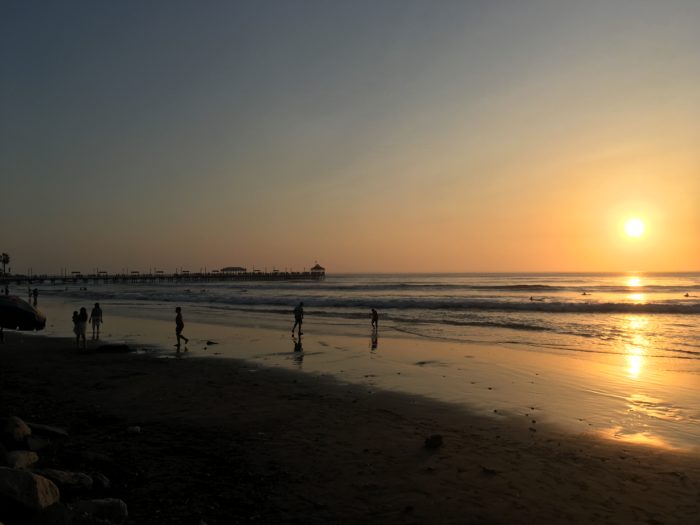
Peru is known for ceviche, a dish of raw fish cured in lime juice and usually served with a deliciously spicy sauce called tiger’s milk (leche de tigre). We had been avoiding ceviche while we were inland, but on the coast the fish is fresh and ceviche is everywhere. Plates seem to range from 20 soles to 45 soles ($6-$14). For our first ceviche experience we went to a restaurant on the Main Street with a view of the ocean and shared two ceviches: one with corvina (white sea bass) and one mixed ceviche with a fish and seafood blend. Both were deliciously citrusy and fresh tasting, although we enjoyed the variety of the mixed ceviche more. The tiger’s milk was spicy and flavorful and really made the dish.
While in Huanchaco we also took our first surfing lesson at the Muchik Surf School. Our hostel had recommended another surf school, but it was slightly more expensive and couldn’t beat Muchik’s awesome TripAdvisor reviews. Muchik offers a money-back guarantee if you don’t stand up on the surf board during the first lesson. Of course, they caveat that guarantee with lots of conditions, like if the instructor determines you don’t have aptitude, so don’t count on not paying for your lesson. Even so, between 30 minutes of classroom instruction and an hour and a half in the water, there was no way we weren’t going to stand up! The instructors were really good and riding a wave towards shore on the board was super fun! We felt so solid on our boards we were even throwing in some dance moves once we were on our feet. Muchik offers discounted gear rental for the day of your lesson if you want to continue practicing, but we were so tired afterwards, we went in search of more delicious ceviche instead.
The main tourist attractions in the Trujillo/Huanchaco area are the archaeological sites of Chan Chan and the Huacas del Sol y de la Luna. Eric wanted a rest/work day, so he stayed in the hostel while Jess ventured out to see the sights.
Getting to Chan Chan from Huanchaco is easy. You can take either of the big red and yellow buses (2 soles / $0.60) from the Main Street in Huanchaco and tell the driver you want to get off at Chan Chan. The bus will stop on the side of the road and you have to walk down the long dirt road to get to the entrance. The entrance fee is 10 soles ($3) and you can hire a guide for an additional fee, but it’s more reasonable if you can share the cost with multiple people, so Jess went it alone.
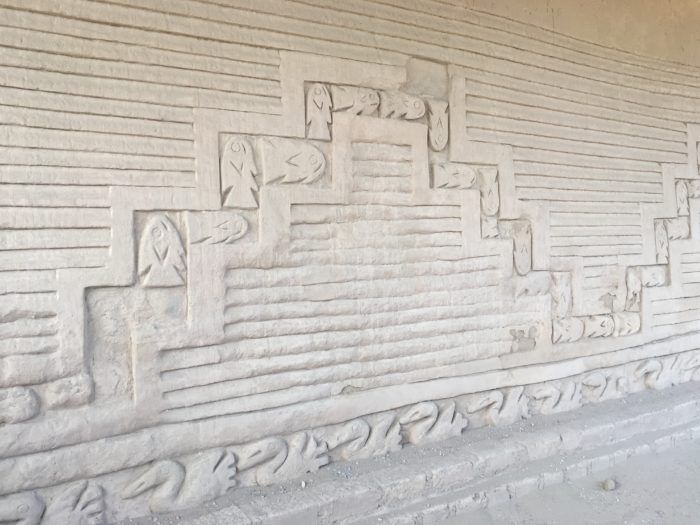
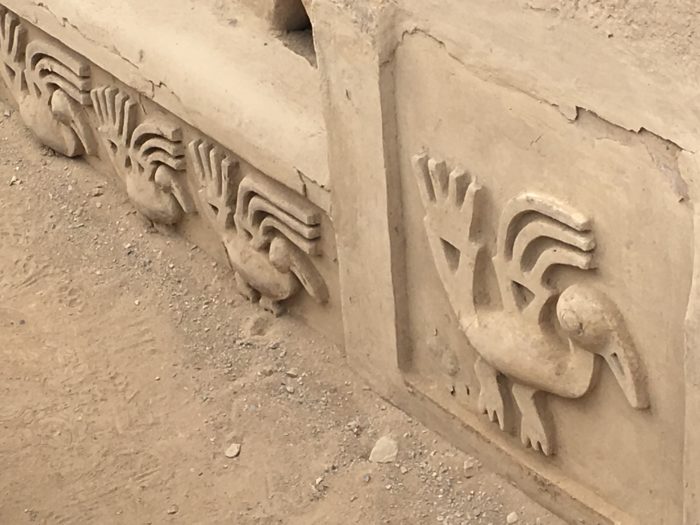
Chan Chan was the largest city of the pre-Columbia era and the capital city of the Chimor empire which began around 900. The Chimor empire of the Chimú culture was defeated by the Incas and incorporated into the Inca empire in 1470. Chan Chan, at 20 square kilometers, is believed to be the second largest adobe city in the world. The walls of the city are carved with elaborate designs of fish, birds and other shapes.
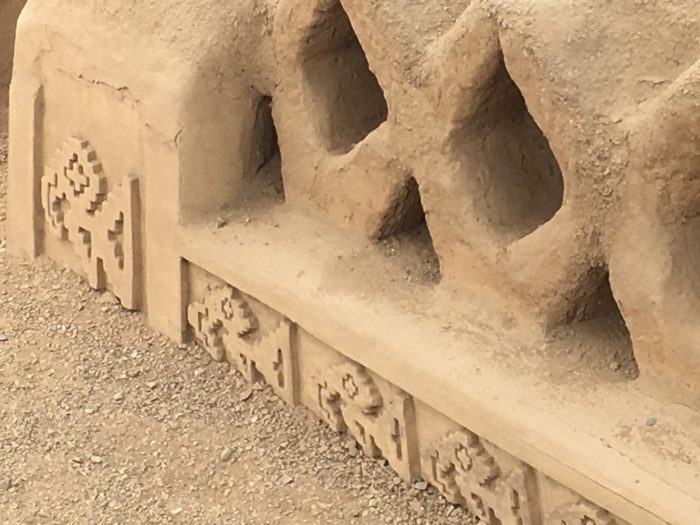
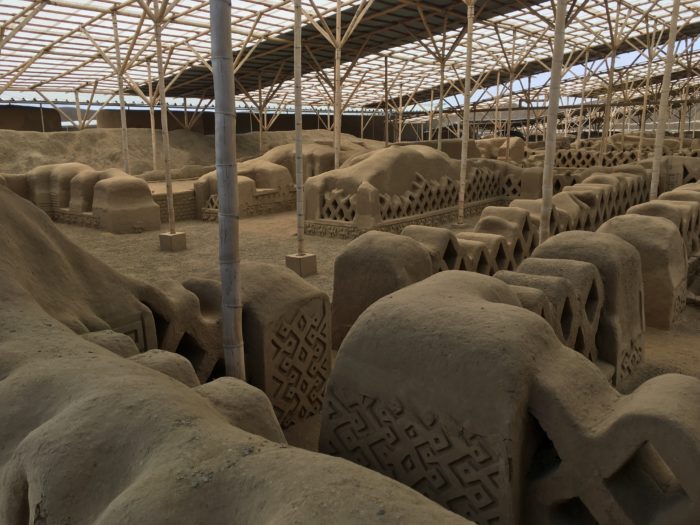
After visiting Chan Chan, Jess went back out to the main road to wait for the bus. To get to the Huacas de Moche (del Sol y de la Luna) from either Chan Chan or Huanchaco you have to take the red and yellow bus (2 soles / $0.60) without the heart icon in the front window to Ovalo Grau and you can wave it down from the bus stop outside Chan Chan. The bus drops you off just before a big roundabout called Miguel Grau. From there you can take a combi (small minivan bus) to the Huacas for 1.50 soles ($0.45). The correct combi says “Campiña de Moche” on the front window, picks up in front of the gas station (Servicentro Delfin), and drops you right outside the ticket office for the Huaca de la Luna. Even though there’s a sign for Huaca de la Luna near the road, don’t get out until the last stop because it’s a long walk in from the road.
Currently you can only visit Huaca de la Luna because Huaca del Sol is still being restored. Entrance to Huaca de la Luna costs 10 soles ($3) and includes a guided tour which is offered in English and Spanish. There is also a museum you can visit for an additional cost.
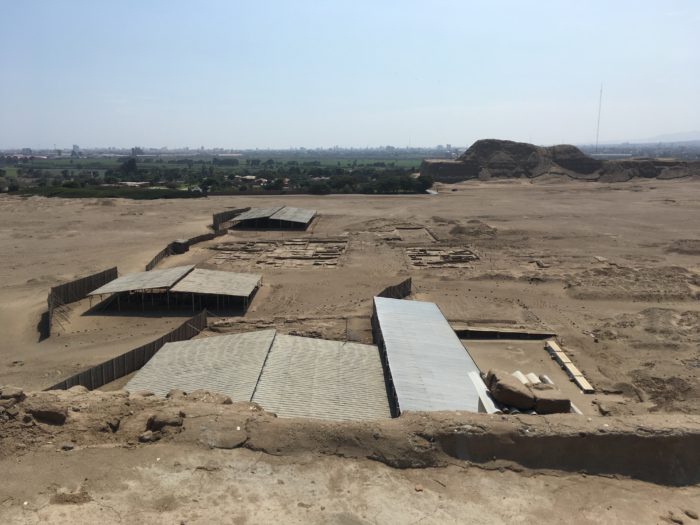
Huaca de la Luna and Huaca del Sol are archaeological remains from a historical Moche city. It is believed that Huaca de la Luna was a ceremonial temple while Huaca del Sol served an administrative and military function. Huaca de la Luna is better preserved because the Spanish looted Huaca del Sol but mostly left Huaca de la Luna untouched. Excavation of the Huaca de la Luna revealed human remains believed to be sacrifices of captured warriors made to ask the gods for good weather. It is believed an El Niño weather phenomenon in the 4th century caused decades of severe rain followed by severe drought. When the sacrifices did not improve the weather conditions, the Moche were believed to have abandoned their religion which precipitated the decline of the Moche culture.
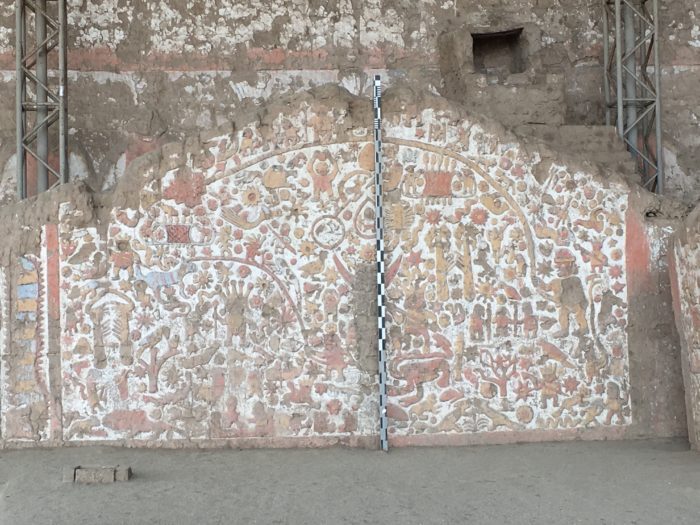
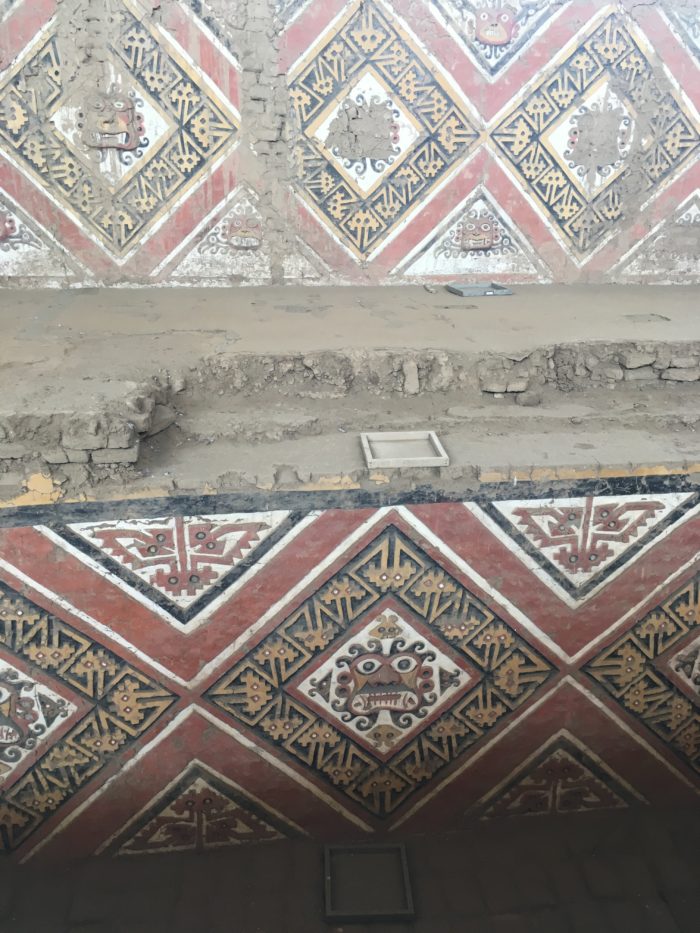
Huaca de la Luna is a large structure comprised of three platforms. The inside is decorated with colorful fresco-like art depicting Ai Apaec which was the Moche’s most powerful god.
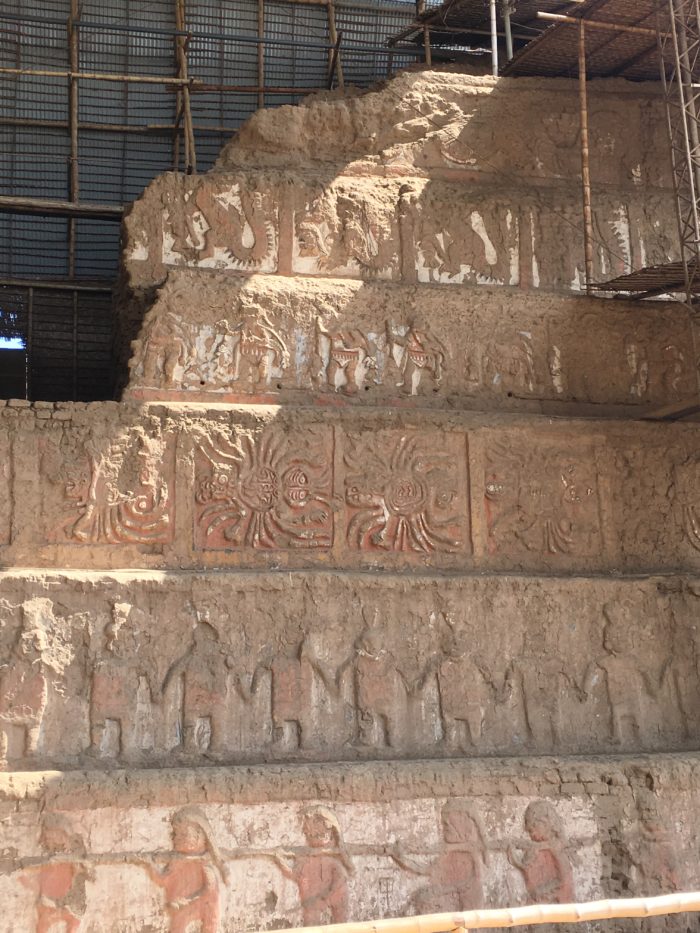
The external facade had seven levels each with its own mural displaying an aspect of the Moche culture such as the sacrifice ritual. Only six of the levels are still visible.
When the tour was over, the Campiña de Moche “combi” was waiting at the exit to take people back to Ovalo Grau. The bus goes back the same way it comes, so Jess decided to get off at the Terrapuerto bus terminal to see about getting a bus to Cajamarca, our next destination.
We’ve discovered long distance buses are a little more complicated in northern Peru than in other places because buses to different locations depart from different stations and many of the bus companies have their own unique departure locations. At the Terrapuerto Jess learned buses almost only go to Lima but that there was a location for a specific company with buses to Cajamarca on the other side of the city in Trujillo. Jess thought she’d see if she could make it there on the way back to Huanchaco. After walking back to Ovalo Grau from the Terrapuerto, and waiting for the Huanchaco bus on the opposite side of the street from where it dropped her off, Jess discovered (with the help of some friendly Peruvians) that the Huanchaco bus goes in a loop and therefore continues in the same direction as it was going when she got off. The bus went relatively close to the purported bus company office, so Jess got off and walked to where the office was supposed to be but couldn’t find it. Worried about making it back to the hostel by the agreed upon 6pm, Jess abandoned the quest for bus tickets and caught the bus back to Huanchaco.
In Peru redbus.pe is a good way to buy tickets in advance. We have subsequently discovered you pay a premium (sometimes as much as $6 per ticket) for buying online, but since the bus company’s offices are scattered around the city, you don’t run the risk of showing up and not getting a seat. We ended up buying tickets with Linea company and then going to their office the next evening to catch the night bus to Cajamarca.