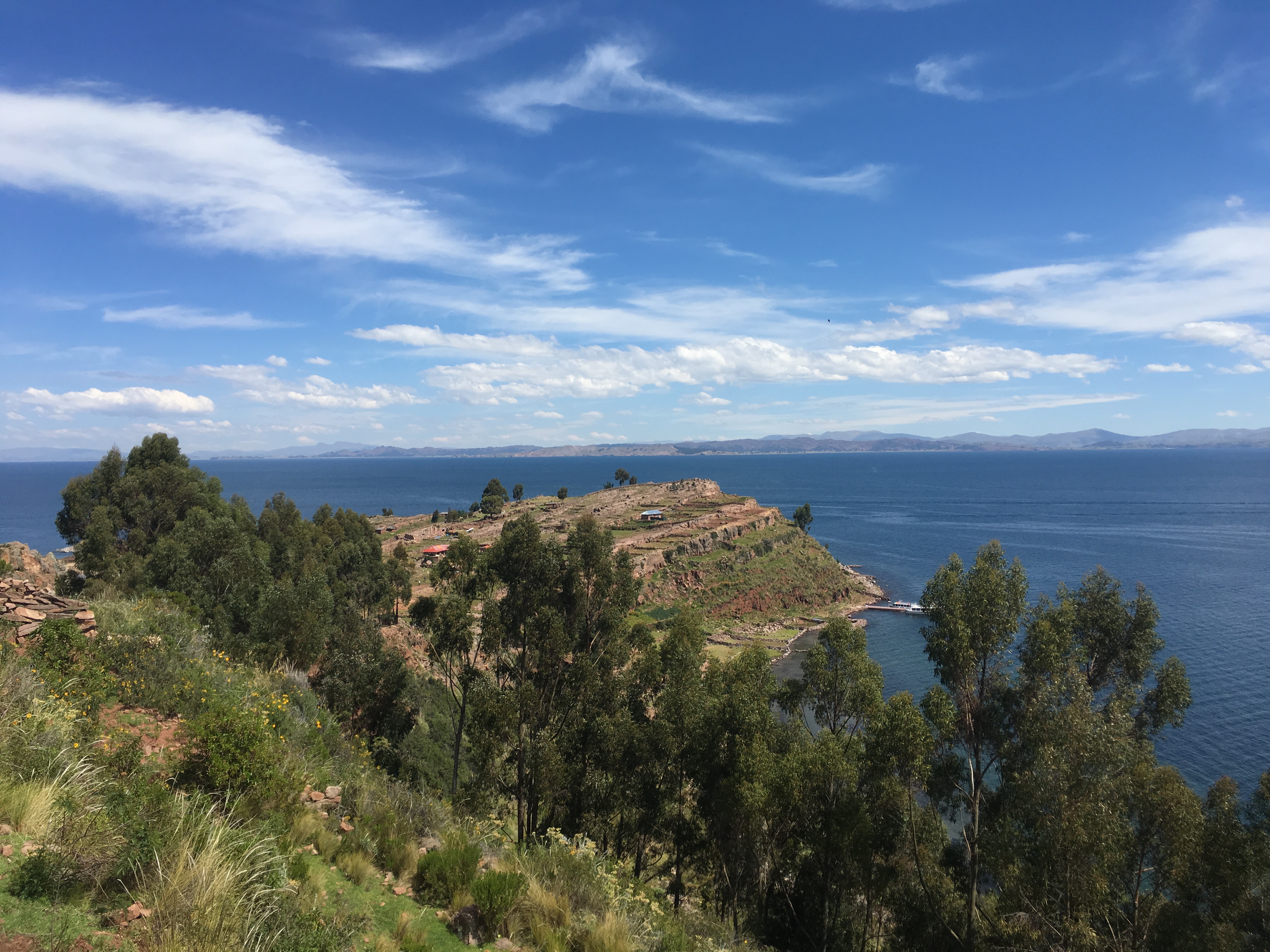
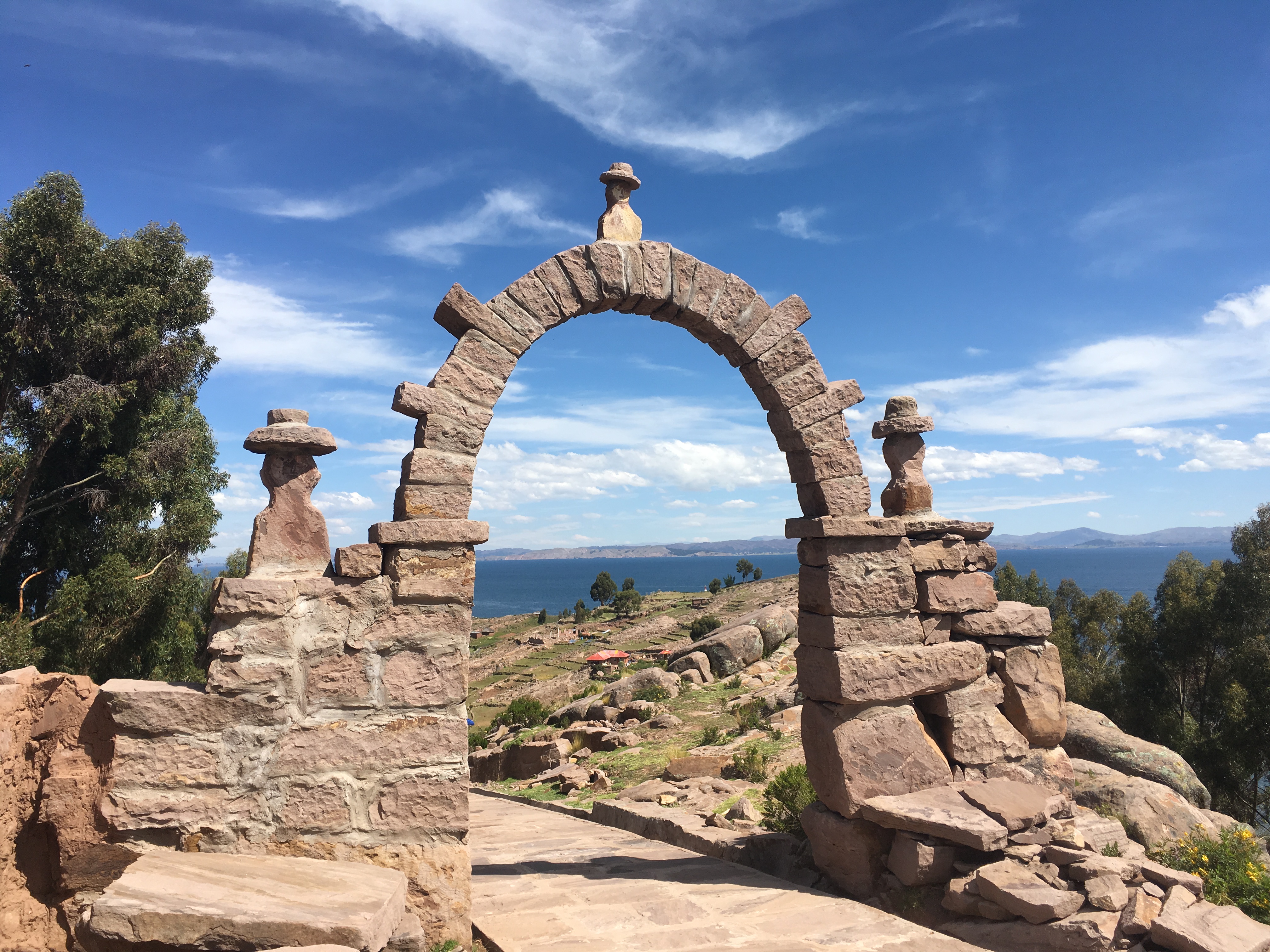
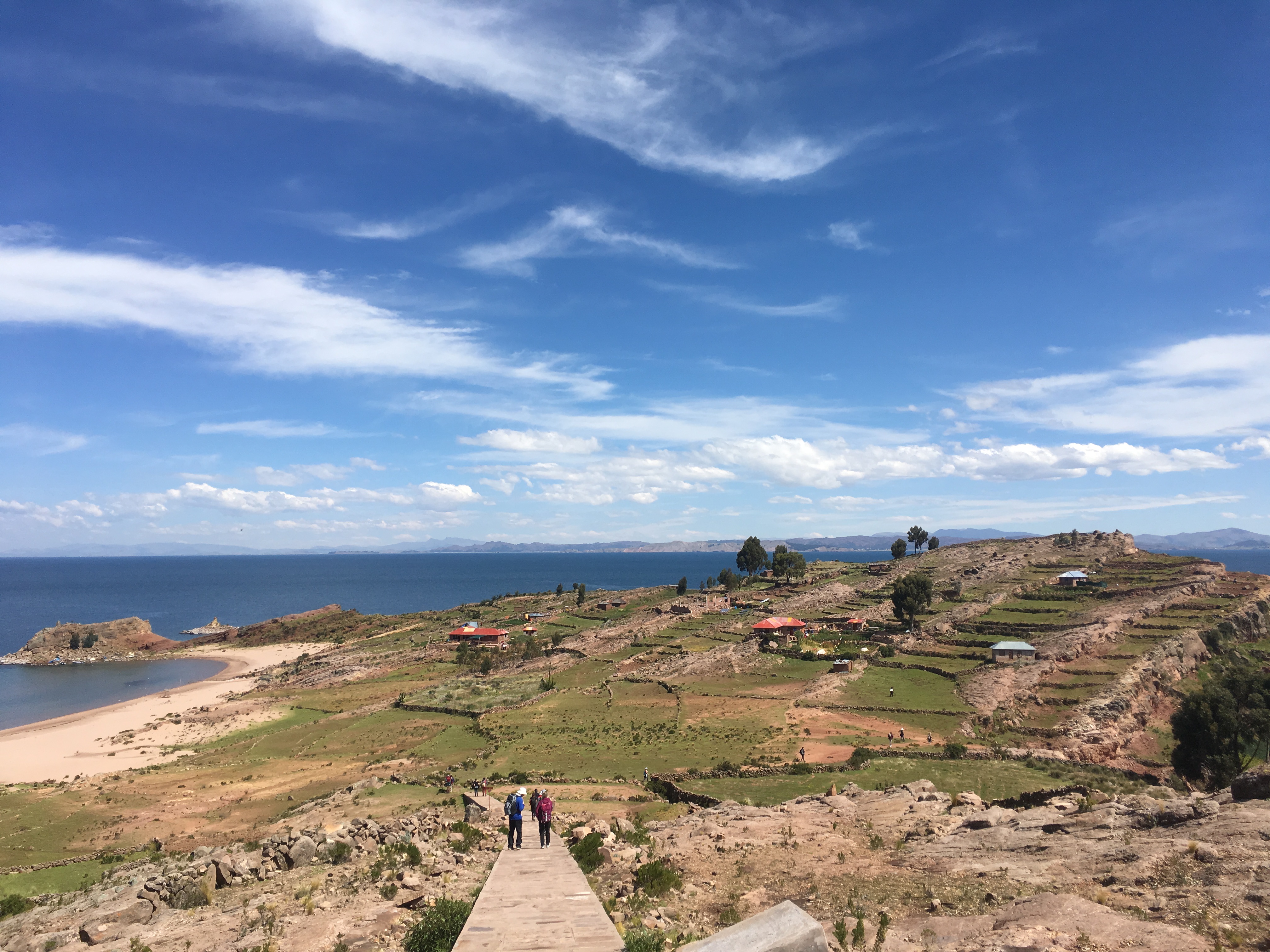
We just finished an incredible 36-hour trip to the islands of Uros and Taquile on the Peruvian side of Lake Titicaca, the highest navigable lake in the world.
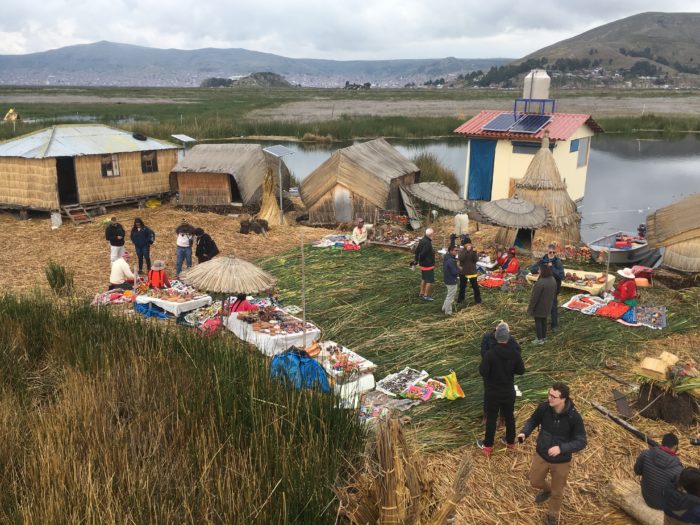
Our trip started with a visit to the floating islands of Uros which are in the Bay of Puno not far from the city. The Uros community is comprised of 120 islands which each support approximately five to seven families of three to four members each. There are roughly 2,000 inhabitants.
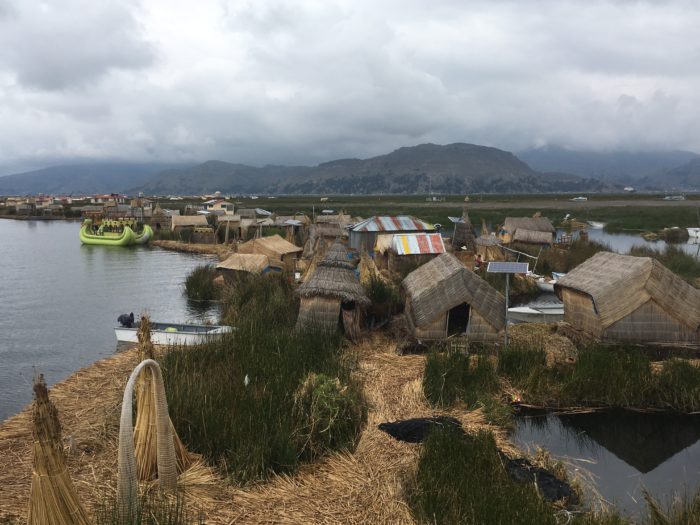
The floating islands are made from the roots and reeds of the totoro plant which grows in abundance in Lake Titicaca. The roots of the reeds are cut into large blocks and lashed together with ropes attached to wooden poles in the center of each root block. The island is then anchored to a large wooden pole a few feet away. Layers of reeds are then laid across the root blocks to create the surface of the island. New reeds have to be added to the islands twice a month as the reeds closest to the water rot causing the islands to sink.
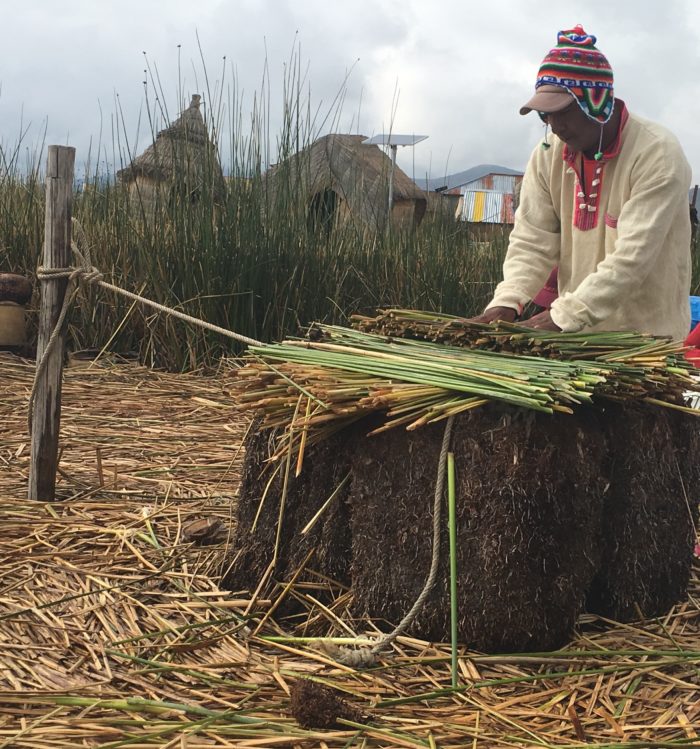
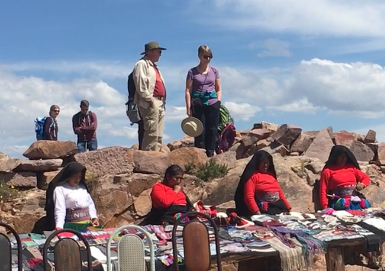
The islanders used to fish and hunt birds, but life has gotten easier since tourism to the area started 30 years ago. Now they depend on tourism and selling handicrafts to support themselves. This means they like tourists, but they also put on the hard sell to buy their works which include embroidered artwork representing life in Uros, and beautiful mobiles made from the totoro reed.
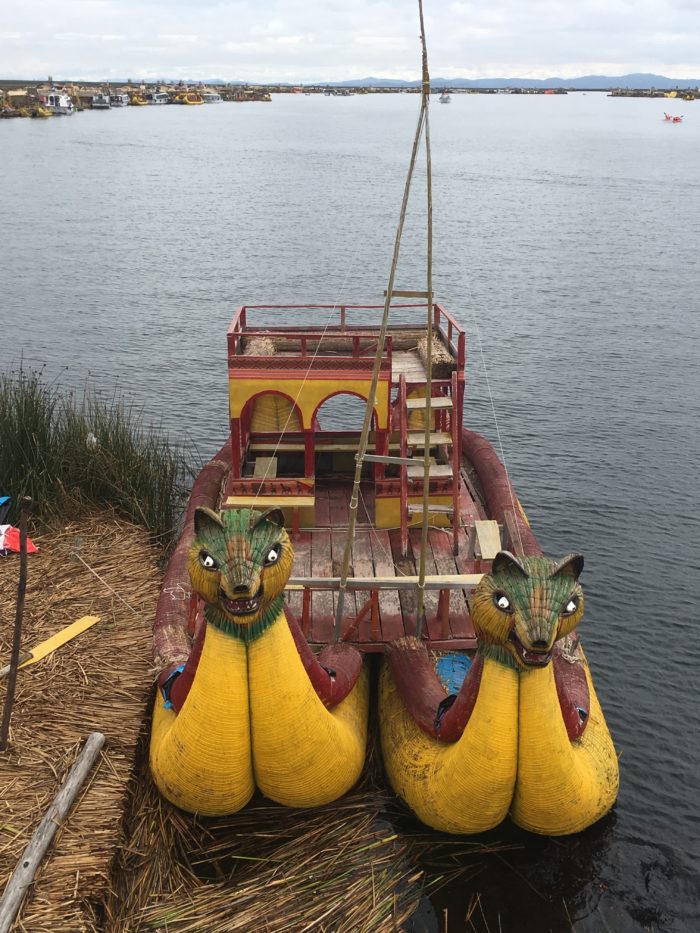
The islanders use the totoro reed for everything: islands, houses, and boats. Some of them have reed boats with wooden platforms which they use to transport tourists from one island to another for a small fee. The reed bases of the boat are filled with thousands of plastic bottles to help them float and the islanders row them with long oars. We elected to take one of these boats to the next island to support the islanders even though we didn’t want any of their handicrafts.
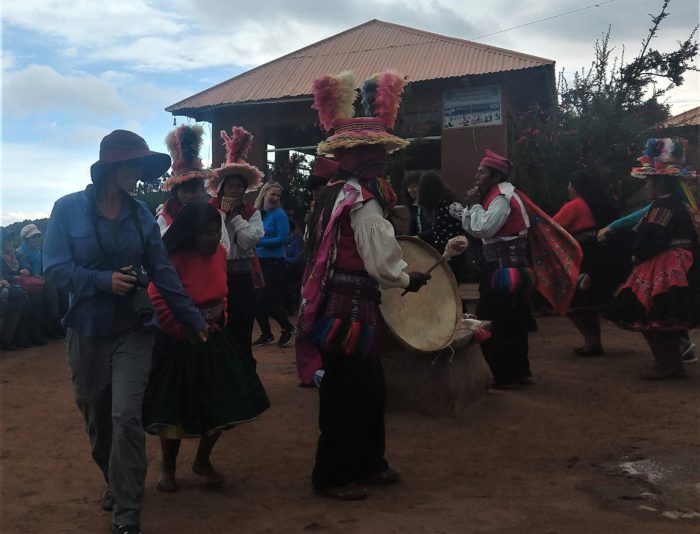
After the visit to the floating islands we got back on the tour boat for an hour and 20 minute ride out to Taquile Island. We docked on the remote side of the island and started a short walk up to the restaurant for lunch. Before we ate, a group of the islanders played some music and performed a traditional dance and then invited us to dance with them. Then we were served a delicious trout meal. Canadian Trout was introduced to Lake Titicaca and has become an invasive species because it eats the smaller native species of fish in the lake. However, the trout has helped the local economy because it’s a more substantial fish to serve as food.
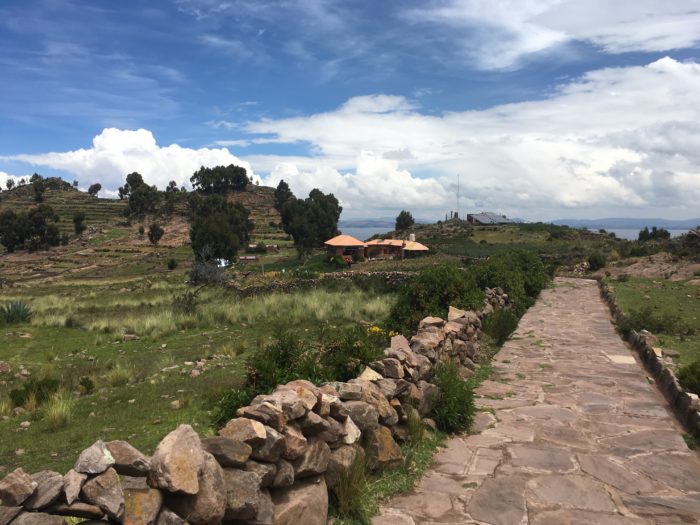
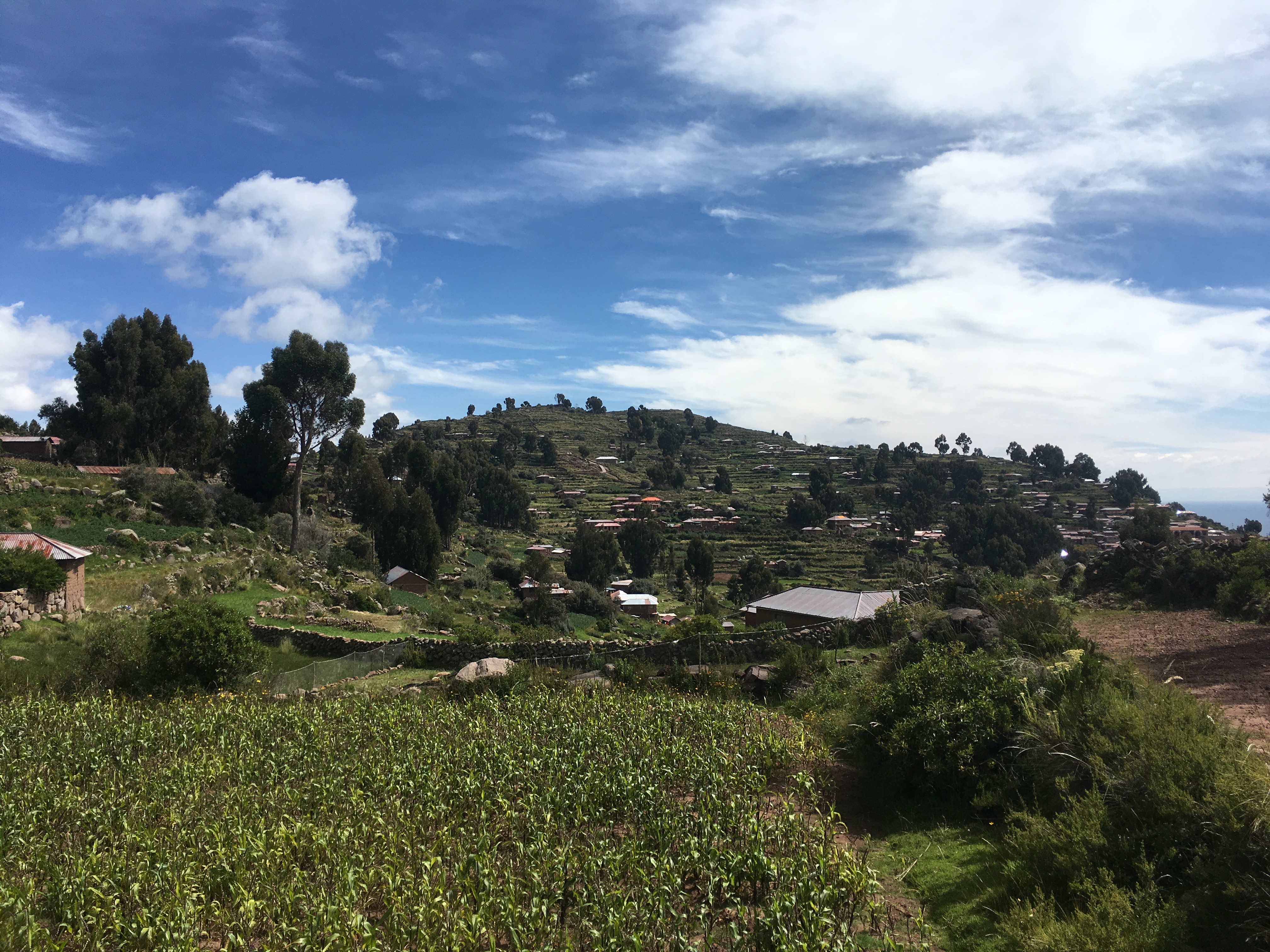
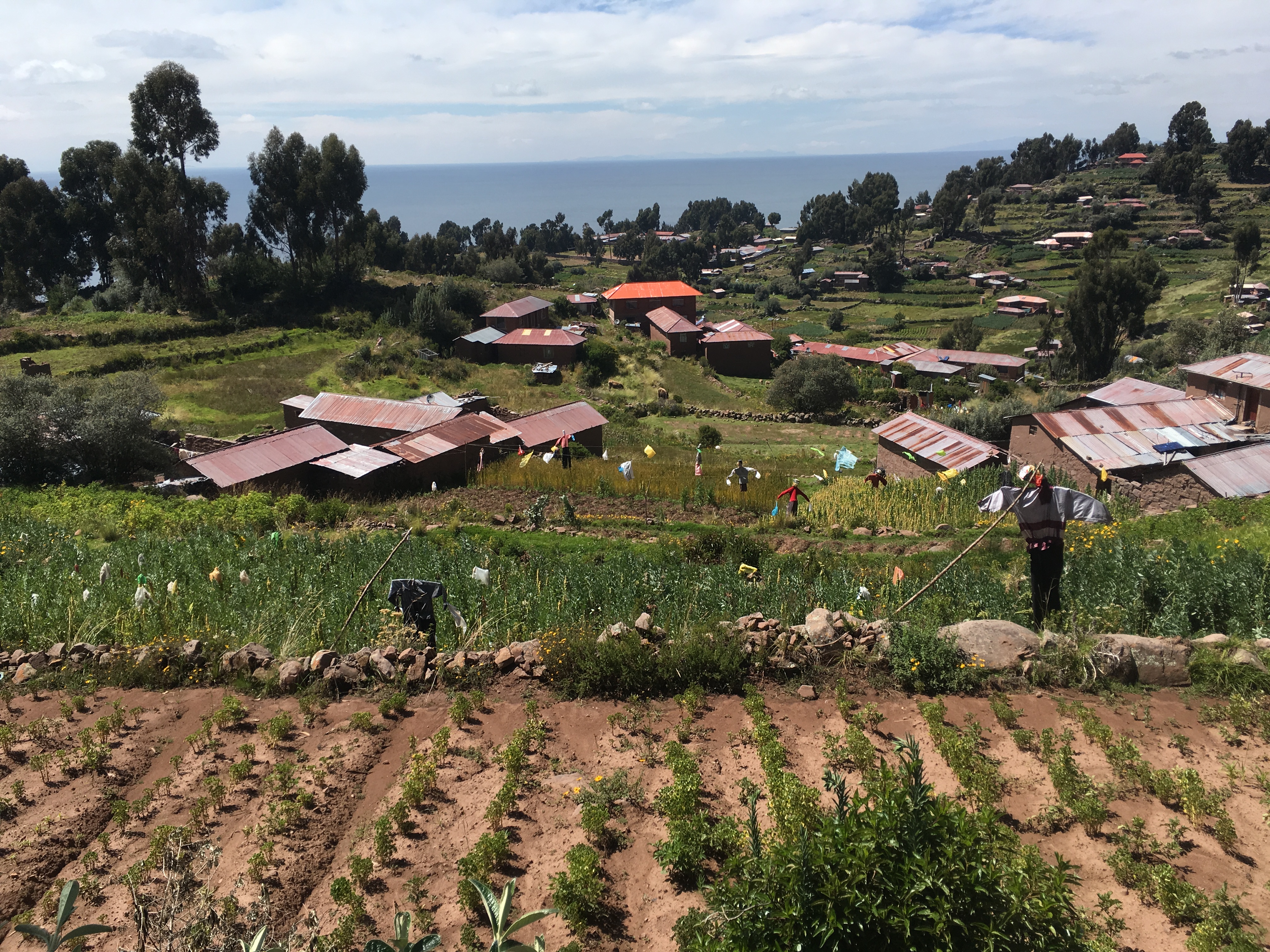
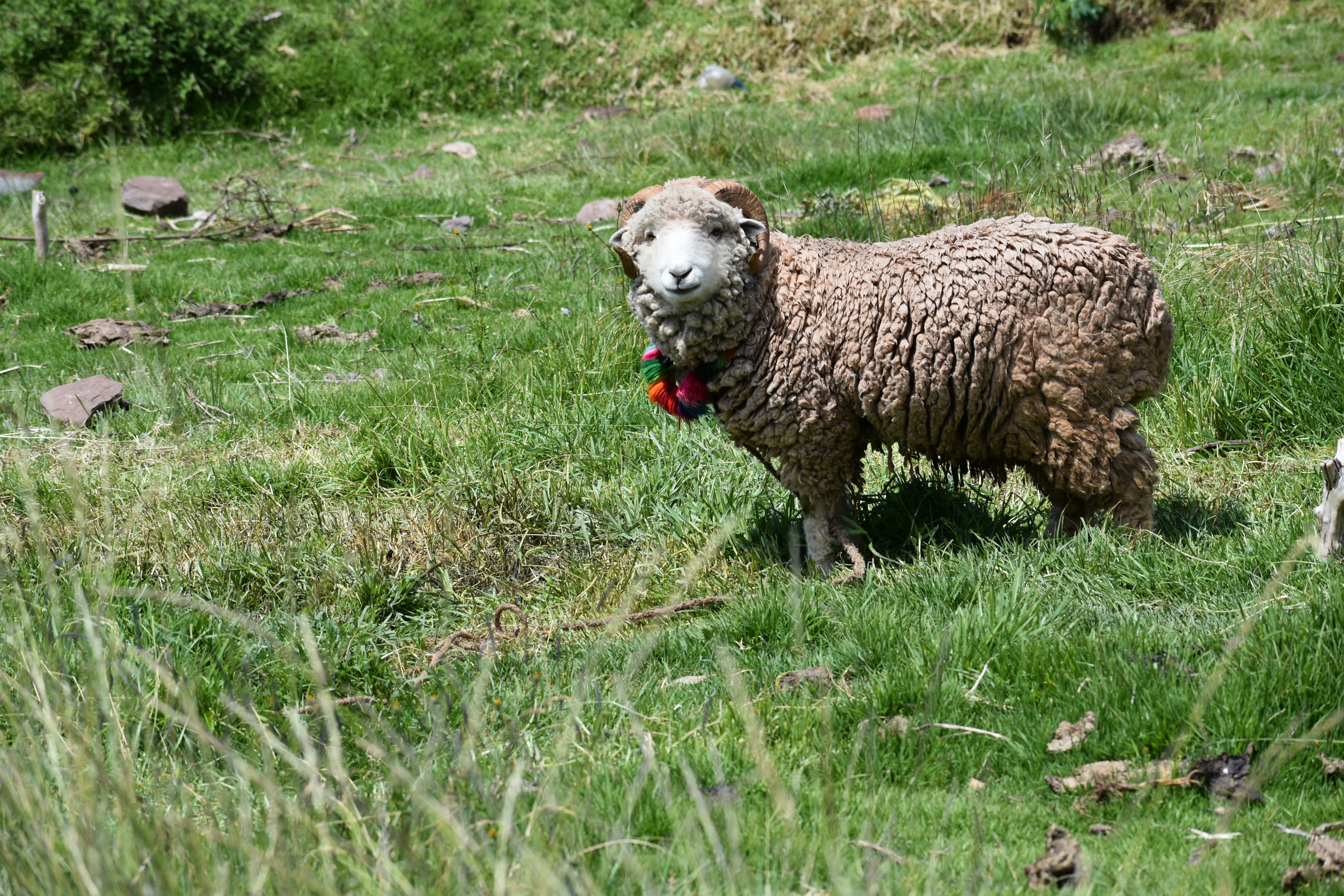
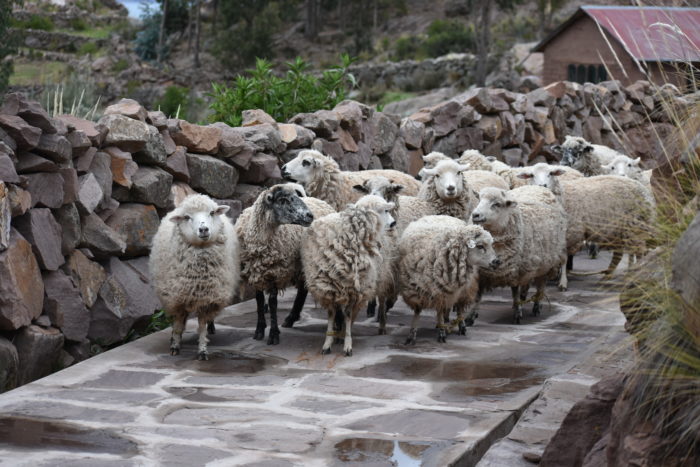
After lunch we met Ivan, our host for the next 24 hours. On the 30-minute walk to his house, Ivan showed us local plants and told us more about the island. The island is divided into six communities. Three are for agriculture (potatoes, corn, quinoa, fava beans, and a carrot-like plant), and three are for raising sheep. There is one path that winds around the island and each community constructs a section of it. The island is approximately four miles from one side to the other.
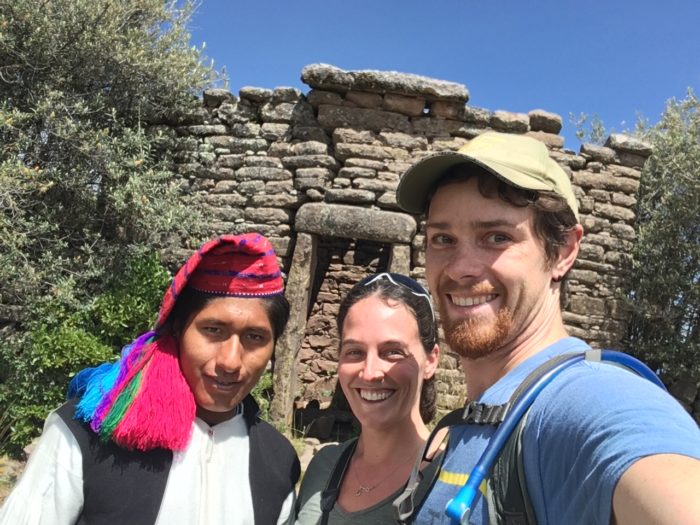
The islanders dress in traditional clothing some of which was influenced by the Spanish. The men wear black pants with white long sleeve shirts and a stocking-cap-shaped hat that signifies whether they are married or not. A red and white hat means a man is single and a red hat means a man is married. Ivan wears a red hat even though he is not married, but despite asking twice, we never quite understood his explanations for that. The women wear skirts, red sweaters, and long black mantles with colorful tassels they pull over their heads to protect from the sun. Black is the color of respect.
When we arrived at Ivan’s house we had four hours to explore the island on our own. Unfortunately while we were out it started raining. We tried to hide under a big boulder, but we panicked that it wasn’t keeping us dry and decided to run back to the house. In the process we got quite wet and after that we were cold since we didn’t have any dry clothes to put on and there’s no heat in Ivan’s house. We drank a lot of warm tea and played cribbage until dinner.
Ivan and his younger brother prepared dinner while we chatted with their grandmother over tea. She has four children and five grandchildren and she has lived on the island her entire life. She makes beautiful weavings which she sells in the town square. She speaks some Spanish which she learned in primary school, but mostly the family speaks Quechua together. We were able to communicate in Spanish and we learned a few words in Quechua too.
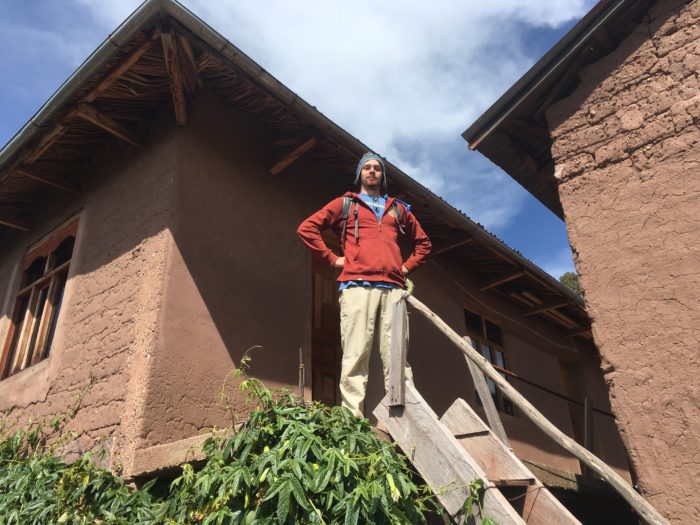
Dinner was a delicious soup and egg fried potato with rice. After dinner we all went to bed. We had a very nice private room with two beds. Since it was cold and we had been a bit wet from the rain for a while, we took all the blankets off the second bed and piled them up on ours and we were soon very cozy. It was so dark and quiet on the island, we were in bed before 8:30pm and we fell asleep shortly thereafter. We set our alarms for the sunrise which we would have been able to see through the window from bed, but it was too cloudy, so we went back to sleep. It was a much needed catch-up after a few early mornings in a row.
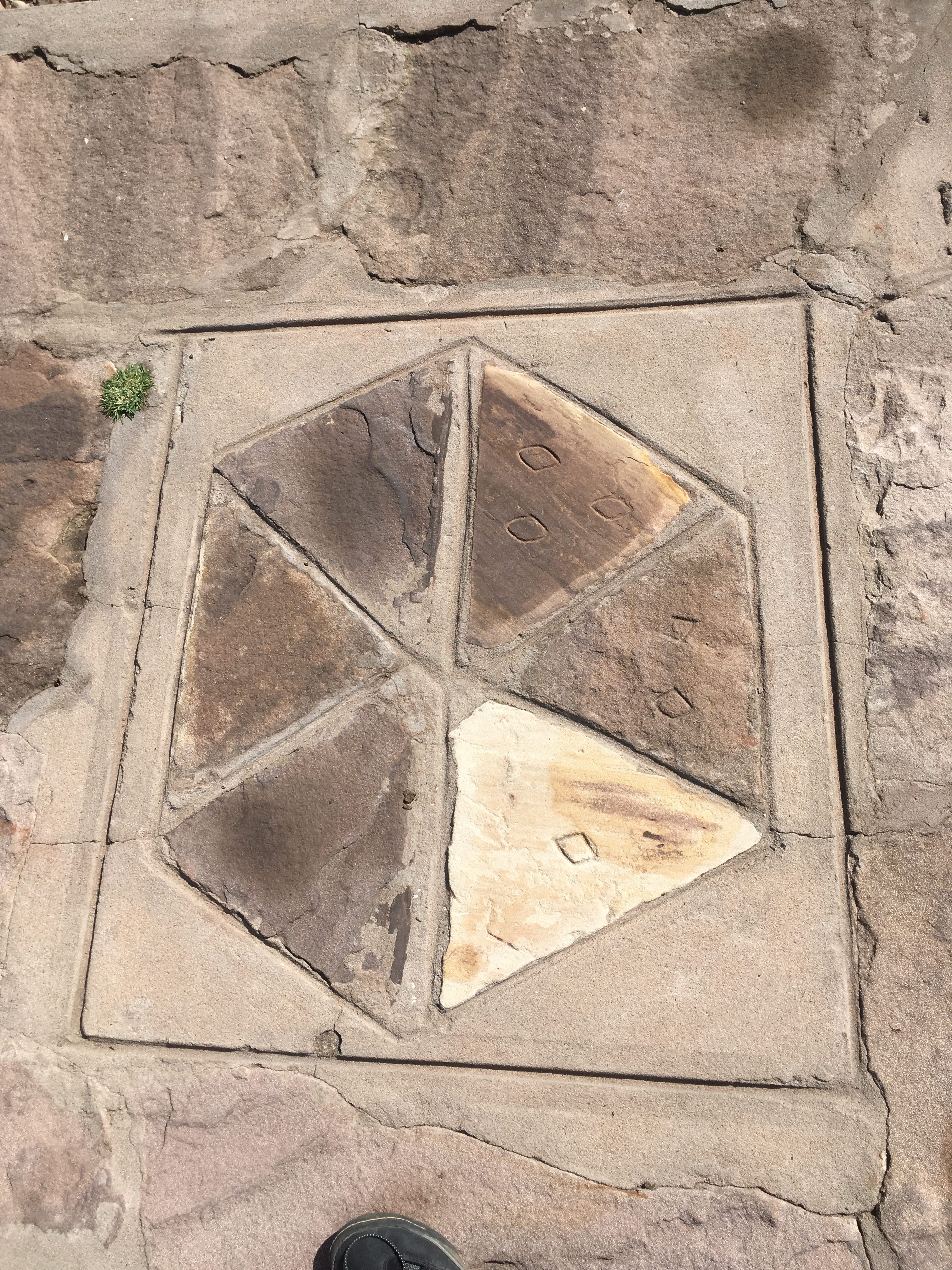
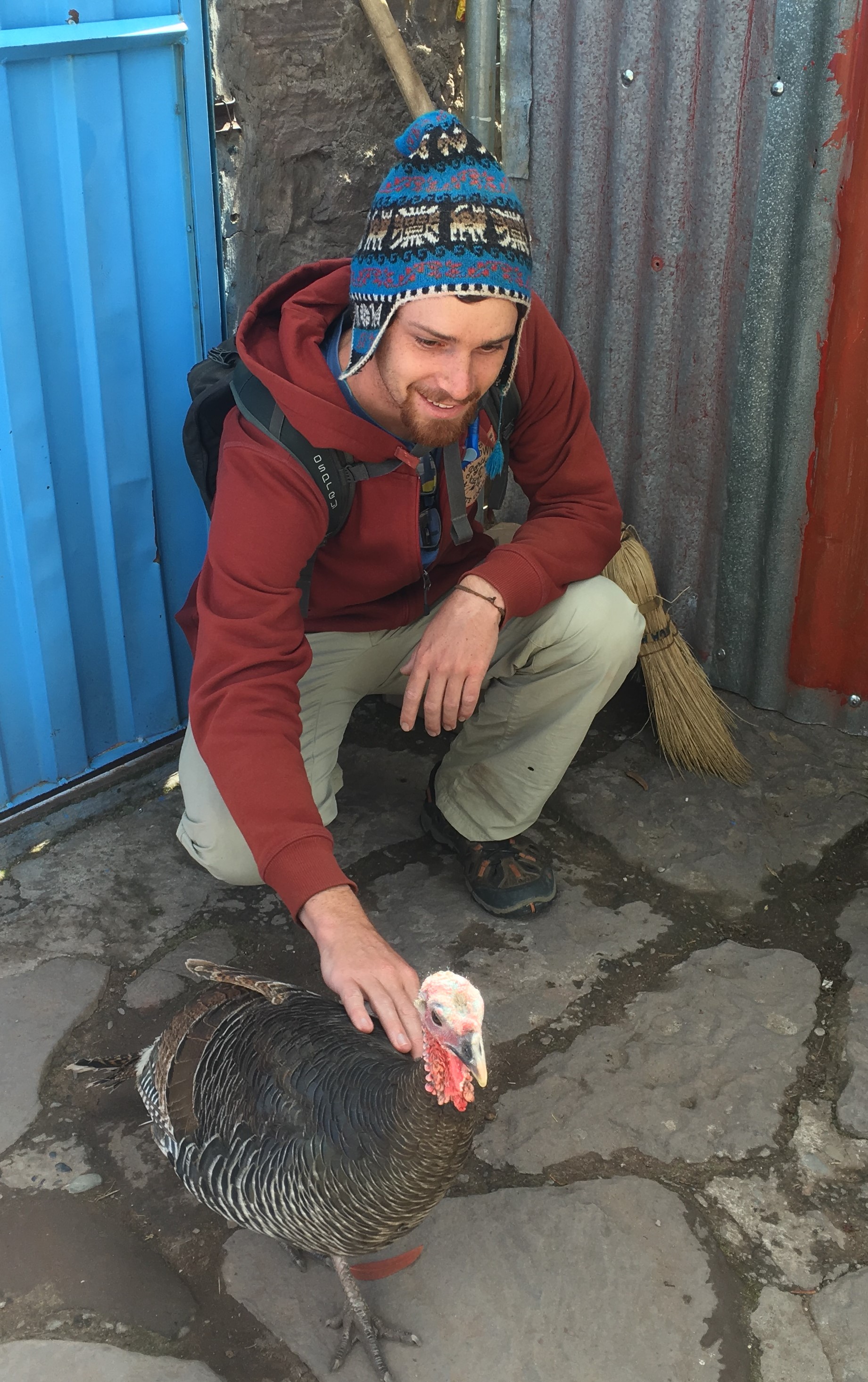
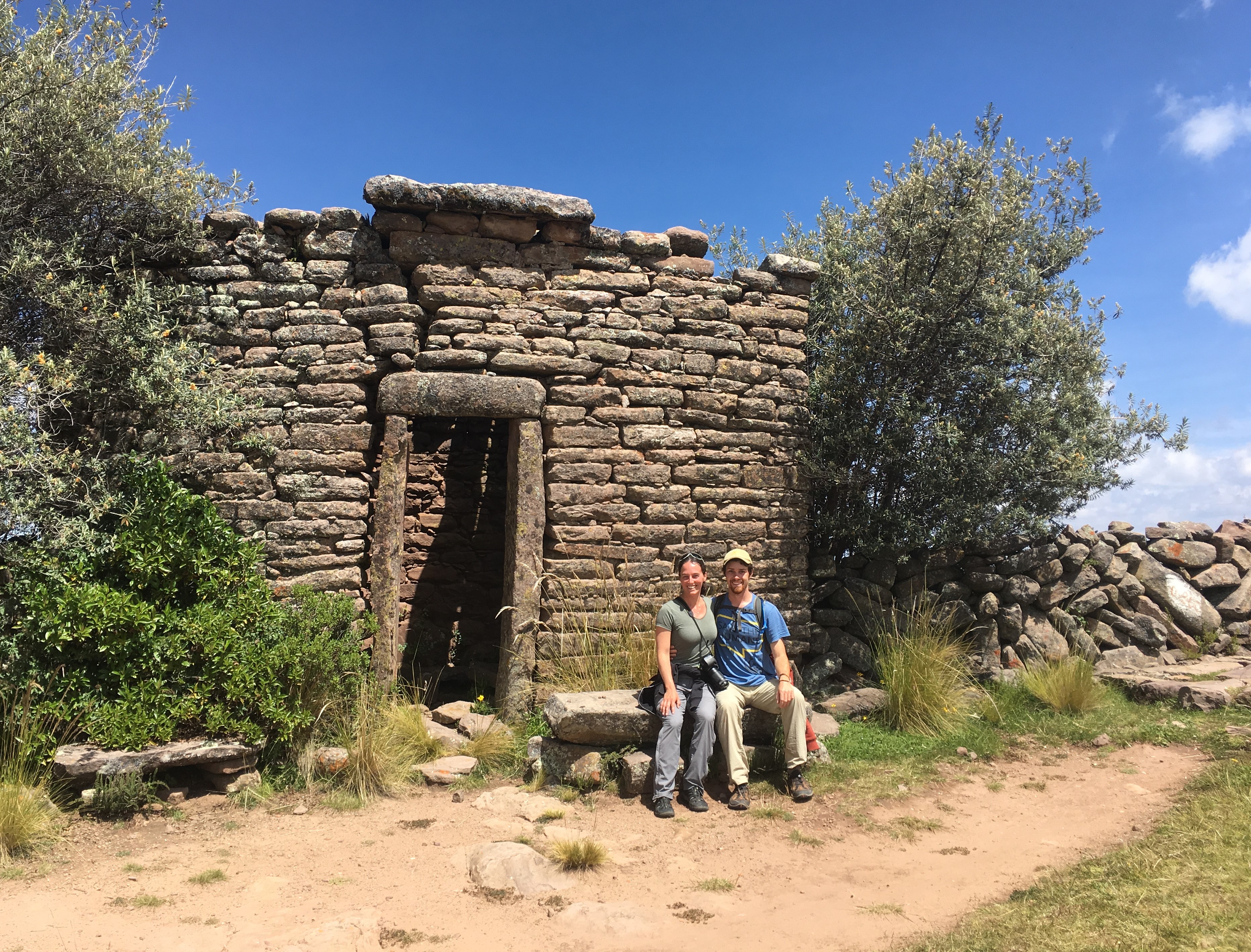
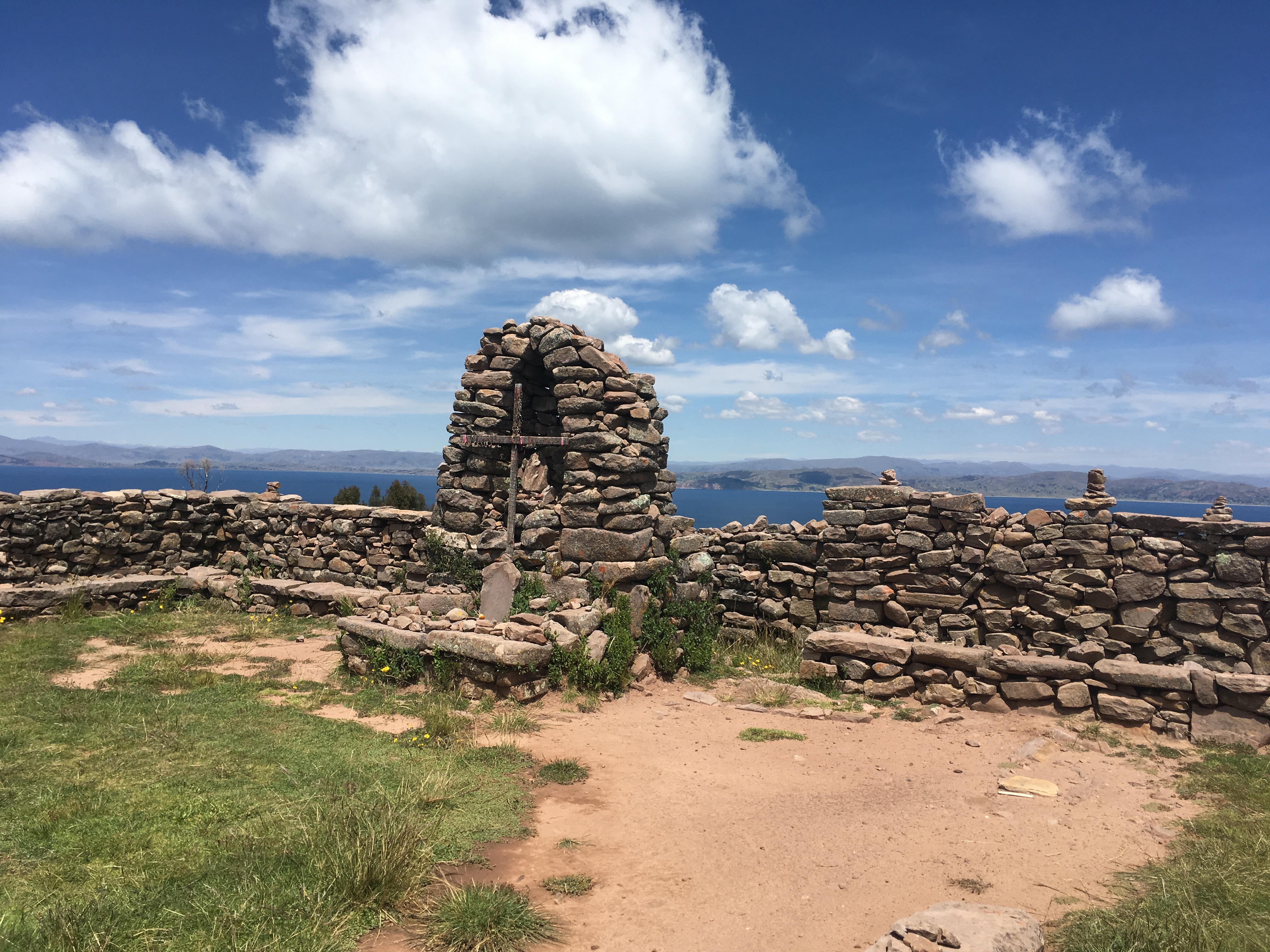
In the morning, Ivan served us pancakes and his mother displayed her knitted and woven good. Eric bought an awesome (maybe a bit silly) hat and then Ivan took us on a walk around the island. We saw the old Incan ruins and the temple on the northern tip of the island. The temple is still used for some coca leaf ceremonies. The biggest ceremony takes place at Easter when four experts in the coca leaf ceremony enter a special part of the temple that is usually closed. There is also a lot of music and dancing for which each of the communities is currently preparing.
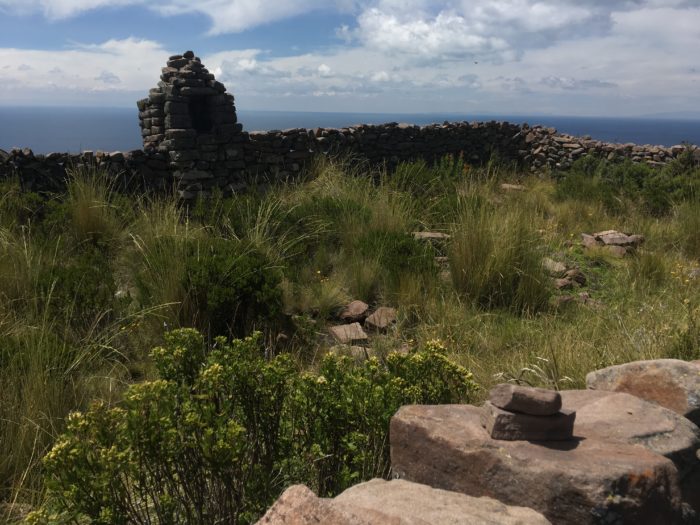
In fact, Ivan’s father was not at the house because he is a leader in one of the communities and is helping them prepare for Holy Week. Leaders are elected for one year by raised hand vote and they are responsible for helping organize and implement projects in the communities such as building or improving the paths.
After visiting the temple, we walked down to the main square where we had lunch. Then Ivan walked us back to his house to pick up our things and head to the boat back to Puno. Ivan is a boat captain and he had helped captain a boat out to Taquile yesterday leaving his boat in Puno, so he was heading back to Puno on the boat with us.
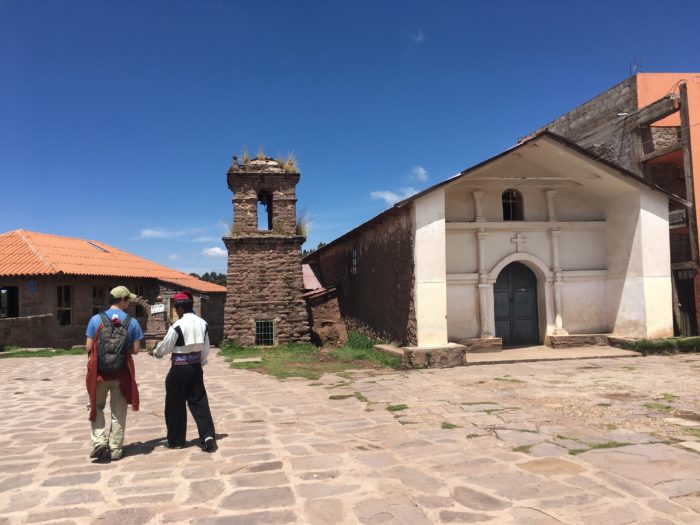
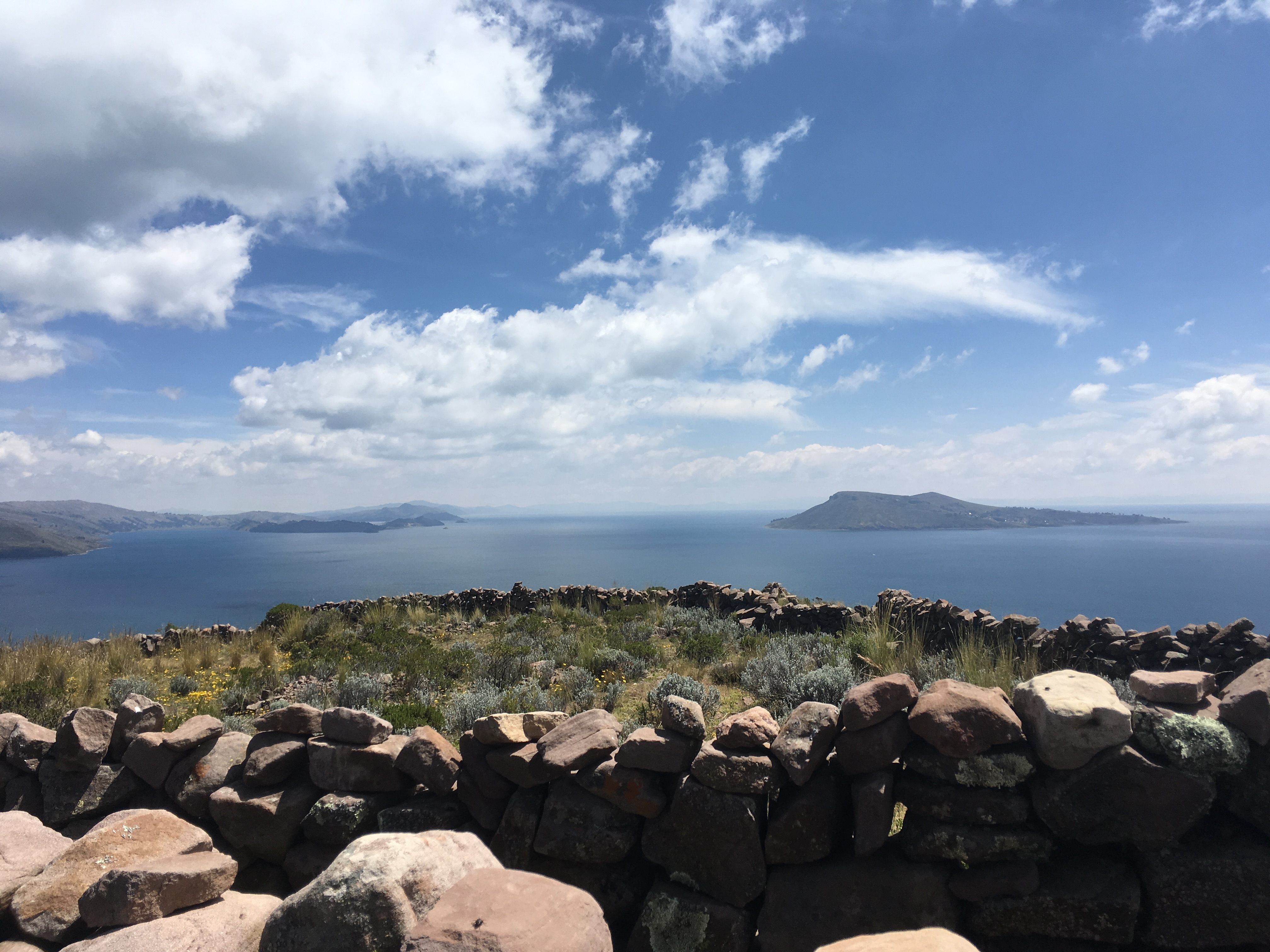
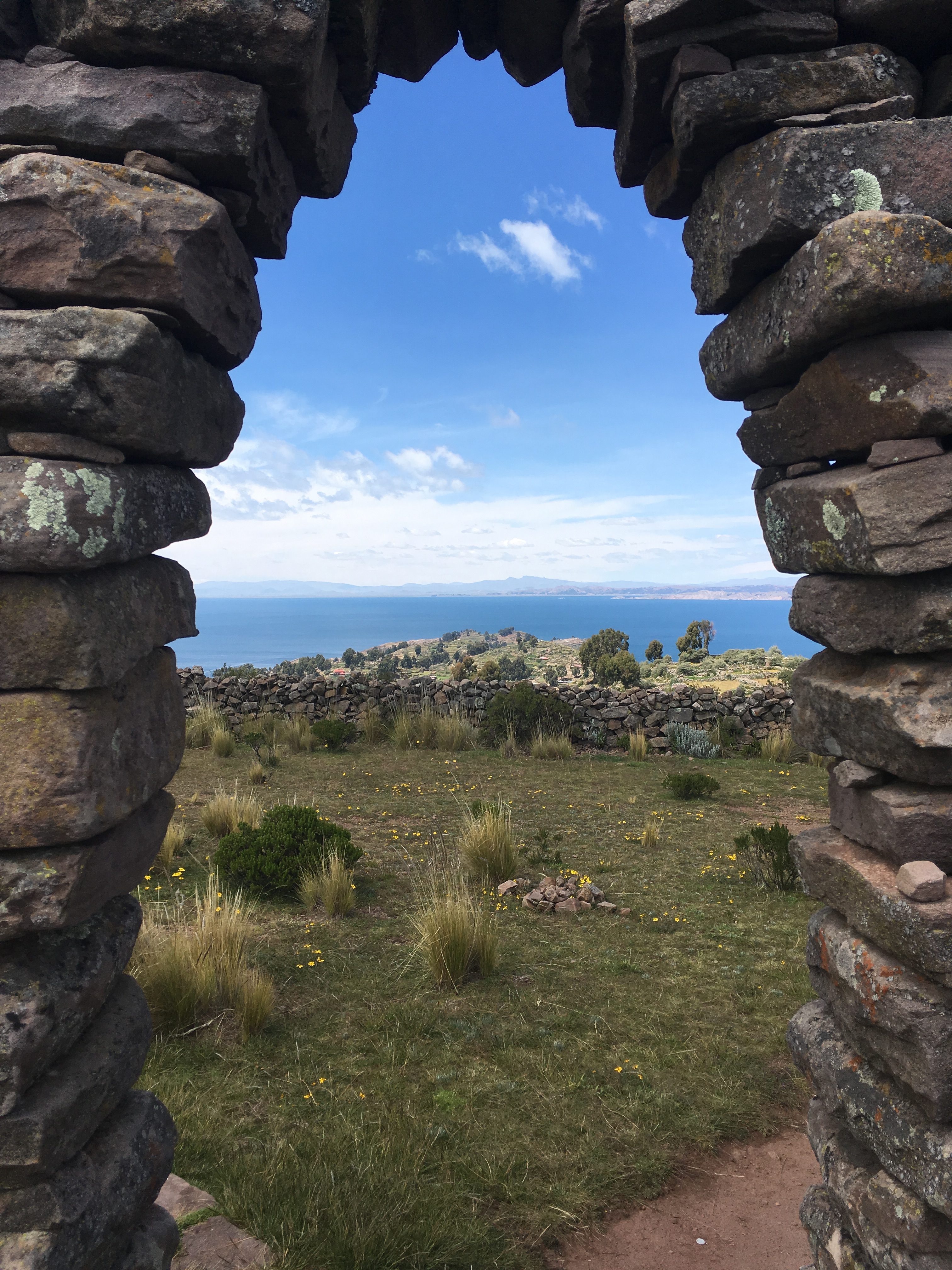
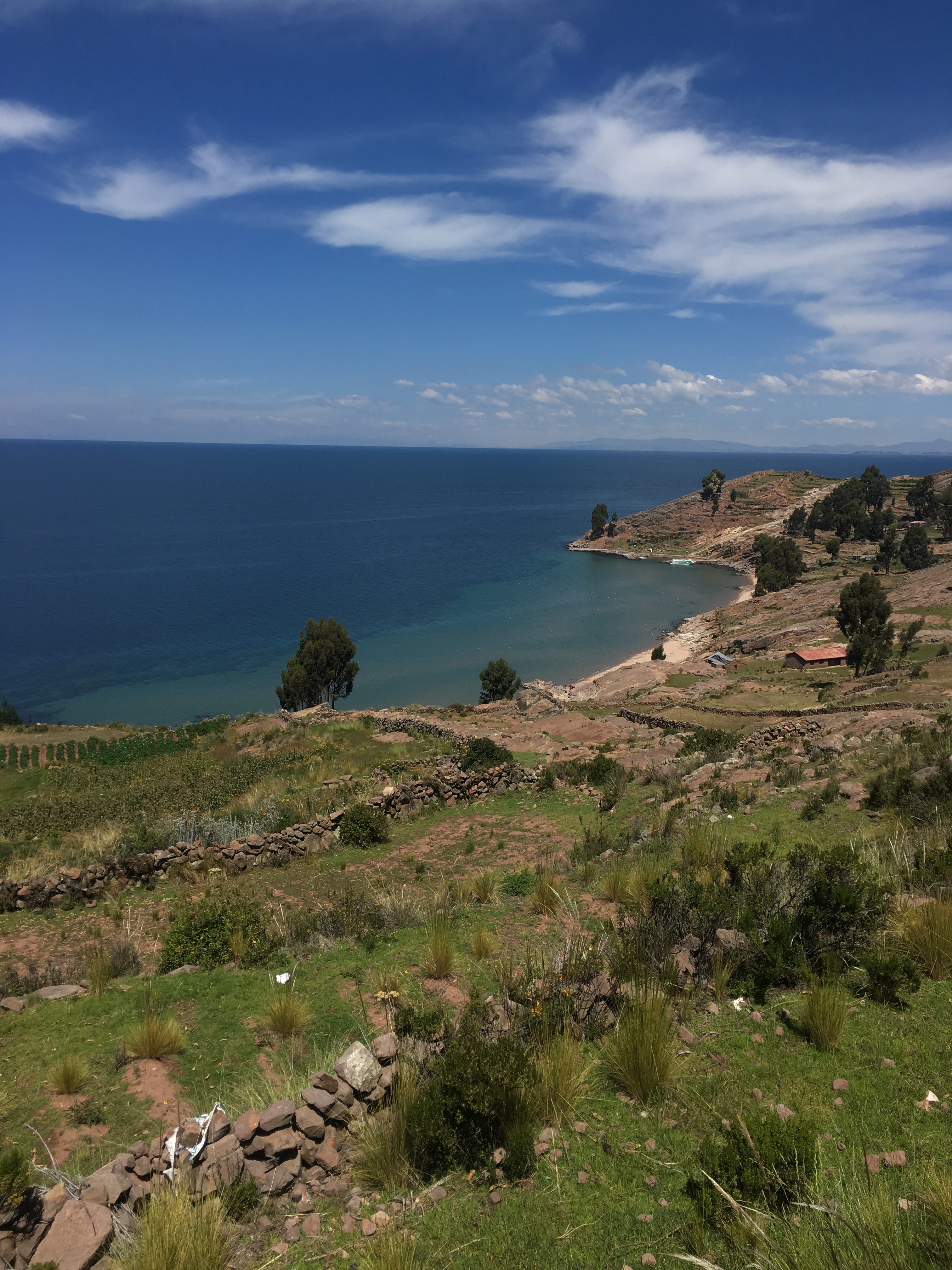
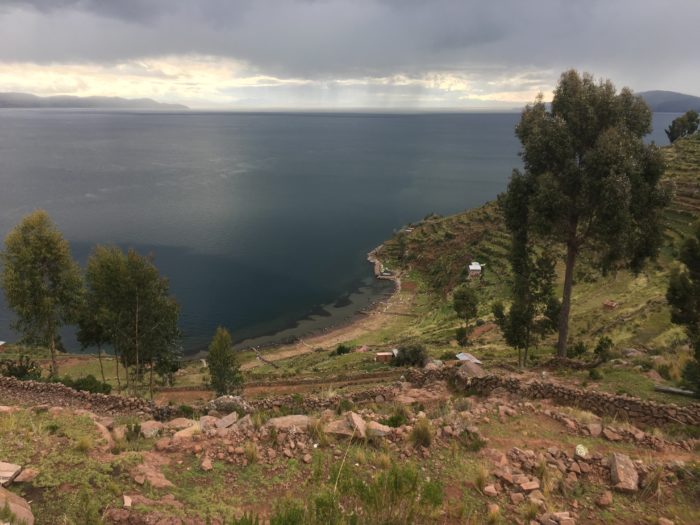
We loved being on the beautiful, quiet island with Ivan and his family. It was wonderfully peaceful. The views were stunning from every part of the island and we learned a lot about the communities and the culture while we were walking around with Ivan. It was an amazing way to spend some extra time in the Lake Titicaca area. Everyone had warned us that the city of Puno was terrible, so much so that almost all the tourists on our Bolivia Hop bus were leaving Puno the night we arrived. However, we didn’t have any issues with Puno and staying a night allowed us to have this incredible experience.