

Today we did a crazy thing: we went into an active Bolivian silver mine and saw the miners in action. Many people argue it is inappropriate and even unethical to visit the mines because the working conditions are so poor. However, mining is such an important part of Bolivia’s history and economy that we thought it was important to see and understand first hand what this work is like.
We did a tour with Koala Tours, which claims to be the only tour company that shares some of the money from the tours with the miners. Ronaldo, our guide, was once a miner in this mine himself.
The Caracoles mine in Cerro Rico is a 4-level mine which belongs to two of 37 cooperatives owned by the Bolivian government. Miners decide how, where, and how much they want to work. They often work in groups, some as small as 1-4 miners, others as large as 20-30 miners. There are estimated to be 15,000 miners working in the mines. All of the miner groups have their own workplace in the mine and they respect each other’s places. The only requirement for working in the mine is being strong and being male. Miners can earn 1.5 – 3 times the average salary in Potosi, so it’s not uncommon to see boys as young as 14 working in the mines to help support their families. Miners are superstitious and believe women working in the mines bring bad luck and make the minerals disappear although they are allowed to work with the minerals outside the mines. In many cases the women working outside the mines are widows of miners who died inside.
The first stop on our tour was the warehouse to get protective clothing (overalls to protect our clothes from the dust, helmets with miner’s lamps and rubber boots). Next we stopped at the miner’s market to buy items for the miners (coca leaves, juice, and dynamite – yes, dynamite with a detonator and fuse, and sodium nitrate to make a bigger explosion, all handed to us in a single plastic bag for $3!). Since the miners are effectively freelancers, they get to keep any money they make beyond the 2% they pay to the government and 12% they pay to the cooperatives. Their expenses eat into that remainder, so they appreciate the contributions from tours.
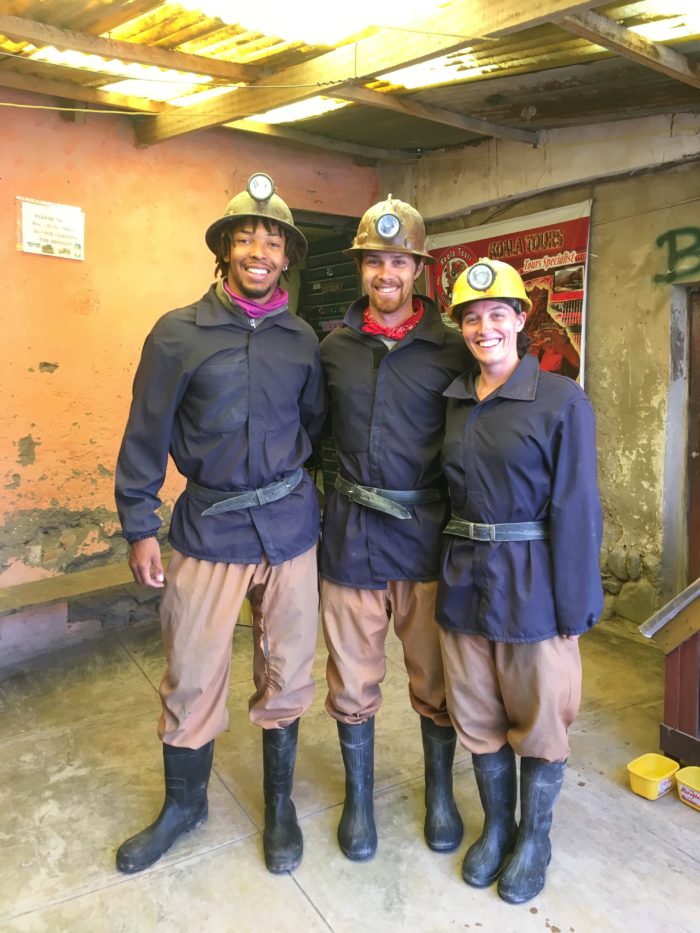
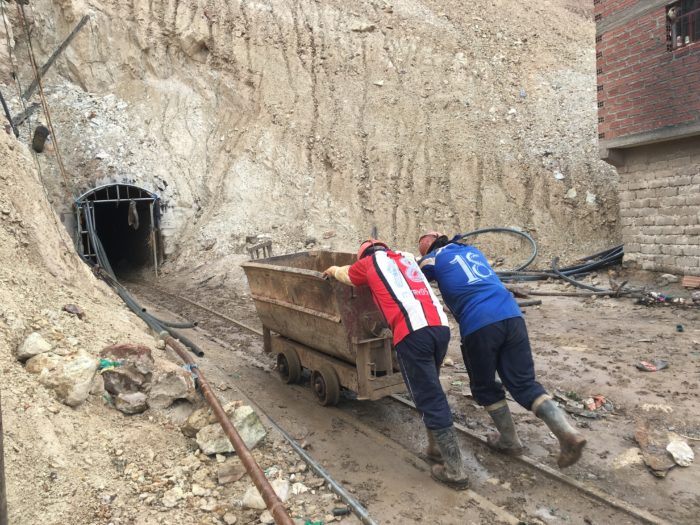
After the miner’s market, we drove to the entrance of the mine which is at 4,400 meters (14,430 feet) above sea level. At the entrance some miners were running out with a two-ton wagon filled with minerals, and Ronaldo tossed them some of the juice we had brought. Once the wagon had gone back into the mine, we followed it inside and we would be inside the mine for the next two and a half hours.
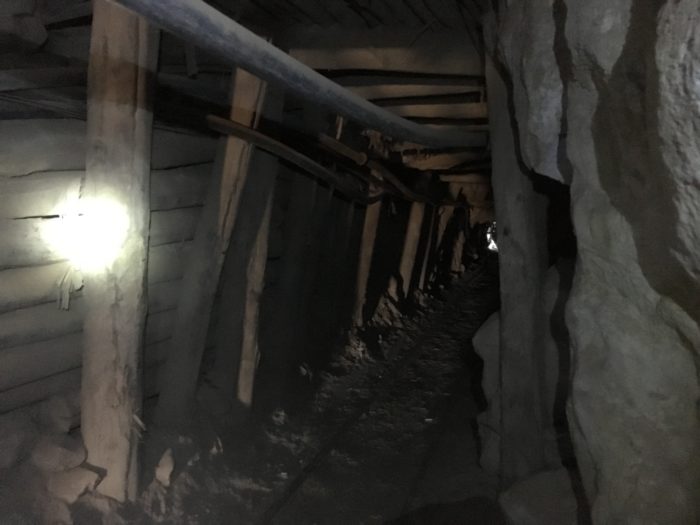
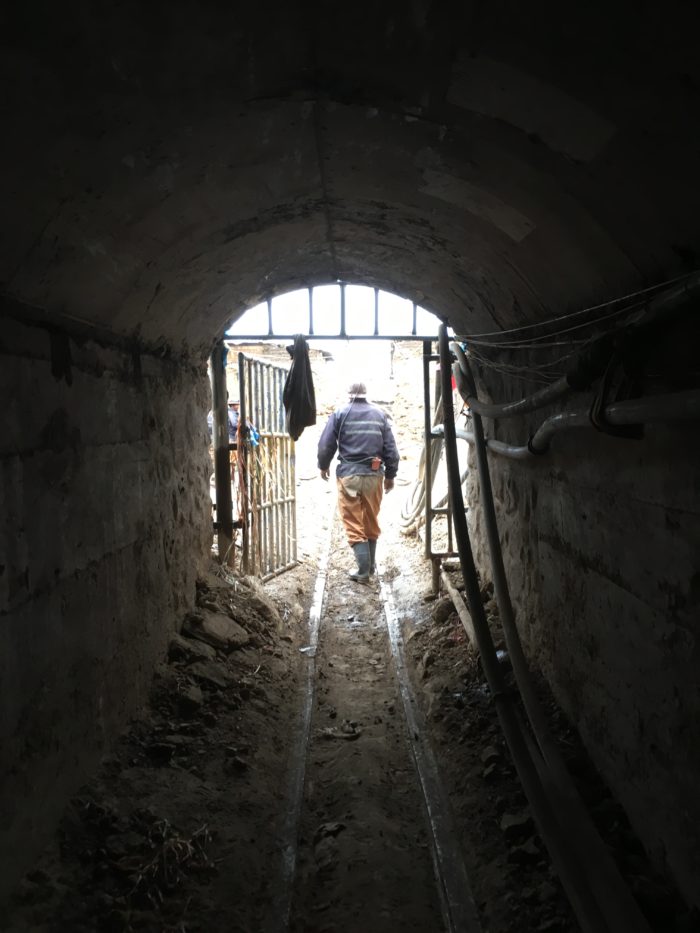
The mine is a series of narrow tunnels of varying height. Even Jess had to bend over to walk through a lot of it, and she still bumped her head on the ceiling a few times. Along the edge is a pipe filled with compressed air for the pneumatic drills and an electric cable.
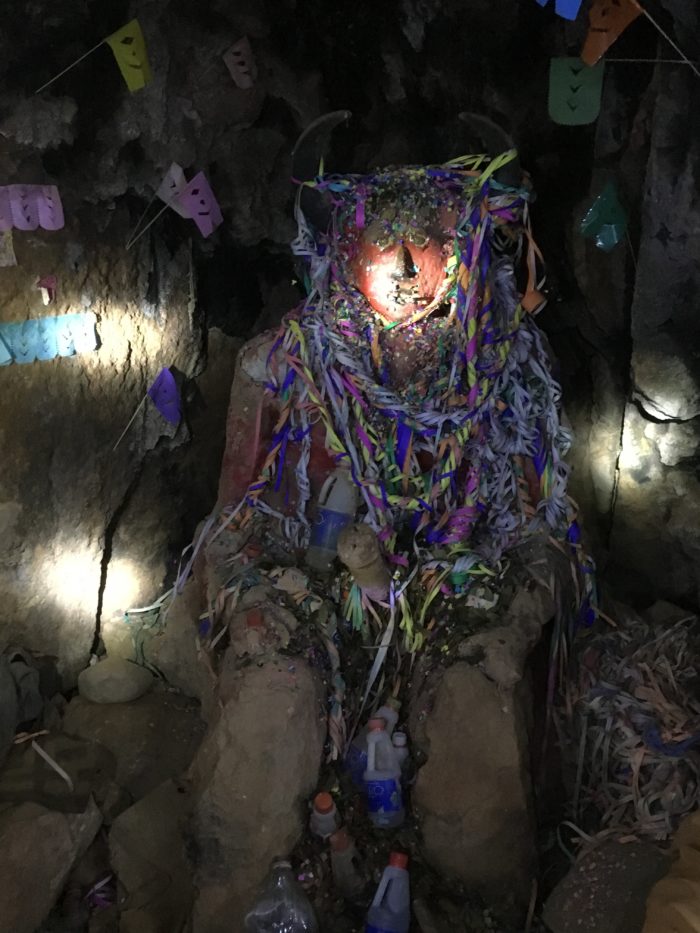
After about 10 minutes, Ronaldo sat us down to tell us about the history and ownership of the mines. We think this was also to allow us to adjust to being in a tight tunnel underground. Then he showed us the El Tío statue inside the mine. El Tío is a spirit that resembles the devil and is believed to have the power to protect and to destroy. Miners make offerings of coca leaves, juice, and 96% alcohol to El Tío for a safe, productive day in the mine.
We walked deeper into the mine and found some of the miners working. We went down one level to see one miner drilling holes for dynamite and another miner using a chisel and a hammer to extract the minerals. Getting to the miner’s workplaces required walking across some precarious looking planks of wood and climbing down some narrow, sloping passageways. The electricity cable crisscrosses the path in some places, so you have to pay attention to where you put your hands. One girl in our group touched it by mistake while she was climbing down and got a painful shock. The miners who work on the upper levels can use the shoots to drop the minerals into the wagons; however, the miners who work on the lower levels have to fill their bags with minerals and either carry them out on their backs or use a pulley system to get them up to the main level. A full bag of minerals can weigh as much as Jess.
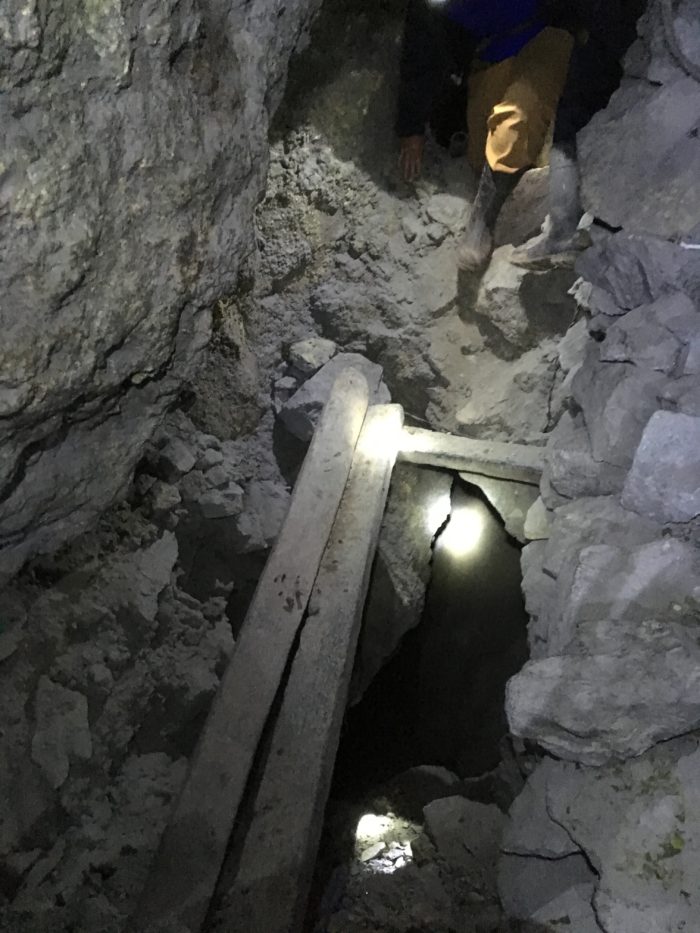
Narrow planks 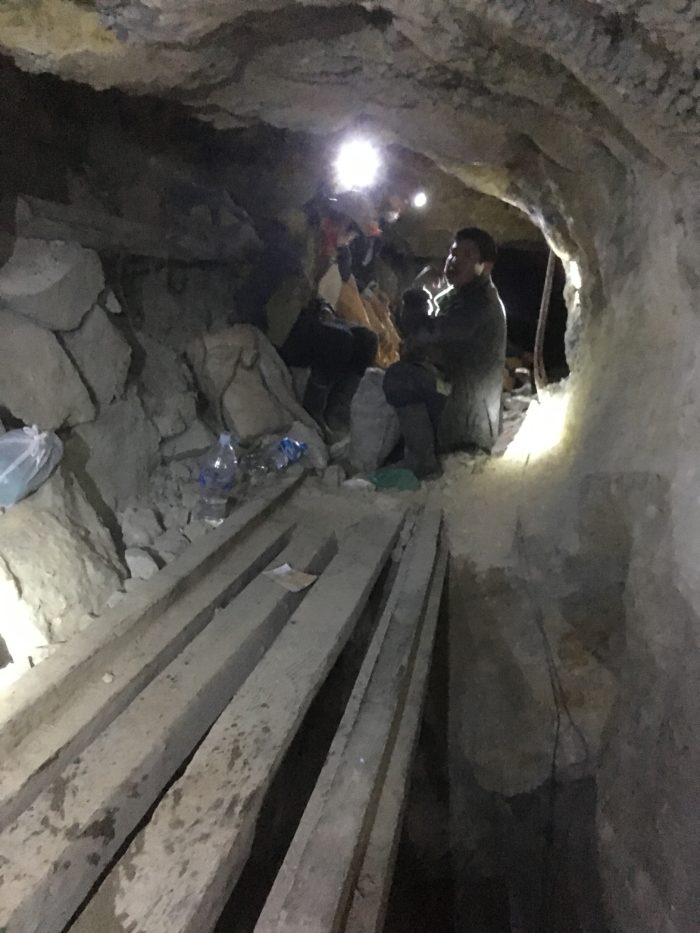
We climbed down under these planks 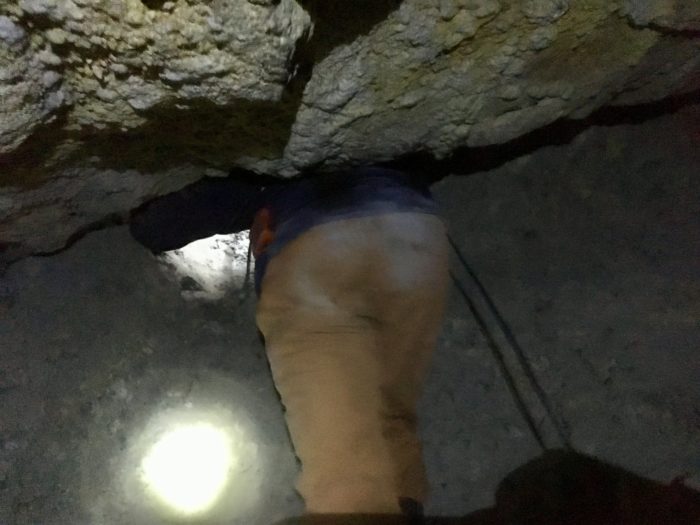
Climbing back out again
The mine is so filled with dust, the miners don’t eat in the mine; they chew coca leaves all day to take away their hunger. Life expectancy for the miners is 45-55; if they don’t die from noxious gases or mine collapse, they get silicosis from the dust. In some parts of the mine, there is notably less oxygen (beyond the fact that you’re already almost three miles above sea level). There is no communication system, so when a mining group plans to detonate some dynamite, one person runs around and tells people nearby.
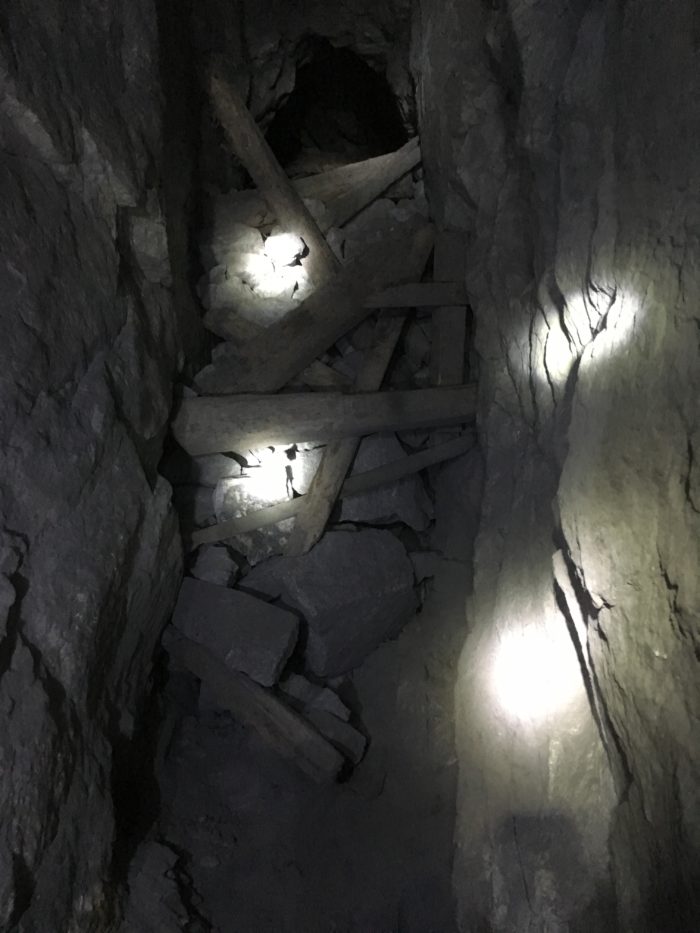
Towards the end of the tour we went up a ladder to another level where there were two miners working. One was extracting rocks that contained minerals and the other was pounding the rocks to get rid of as much non-mineral material as possible. If you have to carry everything out of the mine, it pays to have as much mineral content as possible. Above the workers was a wall of rocks braced with some rather precarious-looking pieces of wood. The wood was preventing the rocks from collapsing in on the miners. When the miners are finished in that area, they will remove the wood and allow the rocks to fall down because there are valuable minerals in those rocks. Through the hole at the top of this rock pile, some other miners that were part of the group were planning to detonate some dynamite. We were assured the dynamite was far enough away to not be a concern to us, but it still felt a bit alarming to be just on the other side of this rock wall so we went down to the next level to wait for the detonation.
With that our time in the mine was over and we started the walk back out to fresh air. Seeing the light at the end of the tunnel was a relief. We are glad we do not have to work in those conditions. It hard to imagine choosing to go into the mine every day knowing the risk of early death. However, the miners believe this is the best way to provide for their families and they accept the consequences. Ronaldo and the workers tout their freedom to choose how much they work, and we suspect they get to keep more of the money they make as a result, but if something goes wrong in the mine, they are on their own.
Potosi’s economy revolves around the silver mines in Cerro Rico. Silver has been mined here since 1545 along with other minerals like lead, tin and zinc. It is estimated the Cerro Rico mines might be in operation for 10-20 more years depending on how much of the minerals remain to be extracted. Potosí is so heavily dependent on mining it is expected to become a ghost town once the mines close.